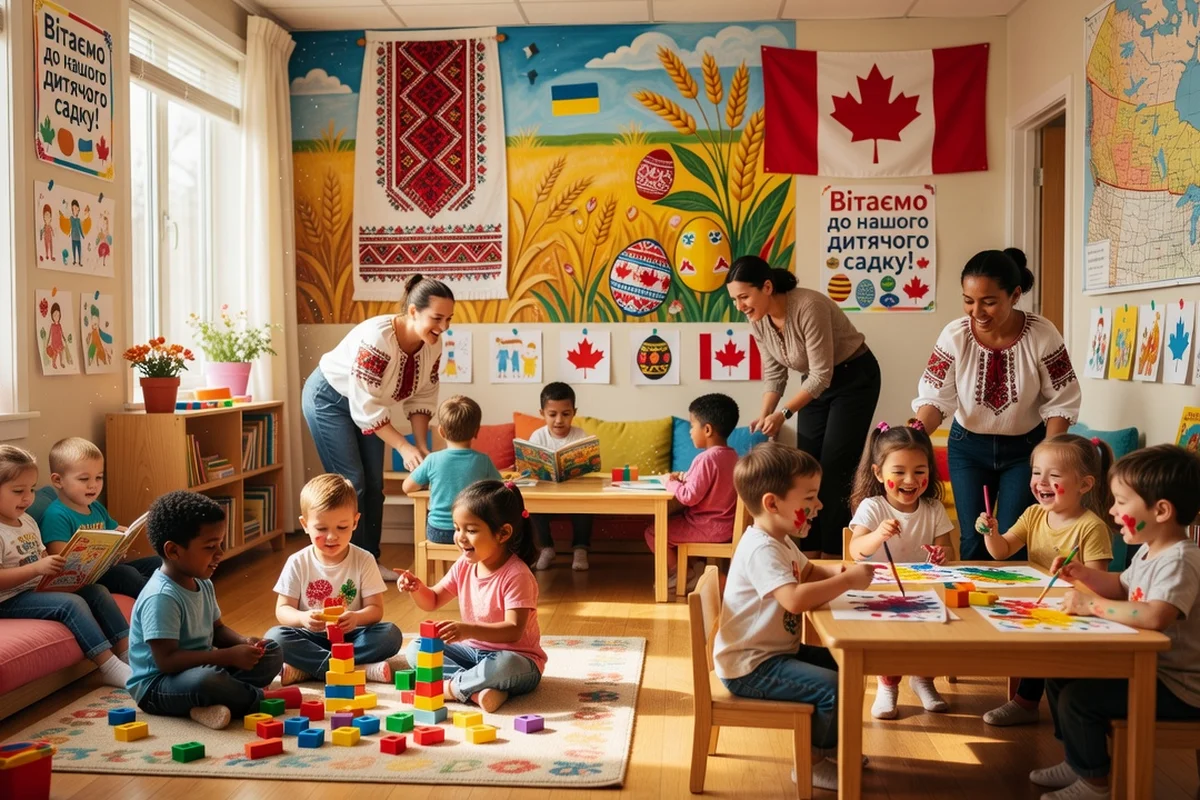
A welcoming Ukrainian-Canadian daycare environment in Toronto where children learn and play.
Toronto boasts one of the largest Ukrainian communities in Canada, attracting families seeking safety and new opportunities. In 2026 this vibrant population benefits from targeted support systems. Accessible childcare is fundamental for Ukrainian newcomers because it enables parents to secure jobs and participate in society. Working families rely on daycare to manage daily responsibilities without compromising child development. These services foster integration by providing safe spaces where children learn English and social skills while parents build careers. The challenges faced by Ukrainian families include adapting to new regulations and finding affordable care. Accessible options reduce stress and promote mental health. Community resources play a key role in bridging gaps. Those using the CUAET pathway often need immediate assistance upon arrival to establish routines. Family support programmes ensure children thrive in educational settings from an early age. This article examines Ukrainian childcare, daycare choices, and family support available in Toronto in 2026. It reviews licensed centres, home daycares, government funding, and cultural programmes. The discussion includes how to access subsidies, tips for enrolment, and the role of local organisations in supplementing services. Readers learn about future developments and best practices for balancing work and family life. Overall, it provides comprehensive guidance to help Ukrainian families navigate the system successfully while highlighting resources that promote economic participation and cultural continuity.
Understanding Toronto's Childcare Landscape
Toronto's childcare landscape in 2026 offers Ukrainian families a range of licensed options tailored to newcomer needs, including supports through settlement agencies and the Canada-Wide Early Learning and Child Care system. Licensed daycare centres provide structured environments for infants from six weeks to five years, with many offering Ukrainian-language resources or cultural programming to ease integration. Home childcare options, regulated by the City of Toronto, serve similar age groups in smaller, family-like settings ideal for flexible schedules. Preschools focus on children aged two and a half to five, emphasizing play-based learning that prepares kids for school while accommodating Ukrainian-speaking staff where available.
Subsidy programmes such as fee assistance and CWELCC reductions help lower costs for eligible families, with applications processed through the City of Toronto based on income and residency status. Age groups typically include infants under 18 months, toddlers 18 to 30 months, and preschoolers up to six years. Ukrainian families can access multilingual intake services to navigate waitlists and eligibility for these supports in 2026.
| Care type | Age range | Typical hours | Cost range | Best for |
|---|---|---|---|---|
| Licensed daycare centres | 6 weeks to 5 years | 7 a.m. to 6 p.m. | $10 to $80 per day after subsidies | Full-time working parents seeking structured education |
| Home childcare | 6 weeks to 12 years | 7 a.m. to 7 p.m. | $30 to $60 per day | Families preferring smaller groups and flexible hours |
| Preschools | 2.5 to 5 years | 9 a.m. to 3 p.m. | $20 to $50 per day | Part-time school readiness with cultural supports |
Families should apply early through Toronto's centralized waitlist and consult Ukrainian community organizations for guidance on subsidy applications. These programmes ensure accessible, high-quality care that respects cultural backgrounds while meeting provincial standards. In 2026, expanded spots aim to reduce wait times for Ukrainian newcomers arriving under federal immigration streams.
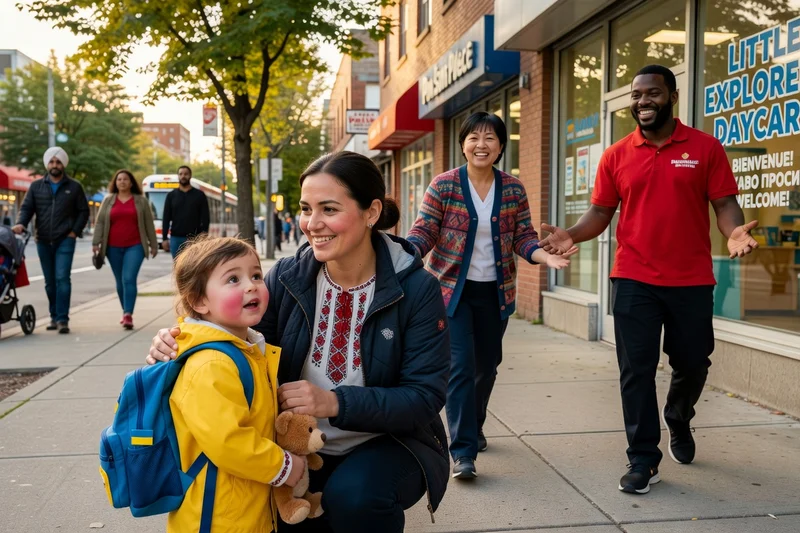
A Ukrainian mother completing the morning drop-off at a Toronto daycare centre.
Licensed Daycare vs Home Childcare
Licensed daycare centres in Toronto follow strict provincial regulations that ensure high safety standards, including regular inspections, secure facilities and emergency protocols. These centres typically employ staff with early childhood education qualifications, maintaining lower child-to-staff ratios. Home childcare options, when licensed through agencies, also meet safety requirements but may vary in physical setup, often providing a more home-like environment with fewer children overall.
Group sizes differ significantly between the two choices. Licensed centres usually accommodate larger groups of 15 to 25 children, allowing for structured learning yet potentially less individual attention. Licensed home childcare providers limit groups to five or six children, fostering closer supervision and personalised care that suits Ukrainian families seeking familiar routines during settlement in Canada.
Flexibility stands out as a key advantage for home childcare. Providers often offer extended hours, part-time spots and the ability to accommodate shift work common among newcomers. Licensed centres operate on fixed schedules aligned with school hours, which can limit options for parents balancing multiple jobs or language classes.
Language support remains essential for Ukrainian families. Many home providers speak Ukrainian or Russian, easing the transition for young children while introducing English gradually. Licensed centres focus on bilingual programs but may lack specific Ukrainian linguistic resources. Families can explore additional community connections through Ukrainian Canadian organizations to identify providers offering cultural and language continuity alongside regulated care.
Both options require careful verification of licensing status through the Ontario Ministry of Education. Ukrainian families should weigh safety standards, staff qualifications, group sizes, flexibility needs and language preferences when selecting care that supports their children's development and integration in Toronto.
Financial Help and Subsidies
Toronto families seeking financial help for childcare can access important supports through provincial and municipal programs. The Canada-Wide Early Learning and Child Care agreement has driven major fee reductions in licensed centres and home-based programs. Since 2022, participating Toronto providers have lowered daily rates by an average of fifty percent, moving steadily toward the national target of ten dollars per day by 2026. These savings apply automatically once a centre joins the agreement, easing costs for thousands of households without requiring separate applications.
Toronto childcare subsidy eligibility is determined by the City of Toronto's Children's Services division. Families qualify based on income, family size, residency, and employment or study status. Priority is given to lower-income households, single parents, and those with children who have special needs. Approved subsidies cover the difference between the full fee and what the family can afford, often reducing parent contributions to a manageable amount.
Ukrainian newcomer families arriving through the Canada-Ukraine Authorization for Emergency Travel program receive dedicated assistance. They may access expedited subsidy processing and additional settlement supports when applying for childcare. Local agencies help confirm eligibility and connect families to licensed spaces participating in the Canada-Wide agreement.
- Check household income against current Toronto subsidy tables on the city website.
- Collect proof of residency, income statements, and child identification documents.
- Register for a MyToronto account to submit the online subsidy application.
- Contact a Ukrainian settlement agency for translation help and priority referral.
- Visit an approved childcare centre to confirm participation in fee reductions.
- Follow up with Children's Services within two weeks if additional information is requested.
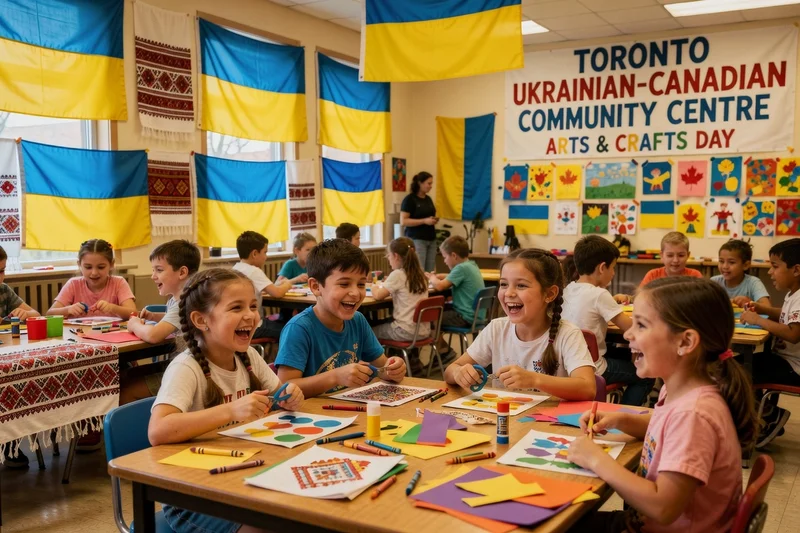
Ukrainian-Canadian children enjoying arts and crafts at a Toronto community centre.
Language and Cultural Considerations
When selecting appropriate childcare in Toronto for children of Ukrainian descent, families should prioritise options that address both linguistic needs and cultural continuity. Bilingual programmes are particularly valuable as they allow children to develop proficiency in English while continuing to use and improve their Ukrainian language skills through daily interactions and educational activities. These programmes often employ staff familiar with Ukrainian traditions, creating a supportive atmosphere for young learners adjusting to a new environment.
Ukrainian language Saturday schools serve as an excellent complement to standard childcare arrangements. Located throughout the Greater Toronto Area, these schools provide specialised instruction in the Ukrainian language on weekends, helping to reinforce vocabulary and grammar that might not be covered in regular settings. Parents report that attendance at such schools significantly boosts their children's confidence in using Ukrainian at home and in community settings. These institutions often collaborate with local community centres to offer resources tailored to immigrant families.
Cultural activities integrated into childcare programmes can include folk dancing, cooking traditional foods, and participating in seasonal festivals. These elements help children maintain a strong sense of identity and belonging to their heritage. Engaging in these activities also promotes social bonds with other Ukrainian families in the city.
To effectively maintain heritage while integrating into Canadian society, it is important to choose childcare that values diversity. Additional guidance can be found by visiting the page dedicated to Ukrainians in Toronto. Families are encouraged to research various options thoroughly to find the best fit for their needs and values. This balanced approach ensures that Ukrainian children in Toronto grow up appreciating their roots while becoming active participants in multicultural Canadian life.
Settlement Support for Ukrainian Families
Toronto offers essential settlement support services for Ukrainian families with children, helping newcomers build stable lives in Canada. Newcomer centres across the city provide orientation sessions, language training, and referrals to local resources that ease the transition for Ukrainian families arriving in Toronto. These hubs connect parents with employment workshops and community events tailored to Ukrainian cultural needs.
School registration help is a key focus, with dedicated staff at newcomer centres and Toronto District School Board offices guiding families through enrolment processes. They assist with documentation, assess language levels, and secure spots in programs that include English as a Second Language support to promote academic integration for Ukrainian children.
Mental health resources address the unique challenges faced by Ukrainian families, offering free counselling through agencies like the Canadian Mental Health Association and specialised trauma support groups. These services help parents and children manage stress from relocation while promoting overall well-being in a supportive environment.
Parenting groups organised by settlement organisations allow Ukrainian parents to connect, share experiences, and learn about Canadian child-rearing practices. Weekly sessions cover topics from school involvement to family health, fostering networks that reduce isolation for families settling in Toronto.
Emergency supports include immediate access to food banks, short-term housing aid, and financial assistance through organisations partnered with the City of Toronto. These resources ensure Ukrainian families receive prompt help during crises, complementing longer-term settlement planning. For families exploring options, understanding how to immigrate to Canada from Ukraine highlights pathways and post-arrival supports available in Toronto.
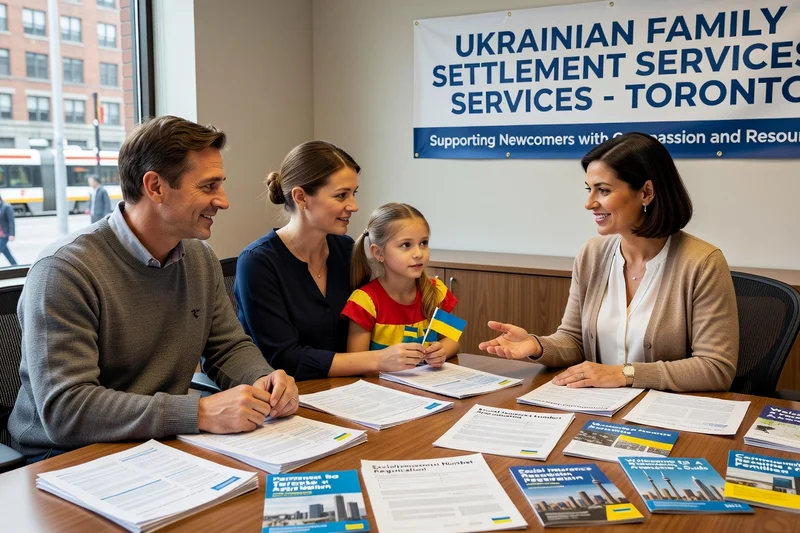
A Ukrainian family in Toronto receiving guidance from a settlement support worker.
Tips for Choosing the Right Provider
Choosing a childcare provider in Toronto requires careful consideration, especially for Ukrainian parents navigating the system in a new country. The city has many reputable options, but finding one that aligns with your family's values and provides a supportive atmosphere is key to your child's development and your peace of mind. Start by exploring licensed facilities that follow Ontario's regulations for early childhood education. These centres must adhere to strict health and safety protocols, which is vital for building trust. Consider the location and how it fits with your daily commute from Ukrainian-populated neighbourhoods like Bloor West Village or the Junction. Budgeting for childcare is another practical step. Fees vary widely, so investigate government assistance programs designed to make quality care accessible. Additionally, prioritize providers with experience serving diverse communities, including those from Eastern Europe.
- Verify that the provider is licensed by the Ontario Ministry of Education for compliance with provincial standards.
- Schedule an in-person visit to observe staff-child interactions and the overall cleanliness of the facility.
- Inquire about staff training, child-to-caregiver ratios, and experience with Ukrainian or bilingual children.
- Ask if they offer any Ukrainian language support or cultural activities to help children maintain their heritage.
- Request references from other Ukrainian families in Toronto who have used their services.
- Review the menu to ensure options accommodate dietary preferences or traditional Ukrainian foods where possible.
After selecting a few options, schedule tours and prepare questions in advance. Talk to other parents in the Ukrainian community for recommendations based on real experiences. This network can provide invaluable insights into which providers truly support multicultural integration. Ensure the curriculum promotes play-based learning, which is standard in Canadian early childhood settings. Always verify current licensing status online before making a final decision to avoid any issues. It is also beneficial to understand the different types of childcare available, such as full-day centres versus part-time programs, to match your work schedule effectively.
Frequently Asked Questions
What childcare subsidies are available for Ukrainian families in Toronto?
Ukrainian families in Toronto may access the Canada-Wide Early Learning and Child Care fee reductions and Toronto childcare subsidies based on income, family size and residency. Newcomers arriving through CUAET can receive expedited application support from settlement agencies.
How do I choose between a licensed daycare centre and home childcare in Toronto?
Licensed daycare centres offer structured programmes, qualified staff and larger groups, while licensed home childcare provides smaller groups, flexible hours and often more language support. Verify licensing through the Ontario Ministry of Education before enrolling.
Are there Ukrainian-language childcare options in Toronto?
Some Toronto childcare providers and Saturday schools offer Ukrainian-language activities or bilingual staff. Ukrainian community centres and cultural organizations can help families locate culturally responsive care.
What settlement support exists for Ukrainian families with children?
Toronto newcomer centres provide school registration help, language training, mental health counselling, parenting groups and emergency assistance such as food banks and short-term housing aid.
When should I apply for childcare in Toronto?
Apply as early as possible, ideally before arriving or immediately after settlement, because waitlists for licensed childcare in Toronto can be long. Use the city's centralized childcare registry and ask a settlement agency for help.