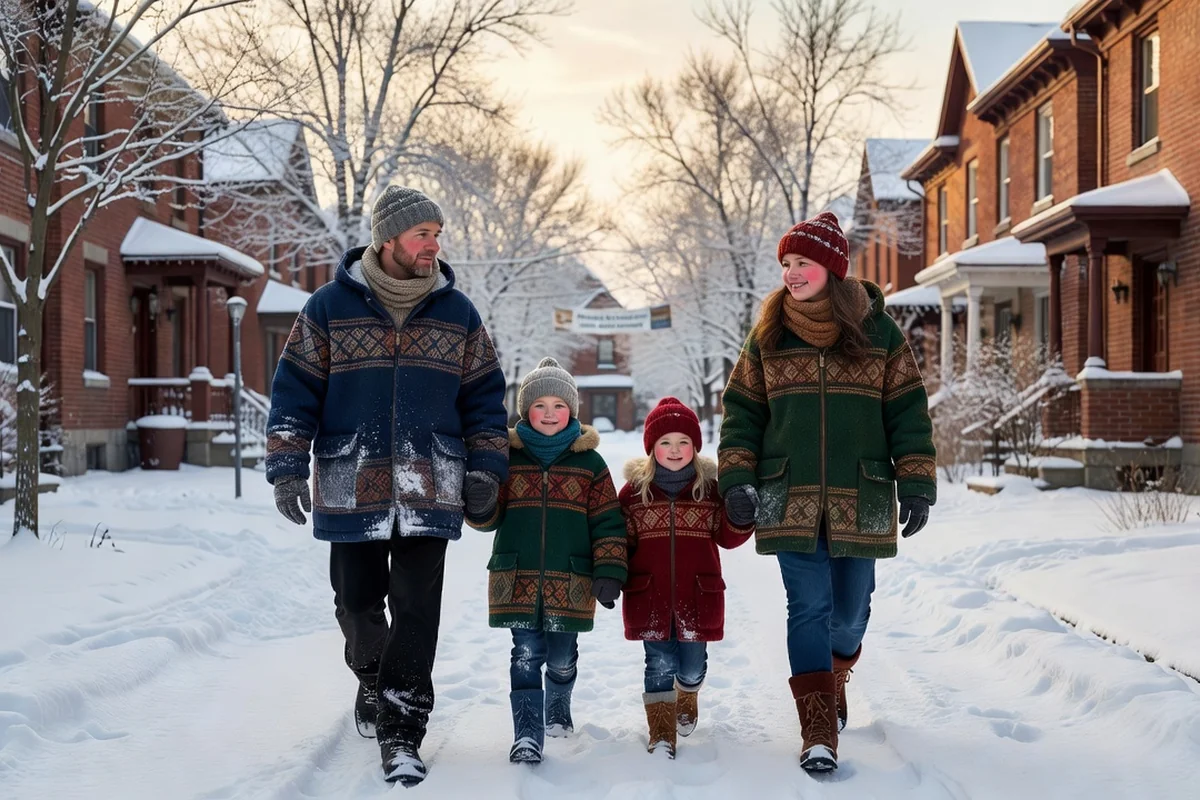
Why the first winter is the hardest milestone
For most Ukrainians who arrived under the post-2022 Canada-Ukraine Authorization for Emergency Travel, the first winter is the point where abstract differences between Ukraine and Canada become physical. Winter in Ukraine is cold, but Canadian winter brings combinations many newcomers have never faced: weeks of temperatures below −20 °C, wind chill that strips heat from exposed skin in minutes, deep snow that does not melt for months, and daylight that shrinks to fewer than nine hours in Toronto and even fewer in Edmonton or Winnipeg.
The good news is that Canadians have turned winter preparation into a system, and the system is accessible to newcomers. Clothing, heating, driving rules and community support all follow predictable patterns. A family that prepares in October and November — before the serious cold arrives in December — can cut its first-winter costs significantly and avoid the health and safety mistakes that make a first winter feel hostile rather than merely demanding.
This guide is built for exactly that preparation window. It covers what to buy, what it costs, what the law requires, what the cold does to the body, and where the Ukrainian community and Canadian settlement organizations step in to help.
Winter clothing: what to buy first and what it costs
Winter clothing is the single largest first-winter expense, and the one where overspending is most common. Newcomers sometimes buy fashion items that are not designed for −25 °C, or buy expensive branded gear when a mid-range product would perform identically. The rule experienced Canadians follow is simple: protect extremities and stay dry.
The priority order for a basic adult winter set is:
- Insulated waterproof boots — rated for at least −25 °C, with a waterproof (not water-resistant) membrane; wet feet are the fastest route to a miserable winter
- A warm parka or winter coat — down or quality synthetic fill, ideally knee-length for waiting at bus stops
- Hat and mittens — mittens are warmer than gloves; a knitted toque (beanie) under a hood covers most situations
- Scarf or neck warmer — also protects the face in wind
- Thermal base layers — one or two sets of long underwear extend the life of everything else
- Snow pants — essential for children and for anyone walking or using transit daily, optional for car commuters
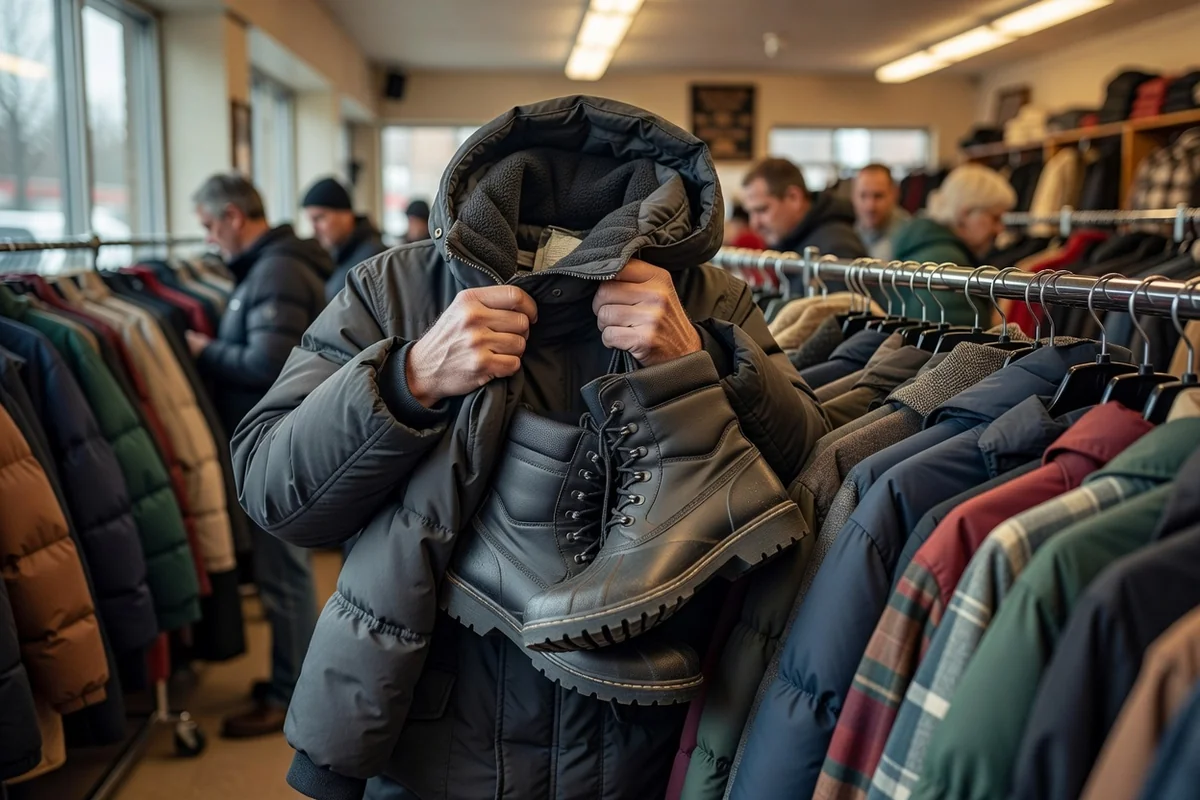
As a rough budget, a basic new winter set costs about CAD $150 to $400 or more per person, depending on the city, the store and whether items are bought new or second-hand. Children's sizes are cheaper and turn over constantly in second-hand stores because children outgrow gear before wearing it out. A family of four should budget carefully, buy the boots and parkas first, and fill gaps at thrift stores rather than trying to buy everything new in one trip.
Where to find free and low-cost winter gear
Almost every Ukrainian family that arrived in 2022–2024 faced the same clothing problem, and Canadian communities responded with organized donation systems. These remain active, and they are the fastest way to reduce first-winter costs from hundreds of dollars to almost nothing.
Start with settlement agencies. Most agencies that serve newcomers run clothing banks, referral systems or emergency vouchers for coats and boots, and they know which local organizations currently have stock. Ask specifically about "winter closet," "clothing bank" or "coat drive" programs — the terminology matters when staff are searching their own referral lists.
The Ukrainian community network is the second pillar. Ukrainian Catholic and Orthodox parishes across Canada — from St. Demetrius in Toronto to small parishes in Prairie towns — routinely organize winter clothing tables and donation distributions. Ukrainian Canadian Congress local branches and partner organizations have collected donations for displaced Ukrainians since 2022 and can point newcomers to the right door even when they do not hold clothing stock themselves.
The third pillar is the thrift store circuit. Goodwill, Salvation Army, Value Village and church-run thrift shops are where Canadians themselves buy much of their winter gear. Quality is high because Canadians donate gear that has been lightly used. For children's snow pants and boots, second-hand is the default choice even for established families.
Heating, utilities and the real monthly cost of winter
Heating is the second major cost shock, and it interacts directly with housing decisions. Canadian consumer guidance puts the combined cost of electricity, heat and water for a one-bedroom apartment at roughly CAD $150 to $250 per month, but the spread around that range is wide. A poorly insulated basement apartment heated with electric baseboards in a cold province can cost considerably more than a well-insulated unit where heat is included in the rent.
Before winter arrives, take three concrete steps. First, ask the landlord — in writing — exactly which utilities are included in the rent and which are billed separately. Many newcomers discover in January that "utilities extra" means a $200 heating bill on top of rent. Our guide to renting as a Ukrainian newcomer covers how to read a lease for these clauses before signing. Second, ask the utility company about equalized or budget billing, which spreads winter heating costs across twelve level monthly payments instead of hitting you with three large winter bills. Third, learn the thermostat habits that matter: setting the temperature a degree or two lower and sealing window drafts with inexpensive film kits produces noticeable savings over a full heating season.
A realistic first-winter budget for a one-bedroom apartment, excluding rent, looks roughly like this:
| Item | Rough monthly range (CAD) | How to reduce it |
|---|---|---|
| Heat and electricity | $100–$200 | Equalized billing, draft sealing, lower nighttime thermostat |
| Water and wastewater | $30–$60 | Usually fixed; included in some leases |
| Internet | $50–$80 | Newcomer and low-income plans from major providers |
| Phone | $30–$60 | Prepaid and flanker-brand plans |
| Total | $210–$400 | Ask settlement agencies about benefit and subsidy programs |
Provincial and federal benefit programs can offset part of these costs for low-income households, and settlement agency staff are trained to screen newcomers for every program they qualify for. This screening is free and is one of the most underused services in the settlement system.
Driving: winter tire rules by province and safe habits
Winter driving frightens newcomers more than almost anything else, and the legal side is genuinely confusing because Canada has no single national rule. Two provinces have hard requirements. Quebec mandates winter tires for all passenger vehicles registered in the province from December 1 to March 15, and police can issue fines of $200 to $300 for non-compliance. British Columbia requires winter tires or chains on most designated highways — including the routes to ski areas and mountain passes — from October 1 to April 30. In the rest of the country, winter tires are strongly recommended rather than legally required, though some insurance companies offer premium discounts for using them.
If you buy used winter tires, check for the three-peak mountain snowflake symbol on the sidewall — it certifies the tire meets snow traction standards — and measure tread depth. All-season tires sold in Canada perform acceptably in light snow but lose grip quickly below about −10 °C, which is why the Canadian advice is unambiguous: dedicated winter tires, installed before the first serious storm.
Canadian winter driving technique is learnable in an afternoon of practice in an empty parking lot. The essential habits are:
- Clear all snow and ice from windows, mirrors and the roof before moving — flying roof snow is a real hazard on highways
- Increase following distance to at least six seconds; braking distances on ice can be ten times longer than on dry pavement
- Brake earlier and more gently; modern anti-lock brakes should be pressed firmly, but stopping distance is the constraint, not technique
- Keep an emergency kit in the car: blanket, shovel, sand or kitty litter for traction, flashlight, phone charger, water and a snack
- If conditions are severe, stay home — Canadians cancel plans during ice storms and major snowfalls, and no one considers it strange
Many Ukrainians arriving with Ukrainian or European driving licences go through the provincial licence exchange process; doing the written and road tests early, before the first snowfall, avoids the much harder experience of a first test in January conditions.
Health: cold, vitamin D and the winter blues
Canadian health authorities treat winter as a serious season, and newcomers should understand the three main risks. The first is hypothermia and frostbite. Wind chill, not the thermometer number, is the operative measure: at −25 °C with wind, exposed skin can freeze in under thirty minutes. The warning signs of hypothermia are intense shivering followed by confusion, slurred speech, clumsiness and drowsiness — a person showing these signs needs warmth immediately, not encouragement to "push through."
The second risk is vitamin D deficiency. Between October and April, most of Canada is too far north for skin to produce meaningful vitamin D from sunlight, and darker winter clothing covers nearly all exposed skin. Many family doctors and pharmacists in Canada recommend vitamin D supplementation through the winter months; a pharmacy consultation is quick and inexpensive.
The third risk is the least visible: seasonal affective disorder, commonly called the winter blues or SAD. Symptoms include persistent low mood, oversleeping, craving carbohydrates, low energy and withdrawing from social contact. SAD is genuinely common in Canada — this is one of the world's most discussed seasonal mental health issues — and it is treatable through light therapy lamps, outdoor daylight exposure even on cold days, exercise, and professional care when symptoms persist. For newcomers carrying the stress of displacement, SAD can stack on top of existing anxiety, so treating it early matters. Checking on elderly relatives, neighbours and anyone living alone during cold snaps is also a well-established Canadian habit worth adopting immediately.
Community support: settlement agencies, UCC and churches
No newcomer family should face a first winter alone, and in practice few have to. Canada's settlement system was expanded specifically for the post-2022 arrivals, and the Ukrainian community infrastructure built over more than a century of immigration — described in our overview of Ukrainian-Canadian organizations — responded with targeted help. The Ukrainian Canadian Congress published its Ukrainian Newcomer Survey 2025 in the autumn of 2025, documenting both the integration progress of the CUAET cohort and the gaps that remain, including housing costs and access to services; the survey is a useful map of where community help is most needed.
In practice, the support network works like this. Settlement agencies handle the formal side: benefits screening, employment services, housing referrals and clothing programs. UCC branches and local Ukrainian organizations handle the community side: donation drives, volunteer networks, school supplies and connections to established families who have been through the same first winter. Parishes handle the immediate material side: clothing tables, food programs and a warm building with people who speak Ukrainian or Russian. Toronto, with the country's largest Ukrainian community, has the densest version of this network; our Toronto community guide maps the main entry points. Prairie cities — where many newcomers settled precisely because housing is cheaper — have smaller but highly motivated networks.
Similar solidarity networks exist across Europe; organizations such as Help to Ukraine's guide for displaced Ukrainians in France document the parallel support systems that grew up there after 2022, and many Ukrainian-Canadian volunteers coordinate informally with them.
The practical advice is to make contact in October, not January. Agencies have more capacity before the seasonal rush, donation stock is better, and knowing your local settlement worker's name before a crisis is worth more than any list of phone numbers.
Frequently asked questions
How much does a full winter outfit cost for one person in Canada?
For a basic new set — insulated waterproof boots, a warm parka, hat, mittens, scarf and thermal layers — newcomers typically spend roughly CAD $150 to $400 or more per person, depending on city, store and whether items are bought new or second-hand. Thrift stores, settlement agency clothing banks and community donation drives can reduce that cost dramatically, and children's winter gear is often the easiest to find for free.
Are winter tires mandatory in Canada?
It depends on the province. Quebec requires winter tires on all passenger vehicles registered in the province from December 1 to March 15, with fines of $200 to $300 for non-compliance. British Columbia requires winter tires or chains on most designated highways from October 1 to April 30. Other provinces recommend winter tires but do not mandate them province-wide, although some insurers offer discounts for using them.
What does heating cost in a Canadian apartment over the winter?
Heating costs vary by province, fuel type and insulation. As a rough consumer guideline, a one-bedroom apartment can run about CAD $150 to $250 per month for electricity, heat and water combined in winter, though a poorly insulated unit heated with electricity in a cold province can cost more. Before signing a lease, ask the landlord exactly what utilities are included; many newcomers are surprised that heat is not always part of the rent.
Where can Ukrainian newcomers get free winter clothing?
Start with settlement agencies, which often run clothing banks, referral programs or emergency vouchers for coats and boots. Ukrainian Canadian Congress local branches and partner organizations collect donations for displaced Ukrainians, and Ukrainian Catholic and Orthodox parishes frequently distribute winter clothing. Community closets, Goodwill, Salvation Army and Value Village thrift stores are the cheapest sources for the rest. Ask specifically about children's gear, which donation drives usually stock first.
How do I protect my health during my first Canadian winter?
Dress in layers and stay dry, because wet clothing plus wind accelerates heat loss. Learn the warning signs of hypothermia: intense shivering, confusion, slurred speech, clumsiness and extreme fatigue. With limited sunlight, ask a doctor or pharmacist about vitamin D. If low mood, oversleeping and low energy persist for weeks, it may be seasonal affective disorder, which is common in Canada and treatable. Try to get outside in daylight and check on elderly relatives and anyone living alone.