Andriy Lysenko, Executive Director, Ukrainian Canadian Congress Toronto Chapter.
Andriy Lysenko
Executive Director, Ukrainian Canadian Congress — Toronto ChapterAndriy Lysenko has spent sixteen years working at the intersection of Ukrainian diaspora advocacy and community integration in Canada. As Executive Director of the UCC Toronto Chapter, he oversees a network of partner organizations, leads advocacy efforts at municipal and federal level, and has been at the forefront of coordinating Toronto’s response to the post-2022 wave of Ukrainian newcomers. He holds a background in political science and community development.
This interview was conducted with the UCC Toronto Chapter director in May 2026. Responses reflect community perspective and publicly available data.
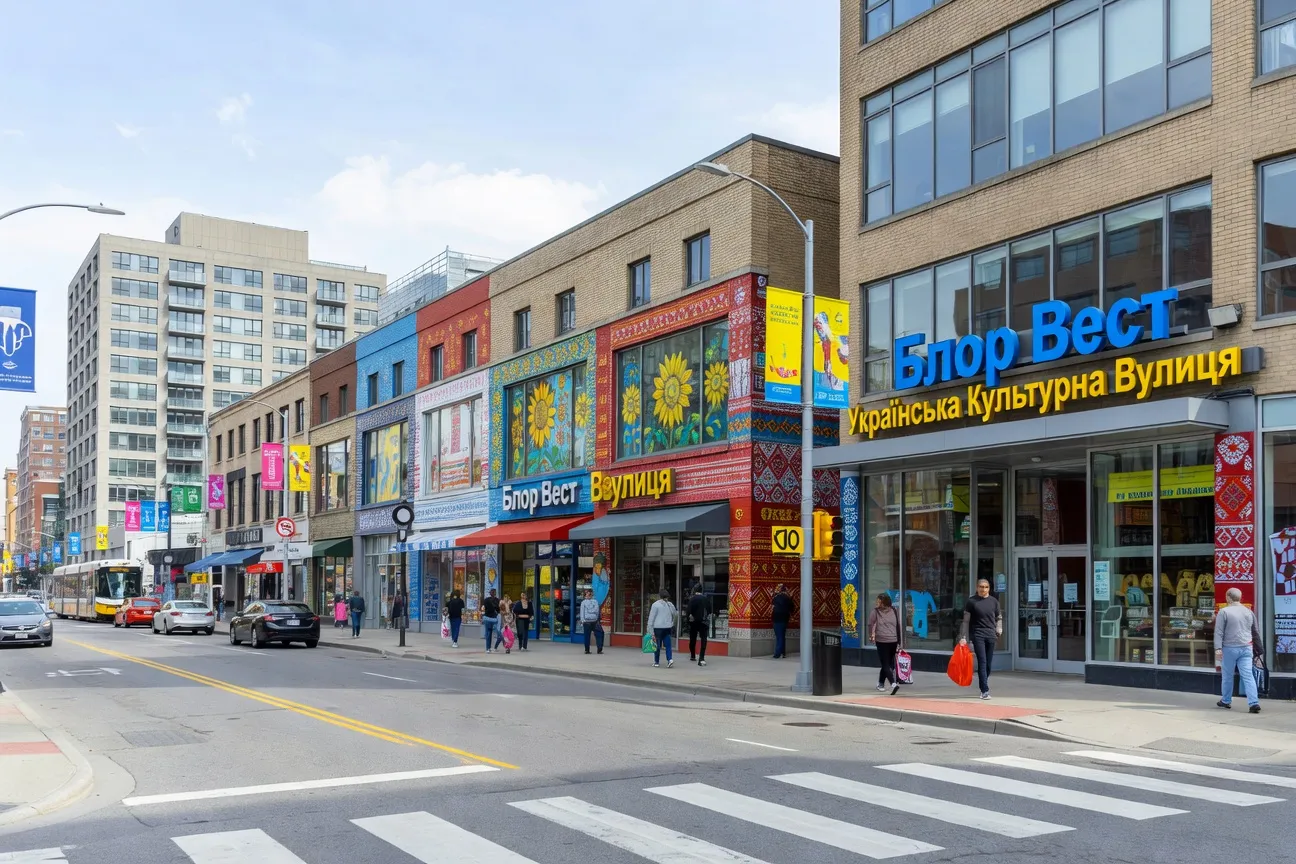
The UCC Toronto Chapter office on Bloor Street West sits a short walk from Saint Volodymyr Cathedral, a few blocks from a Ukrainian bakery that has served the neighbourhood for four decades, and within earshot of the streetcar that Torontonians of every background ride daily. It is, in many ways, the right address for a conversation about how a century-old community adapts to an era of war, displacement and reinvention.
Andriy Lysenko arrived a few minutes early, set down a folder of printed statistics, and opened with a disclaimer that he would repeat in various forms throughout our conversation: “The numbers speak for themselves — you just have to know which numbers to look at.” We spent the better part of an hour doing exactly that.
How Large Is Toronto’s Ukrainian Community in 2026?
Sarah: Let’s start with the fundamental question. How large is the Ukrainian community in Toronto right now, in 2026?
Andriy:Let me be specific about that, because the number you hear depends on which lens you use. By ancestry self-identification — the Statistics Canada definition — the Greater Toronto Area has somewhere between 70,000 and 100,000 people of Ukrainian origin. That is our working estimate, drawing on the 2021 census extrapolated with post-2022 arrival data. The City of Toronto proper accounts for roughly 45,000 to 55,000 of that figure, with the remainder in Etobicoke, Scarborough, North York and the surrounding municipalities of Mississauga, Brampton and Vaughan.
Now, what people often don’t realize is that “Ukrainian community” in Toronto is not one uniform bloc. You have multigenerational Ukrainian-Canadians whose families arrived in the first wave in the 1890s, the second wave after the two world wars, the third wave of post-1991 independence migrants, and now the fourth wave — the post-2022 CUAET arrivals. Each cohort speaks a different Ukrainian, holds different political reference points, and integrates into Toronto in quite different ways. When we talk about the community, we are talking about four communities layered on top of each other.
The numbers speak for themselves: the post-2022 wave brought an estimated 15,000 to 20,000 new Ukrainians to the GTA alone through the CUAET program. That is a 20 to 25 percent growth in a single three-year period. No other city in Canada saw that kind of proportional influx. For context on the broader Ukrainian diaspora across Canada, the national picture is equally striking.
Where Do Toronto Ukrainians Live? Key Neighbourhoods
Sarah: When people think of Ukrainians in Toronto, they think of Bloor Street West. Is that still accurate in 2026?
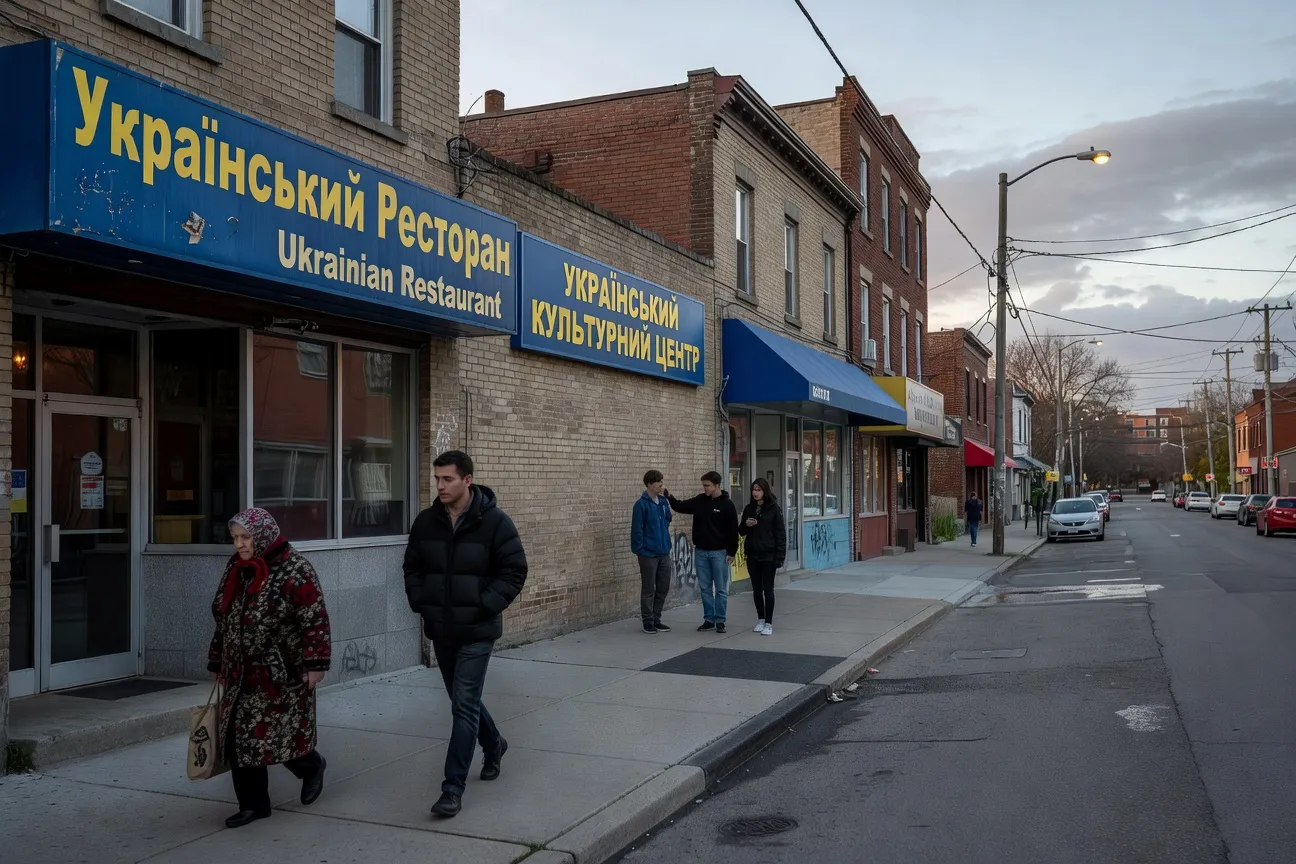
Andriy:Bloor Street West is still the symbolic heart — and a real one. The stretch between Dovercourt and Roncesvalles is still home to Saint Volodymyr Cathedral, the Ukrainian Credit Union, several Ukrainian-owned restaurants and shops, and of course the Ukrainian Canadian Congress office. The Bloor West Village Toronto Ukrainian Festival, held every September, draws 500,000 visitors and remains one of the largest Ukrainian festivals in the world outside Ukraine. That is not an accident of geography; it reflects 80 years of institutional investment in that corridor.
But the residential footprint is much broader now. Etobicoke has a large Ukrainian population with its own parish communities. North York has seen significant Ukrainian settlement since the 1990s. Post-2022 arrivals, who tend to prioritize housing affordability over proximity to the historic community hub, have settled in Mississauga, Brampton, and increasingly Scarborough — neighbourhoods that had very small Ukrainian presence before 2022. From a community perspective, this geographic dispersal is both a sign of growth and a challenge for institutions that were built around the Bloor Street model.
The city is also seeing Ukrainian-owned businesses appearing in areas that were not traditionally Ukrainian neighbourhoods — Ukrainian baked goods, language schools and daycare programs in Vaughan and Oakville, for example. For anyone curious about what it means to be living as Ukrainian in Toronto today, the answer is genuinely different depending on which postal code you are in.
Toronto skyline with Ukrainian community members gathered at a cultural event in 2026.
The Institutions That Hold the Community Together
Sarah: The institutional network is often cited as one of Toronto’s Ukrainian community’s greatest strengths. Can you walk us through what actually exists?
Andriy:From a community perspective, the institutional density here is extraordinary. Let me give you the categories. Religious institutions: Toronto has Ukrainian Orthodox and Ukrainian Catholic parishes across the city, including Saint Volodymyr Ukrainian Orthodox Cathedral on Bathurst Street and Saint Josaphat Ukrainian Catholic Cathedral on Franklin Avenue. These are not just spiritual spaces; they run language schools, host cultural events, and provide settlement support for newcomers. For many post-2022 arrivals, the church was the first Ukrainian institution they encountered in Toronto.
Financial institutions: The Ukrainian Credit Union, founded in 1944, operates multiple branches in the GTA and has assets in the hundreds of millions. It has been instrumental in providing mortgages and small business loans to new arrivals who cannot immediately access mainstream banking. This is not a legacy institution in decline — CUAET arrivals have opened thousands of new accounts since 2022.
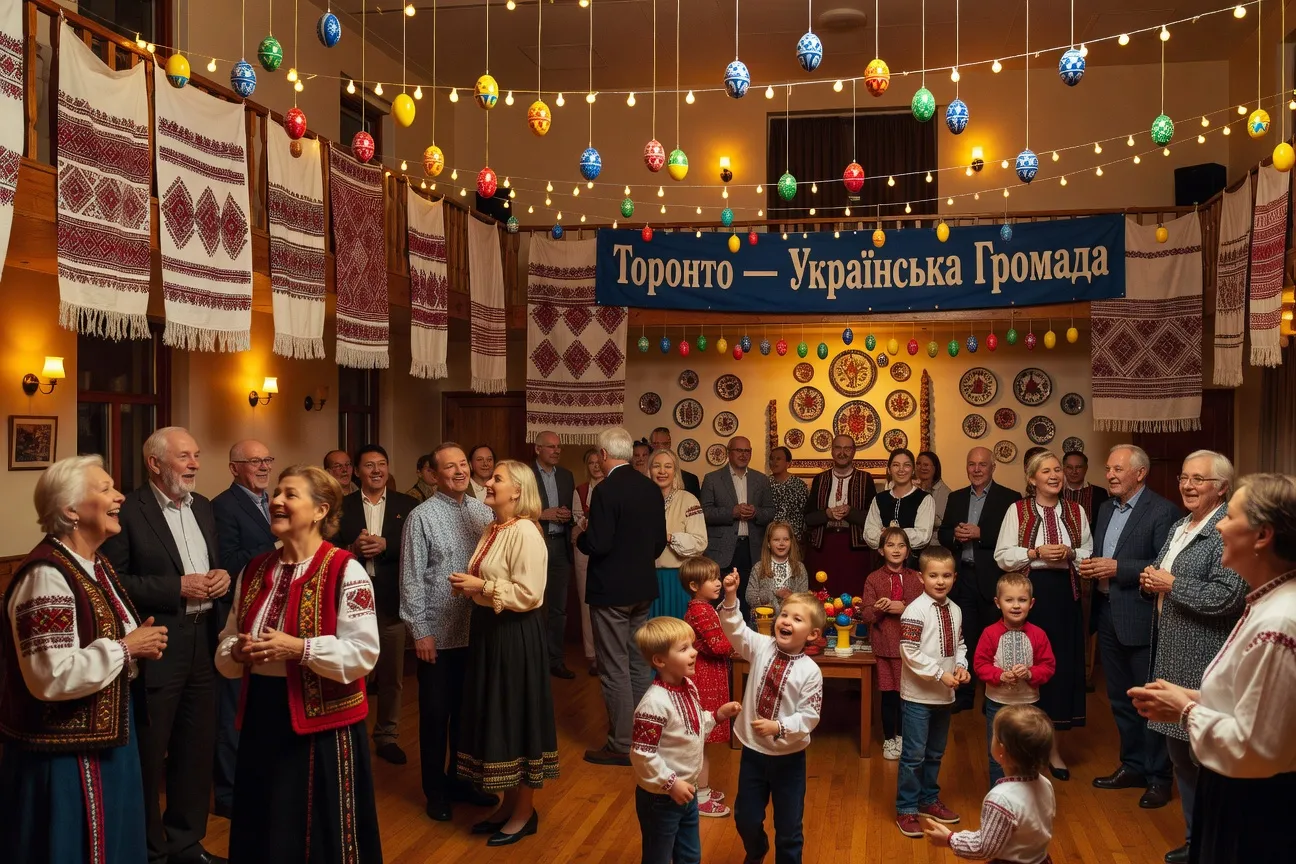
Cultural and educational: The Ukrainian Canadian Congress Toronto Chapter coordinates dozens of partner organizations including Plast Ukrainian Youth Association, the Ukrainian Scouting Organization, Saturday Ukrainian language schools, the Shevchenko Musical Ensemble, and multiple dance companies. What people often don’t realize is that there are currently more than 500 children enrolled in Saturday Ukrainian language schools in the GTA. That number has nearly doubled since 2022. Families in the GTA can also enroll their children in Toronto Ukrainian Saturday school options for 2026.
Advocacy and settlement: The UCC Toronto Chapter works closely with the Centre for Immigrant and Community Services, Ukrainian Canadian Social Services and several newcomer-focused NGOs. In 2022 and 2023 alone, our network helped coordinate housing, employment services and legal advice for thousands of CUAET arrivals in the region. For Ukrainian cultural traditions in Canada, Toronto’s institutions are among the most active custodians in the country.
How Has the Post-2022 Wave Changed Toronto’s Ukrainian Community?
Sarah: I want to ask directly about 2022. How did the full-scale invasion change things here in Toronto?
Andriy:I will be honest with you: February 24, 2022 was a rupture. Not just for Ukraine, but for every Ukrainian community in the diaspora. I have been doing this work for sixteen years and I have never seen anything like it. Within 72 hours of the invasion, our phones were ringing constantly — community members offering spare rooms, asking how to send money, wanting to know if their relatives in Kyiv were safe. The mobilization was immediate and overwhelming.
The practical changes came quickly. Toronto’s Ukrainian community coordinated housing networks, translation services, volunteer pools and fundraising at a scale we had never attempted before. Ukrainian-Canadian businesses donated goods and services. Saint Volodymyr Cathedral became an informal information hub. The UCC became a conduit between the federal government and community organizations managing CUAET intake.
But the deeper change is demographic and cultural. The post-2022 arrivals are not your grandfather’s Ukrainian immigrants. They are often highly educated — engineers, doctors, IT specialists, academics — they arrived with smartphones and instant connections to Ukraine, and many of them maintain a very Ukrainian-centric identity rather than a Ukrainian-Canadian hybrid one. They speak contemporary Ukrainian, not the diaspora Ukrainian preserved from the 1940s. They have strong opinions about politics. They are here, but in many ways their hearts are still in Kyiv or Lviv. For the raw statistics on this wave, the Ukrainian refugees in Canada statistics tell a stark story.
This creates a genuinely productive tension within the community. Long-established Ukrainian-Canadians and recent arrivals are learning from each other. The newcomers bring a direct connection to contemporary Ukraine; the established community brings institutional knowledge, English fluency and political capital. When it works well, it is a remarkable synthesis. When it does not, there are misunderstandings about identity, about what it means to be Ukrainian here versus there. That conversation is ongoing.
What Do New Arrivals Need to Know?
Sarah: If you were speaking directly to a Ukrainian who arrived in Toronto in 2024 or 2025, what would you tell them?
Andriy:The first thing I would say is: you are not starting from zero. Toronto has a Ukrainian community infrastructure that took 130 years to build, and it is there for you. Find the nearest Ukrainian church, not necessarily because you are religious, but because the parish networks know the city. They know which landlords are trustworthy, which employers are actively hiring newcomers, which Saturday school your children can attend, which food bank has Ukrainian-speaking staff.
The Ukrainian Credit Union should be one of your first stops. They have Ukrainian-speaking staff, they understand newcomer financial situations, and they are not going to penalize you for not having a Canadian credit history. A lot of people waste weeks trying to open accounts at major banks and running into bureaucratic walls. The Credit Union is faster and more welcoming.
The numbers speak for themselves on employment: the GTA’s Ukrainian community has strong networks in construction, IT, healthcare, education and small business. The UCC Toronto Chapter runs a job-matching program that has placed several hundred newcomers in the past two years alone. Do not rely only on online job boards — tap the community network.
And I would tell newcomers: give yourself time to understand what people often don’t realize about Canada, which is that integration here is a long-term process. Canadian society is polite and welcoming, but also indirect. Building friendships and professional networks takes longer than in Ukraine. The community — your Ukrainian community — is the bridge. Use it. Ukrainian genealogy resources, heritage programs and cultural organizations exist precisely to give you roots in a new soil. Organizations like those offering Ukrainian genealogy and heritage resources can help you anchor your family story in the Canadian context.
Bloor Street West Toronto Ukrainian neighbourhood storefronts.
The Future: What Is the UCC Focused on in 2026?
Sarah: Looking ahead — what is the UCC Toronto Chapter working on in 2026?
Andriy:Three priorities dominate our agenda. The first is settlement permanence. Many CUAET holders are approaching the end of their initial authorizations and need to transition to permanent residency. Navigating the Canadian immigration system is genuinely complex, and the legal advice gap is real — there are not enough Ukrainian-speaking immigration lawyers in the GTA to meet demand. We are working with legal aid organizations and law school clinics to fill that gap.
The second priority is language and education for the second generation. What people often don’t realize is that the children of post-2022 arrivals are becoming English-dominant very quickly, within two to three years of starting Canadian school. Ukrainian language retention in the second generation is one of the biggest challenges every wave of immigration has faced, and 2026 is the critical window for this cohort. We are expanding Saturday school capacity, pushing for Ukrainian-English bilingual programs in Toronto public schools, and working with the Ukrainian Credit Union to fund scholarships for heritage language study.
The third priority is advocacy on the war and reconstruction. Toronto has a Ukrainian community with real political weight. We elect Ukrainian-Canadian city councillors, we have federal MPs who are deeply engaged on Ukraine policy, and we have a community of several thousand professionals who have expertise relevant to Ukraine’s reconstruction. The UCC is coordinating with the Government of Canada on what post-war reconstruction support looks like and how the diaspora can play a role. From a community perspective, we are not just a welfare network for arrivals — we are a resource for Ukraine’s future. Programs like Ukrainian cultural programs in Canada are part of that broader cultural bridge-building effort that connects diaspora and homeland.
Quick 5: Fast Questions for Andriy Lysenko
We closed the interview with five rapid-fire questions. Here are Andriy Lysenko’s immediate answers.
Resources for the Ukrainian Community in Toronto
Whether you are a newcomer navigating your first weeks in Canada or a multigenerational Ukrainian-Canadian looking to reconnect with your roots, the following organizations offer practical support, cultural programming and community connections.
-
Ukrainian Canadian Congress — Toronto Chapter
The central advocacy and coordination body for Ukrainian Canadians in Toronto. Runs newcomer programs, job-matching services, cultural events and advocacy campaigns. Offices on Bloor Street West.
-
Ukrainian Credit Union (UCU)
Canada’s largest Ukrainian-Canadian financial institution with multiple GTA branches. Provides banking, mortgages, and small business loans with Ukrainian-speaking staff. An essential first stop for newcomers.
-
Saint Volodymyr Ukrainian Orthodox Cathedral
Located on Bathurst Street in Toronto, this cathedral is a hub of community life offering liturgical services in Ukrainian, language school programs and cultural events throughout the year.
-
Saint Josaphat Ukrainian Catholic Cathedral
Serving the Ukrainian Greek Catholic community in Toronto, with parish programs, language classes and newcomer welcome events. Located on Franklin Avenue.
-
Ukrainian Canadian Social Services (UCSS)
Provides settlement services, counselling, translation, and community support programs specifically tailored to Ukrainian newcomers and established community members in the GTA.
-
Plast Ukrainian Youth Association — Toronto
Scouting and youth development organization preserving Ukrainian language, culture and values for young people from kindergarten through young adult. Runs camps, events and leadership programs.
-
Shevchenko Foundation
National organization funding Ukrainian-Canadian cultural and educational projects, scholarships and heritage programs. Toronto-based applicants can access grants for cultural initiatives and community development.
-
Ukrainian Genealogy and Heritage Resources
For those tracing family roots or connecting with historical heritage, organizations such as the Ukrainian genealogy and heritage resources network offer research tools, archives and community connections that bridge Canadian and Ukrainian history.
-
Ukrainian Cultural Programs (Online & Hybrid)
For community members across the GTA seeking digital access to Ukrainian cultural education, language programs and artistic content, platforms such as Ukrainian cultural programs in Canada offer accessible programming for all ages.
-
Bloor West Village Toronto Ukrainian Festival
Held every September along Bloor Street West, this is one of the largest outdoor Ukrainian festivals in the world. Free admission, open to all. An ideal entry point for anyone wanting to experience the community firsthand.
Three Things to Remember
- Toronto’s Ukrainian community is large and layered. Between 70,000 and 100,000 people of Ukrainian origin live in the GTA, representing four distinct immigration waves with different languages, identities and relationships to Canada.
- The institutional network is exceptional. From the Ukrainian Credit Union to Saturday language schools, from cultural festivals to legal settlement services, Toronto has built one of the world’s densest Ukrainian diaspora infrastructures over 130 years.
- 2022 changed everything — and the community is stronger for it. The post-2022 wave brought 15,000 to 20,000 new Ukrainians to the GTA, doubling language school enrolments and adding a new generation of advocates, professionals and community builders.
Ukrainian Canadian Congress Toronto chapter community gathering.