Ukrainian Canadian Civic Advocacy in Context
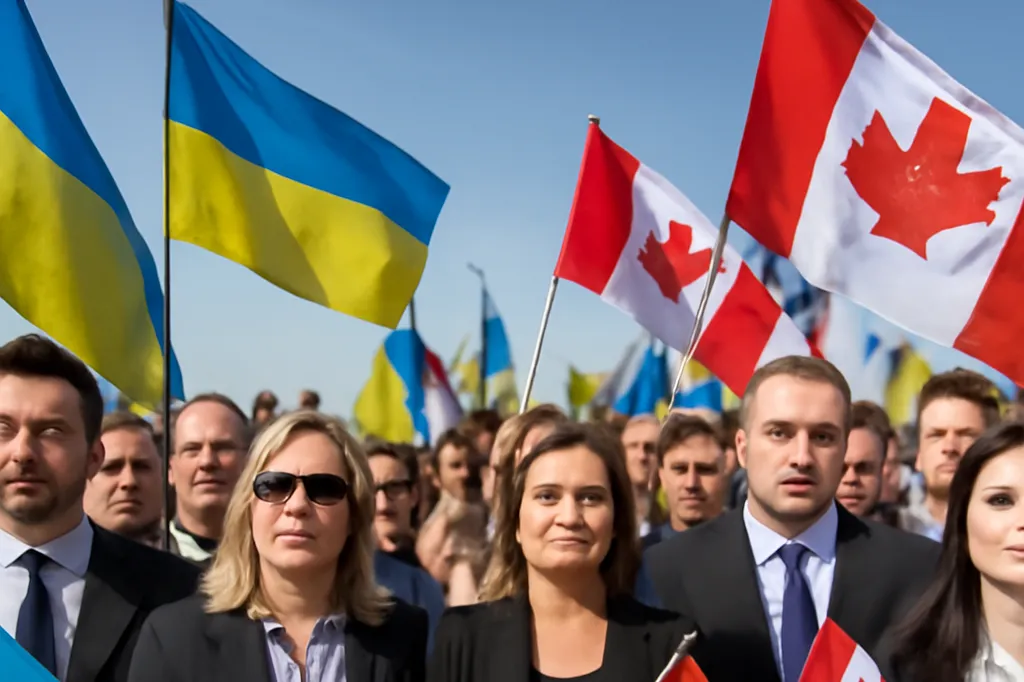
Ukrainian Canadian civic advocacy in 2026 is built on a long tradition of community organization, public engagement and participation in Canadian democratic life. It includes work before federal and provincial governments, involvement in municipal institutions, parliamentary testimony, support for newcomers, and sustained attention to Ukraine's security and humanitarian needs. The community's advocacy is not limited to elections or party politics. It also takes place through representative organizations, local associations, public education, committee appearances and direct engagement with elected officials.
Understanding present-day Ukrainian Canadian political participation requires attention to historical experience. The community has faced exclusion, wartime discrimination and the loss of political rights, while also developing institutions capable of representing collective concerns. These experiences help explain why questions of citizenship, immigration status, democratic participation and government accountability remain important in 2026.
The subject is also broader than any single campaign or electoral cycle. Ukrainian Canadians have participated in Canadian public life through municipal councils, school boards, provincial legislatures and Parliament. At the same time, community organizations have created channels through which concerns can be raised consistently, whether the issue is immigration, historical recognition, military assistance for Ukraine, humanitarian support or Canada's engagement with allies.
For historical context, readers can explore the long history of Ukrainians in Canada, including the immigration and settlement patterns that helped establish Ukrainian communities across the country. That history provides essential background for understanding why Ukrainian Canadian advocacy has often combined local institution-building with national political engagement.
In 2026, the most visible advocacy priorities include support for Ukraine in the face of Russia's war, continued pressure for sanctions and military assistance, humanitarian support, and attention to the status of people who arrived in Canada through the Canada-Ukraine Authorization for Emergency Travel program. These issues are connected by a common concern: ensuring that Ukrainian voices are heard in Canadian public policy while preserving meaningful avenues for participation by people at different stages of settlement and citizenship.
Wartime Exclusion and the Roots of Civic Organization
Ukrainian Canadian advocacy cannot be separated from the experience of the First World War. During that period, Ukrainians from Austro-Hungarian territories were classified as "enemy aliens" in Canada. Thousands were interned, and many people faced restrictions that affected their status and security. The classification did not reflect a unified political identity or a simple relationship to the war; rather, it subjected people from particular territories to state suspicion and unequal treatment.
The 1917 Wartime Elections Act removed voting rights from many naturalized citizens of enemy origin. This history is especially significant because it demonstrates that electoral participation is not merely an abstract democratic principle. For Ukrainian Canadians, the right to participate in political life has been shaped by periods in which that right was restricted or denied.
In response to these conditions, the Ukrainian Canadian Citizens' Committee was formed in 1917 to protest the treatment of Ukrainians in Canada. Its formation illustrates an early form of organized civic advocacy: a community response to a policy that affected rights, legal status and political participation. The committee's work is part of a longer record of Ukrainians in Canada creating collective structures to articulate concerns before government and the wider public.
The legacy of internment and disenfranchisement continues to shape how Ukrainian Canadian organizations approach public policy. Historical memory reinforces the importance of citizenship, legal protections, equal treatment and access to democratic institutions. It also provides a framework for understanding why current discussions about temporary status, permanent residence and electoral participation matter deeply to many people in the community.
Postwar advocacy further developed this institutional tradition. After the Second World War, the Ukrainian Canadian Congress campaigned for displaced persons and opposed forced repatriation to the Soviet Union. This advocacy addressed urgent humanitarian and political questions facing people displaced by war. It also established an important pattern: Ukrainian Canadian organizations could work on issues affecting both the community in Canada and Ukrainians seeking safety and security after conflict.
The Ukrainian Canadian Congress later obtained federal acknowledgment and commemorative funding related to injustices connected to First World War internment. This outcome demonstrates another dimension of advocacy: historical recognition. Civic participation can involve not only immediate policy demands but also the long-term work of ensuring that past injustices are acknowledged in public memory and government action.
The Ukrainian Canadian Congress and National Representation
The Ukrainian Canadian Congress, commonly known as the UCC, is central to the modern structure of Ukrainian Canadian advocacy. It was founded on November 6–7, 1940, as the Ukrainian Central Committee and was later renamed the Ukrainian Canadian Congress. Its creation came with encouragement from the Canadian government to coordinate the Ukrainian Canadian wartime effort.
Over time, the UCC became a national umbrella body representing hundreds of Ukrainian Canadian organizations. It is politically and religiously neutral, a characteristic that matters in a diverse community with different regional, religious, generational and political perspectives. Rather than functioning as a single electoral bloc, the UCC provides a national framework through which organizations can engage governments on shared concerns.
Its current role includes national advocacy before federal and provincial governments. This work reflects the practical reality that many issues important to Ukrainian Canadians involve more than one level of government. Immigration and foreign policy are central federal concerns, while provincial governments also affect public life through their own areas of responsibility. A national organization can therefore help connect community priorities with the appropriate public institutions.
Institutional capacity is one of the defining features of Ukrainian Canadian political influence. Political influence does not depend on the idea that every Ukrainian Canadian votes the same way or supports the same party. The verified record instead points to sustained organization: established community bodies, advocacy experience, links among local and national groups, and an ability to engage governments over time.
- National representation before federal and provincial governments;
- Coordination among Ukrainian Canadian organizations;
- Advocacy on immigration, historical recognition and Ukraine-related policy;
- Public engagement on sanctions, military assistance and humanitarian support for Ukraine;
- Participation in parliamentary and government processes when policy questions directly affect the community.
This organizational model also helps distinguish civic advocacy from partisan activity. Community organizations can raise issues, present evidence and seek policy commitments without endorsing a particular party or treating Ukrainian Canadians as a uniform voting constituency. That distinction is particularly important in a democratic system where communities may share concerns while holding different personal political views.
Elected Office, Local Institutions and Political Participation
Ukrainian Canadians have served in municipal councils, school boards, provincial legislatures and Parliament. Their participation has been documented from Prairie communities and extends across the Prairies, Ontario and federal politics. This record shows that Ukrainian Canadian public engagement has taken multiple forms, from local decision-making and education governance to provincial representation and national parliamentary work.
Local participation is especially important because municipal councils and school boards are often among the most immediate public institutions in community life. Service at these levels can connect civic involvement to issues that affect neighbourhoods, schools and local public administration. Provincial legislatures and Parliament provide additional avenues for Ukrainian Canadians to contribute to public debate and legislative work.
For a closer look at the public-service record of elected representatives, see Ukrainian Canadian politicians and members of Parliament. Their history illustrates that political participation has not been confined to one province, one generation or one order of government.
However, representation by individuals should not be confused with a claim that a community has a single political position. Ukrainian Canadian political influence has been shaped by sustained institutional capacity rather than by a single voting bloc. People of Ukrainian heritage participate in Canadian politics as individuals with different views, while organizations may advance common priorities on specific issues such as support for Ukraine, immigration pathways or recognition of historical injustice.
This distinction is useful in 2026. Electoral participation is one important democratic mechanism, but it is not the only one. Political participation can also include appearing before committees, submitting policy concerns through representative organizations, organizing public support, engaging with elected officials and contributing to community-based discussion. These forms of engagement remain available even when a person is not yet eligible to vote in federal elections.
Advocacy Priorities in 2026: Ukraine, Immigration and Parliamentary Engagement

Since 2022, Ukrainian Canadian advocacy has focused strongly on sanctions, military assistance and humanitarian support for Ukraine. These priorities reflect the continuing need for Canadian policy to address the consequences of Russia's war against Ukraine. The UCC has also pressed for NATO and G7 engagement on Ukraine, placing Canadian advocacy within the broader context of international cooperation.
In March 2026, Ukrainian Canadian representatives testified before the House of Commons Standing Committee on Citizenship and Immigration regarding the status of people who arrived through the Canada-Ukraine Authorization for Emergency Travel, often referred to as CUAET, and possible permanent residence pathways. This testimony is a concrete example of civic advocacy moving from community concern into a formal parliamentary setting.
The issue is significant because temporary status can create uncertainty for people who have built lives in Canada while responding to extraordinary circumstances. Parliamentary testimony allows community representatives to explain why immigration pathways matter and to place the experiences of CUAET arrivals before elected members studying citizenship and immigration policy. It also shows how advocacy can be both national in scope and directly connected to the daily circumstances of affected individuals and families.
The Canada-Ukraine 2026 declaration recognized the contributions of the Ukrainian Canadian community. Recognition in a bilateral declaration does not eliminate the need for continued engagement, but it acknowledges that the community has played a meaningful role in relations between Canada and Ukraine. In practice, advocacy remains necessary because policy priorities must be sustained through changing circumstances and government processes.
Discussion of policy should also be grounded in an accurate understanding of the community's presence across Canada. Readers seeking that broader demographic context can consult how many Ukrainians live in Canada today. Population context can help explain why Ukrainian Canadian institutions operate nationally, while still avoiding the mistaken assumption that a shared background produces a single political viewpoint.
- Maintaining Canadian sanctions and support measures related to Ukraine;
- Supporting military assistance for Ukraine;
- Supporting humanitarian assistance for people affected by the war;
- Encouraging NATO and G7 engagement on Ukraine;
- Addressing the status of CUAET arrivals and possible permanent residence pathways.
These priorities demonstrate the interconnected nature of Ukrainian Canadian civic engagement in 2026. Foreign policy, humanitarian action and immigration policy are distinct areas of government activity, but they overlap in the lived experience of a community responding to war, displacement and the need for durable participation in Canadian society.
Newcomers, Temporary Status and Democratic Participation
A central civic question in 2026 concerns the participation of newcomers from Ukraine who arrived under CUAET. CUAET arrivals on temporary status generally cannot vote in federal elections. Citizenship is required for federal electoral participation, which means that people who are present in Canada under temporary status do not have the same federal voting rights as Canadian citizens.
At the same time, the absence of federal voting eligibility does not mean the absence of civic agency. Permanent residents and temporary residents can engage through advocacy and community organizing. They can participate in community discussions, contribute to representative organizations, support public campaigns and share their experiences with groups that engage governments. These activities can be particularly important when immigration policy is directly affecting their lives.
| Status or position | Federal electoral participation | Civic engagement in advocacy |
|---|---|---|
| Canadian citizen | Citizenship is required for federal electoral participation. | Can participate in advocacy and community organizing. |
| Permanent resident | Citizenship is required for federal electoral participation. | Can engage through advocacy and community organizing. |
| Temporary resident, including many CUAET arrivals | Generally cannot vote in federal elections while on temporary status. | Can engage through advocacy and community organizing. |
This distinction between voting rights and broader civic participation is essential. Advocacy can communicate the realities of temporary status, identify concerns about permanent residence pathways and help ensure that policy discussions include people affected by government decisions. It also allows established community organizations and newer arrivals to work together while recognizing that their legal statuses may differ.
The March 2026 testimony before the House of Commons Standing Committee on Citizenship and Immigration illustrates why this matters. A parliamentary committee can hear from representatives who bring forward questions affecting people who may not themselves be eligible to vote federally. In this way, organized representation can help bridge the gap between temporary legal status and meaningful participation in public policy debate.
For Ukrainian Canadians who are already citizens, voting remains an important part of democratic participation. For permanent residents and temporary residents, advocacy and community organizing provide other ways to contribute. A strong civic culture recognizes both realities: citizenship carries federal electoral rights, while community participation can and does extend beyond the ballot box.
Building Effective Community Engagement
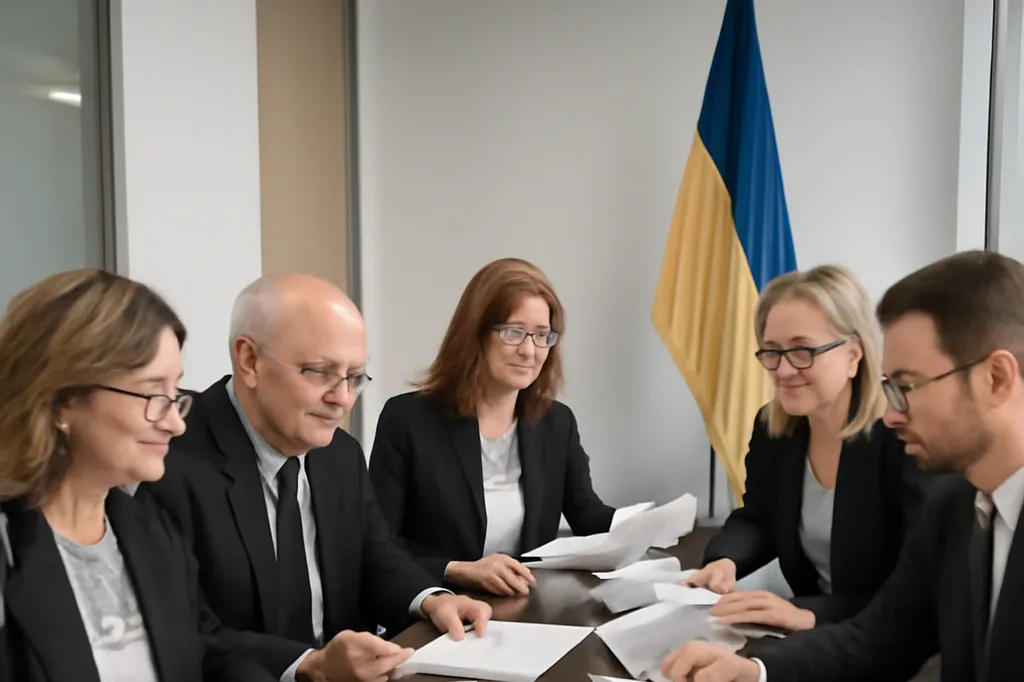
Effective Ukrainian Canadian advocacy depends on continuity. The community's most durable achievements have been connected to organized institutions, whether responding to wartime discrimination, advocating for displaced persons after the Second World War, seeking acknowledgment of First World War internment injustices or engaging governments on current questions involving Ukraine and immigration.
In practical terms, civic participation is stronger when people understand the difference between individual political preference and collective issue-based advocacy. An individual may support any political party or none at all. A community organization, by contrast, may focus on a defined concern such as immigration pathways, humanitarian support, sanctions or military assistance for Ukraine. This approach allows common interests to be presented without requiring uniformity in every political question.
The depth of this work can be seen through the Ukrainian community's cultural life and organizations. Community organizations do more than preserve cultural connections. They can also create the relationships, experience and representative capacity needed for sustained civic engagement.
For people who want to participate responsibly in 2026, the most useful starting point is to identify the policy issue involved and the level of government connected to it. National advocacy before federal and provincial governments is a core role of the UCC, while local involvement may take place through community organizations and institutions. Newcomers can contribute their direct knowledge of immigration and settlement issues, while citizens can combine advocacy with federal electoral participation.
Long-term engagement also requires historical awareness. The community's experience of disenfranchisement during the First World War, its response through the Ukrainian Canadian Citizens' Committee, and the later work of the UCC show why access to democratic institutions cannot be taken for granted. Remembering this history can help keep current advocacy focused on equal participation, legal security and public accountability.
What is the Ukrainian Canadian Congress?
The Ukrainian Canadian Congress is a national umbrella body representing hundreds of Ukrainian Canadian organizations. Founded on November 6–7, 1940 as the Ukrainian Central Committee, it is politically and religiously neutral and conducts national advocacy before federal and provincial governments.
Why does First World War history matter to Ukrainian Canadian advocacy?
During the First World War, Ukrainians from Austro-Hungarian territories were classified as "enemy aliens," thousands were interned, and the 1917 Wartime Elections Act removed voting rights from many naturalized citizens of enemy origin. This history continues to inform community concern for rights, citizenship and equal participation.
Can CUAET arrivals vote in federal elections in 2026?
CUAET arrivals on temporary status generally cannot vote in federal elections. Citizenship is required for federal electoral participation.
Can permanent residents and temporary residents participate in advocacy?
Yes. Permanent residents and temporary residents can engage through advocacy and community organizing, even though citizenship is required for federal electoral participation.
What were key Ukrainian Canadian advocacy priorities in 2026?
Key priorities included sanctions, military assistance and humanitarian support for Ukraine, NATO and G7 engagement on Ukraine, and attention to the status of CUAET arrivals and permanent residence pathways.