Editorial portrait. The interview reflects a synthesis of conversations with matchmakers and community organizers in the Toronto Ukrainian community.

Olena Kovalenko, Ukrainian-Canadian matchmaker in Toronto.
Olena Kovalenko
Toronto-based Ukrainian-Canadian matchmakerHas been organizing cultural mixers and one-on-one introductions within the Ukrainian-Canadian community since 2018. Holds an M.A. in cross-cultural communication. Works with both heritage Ukrainian-Canadians and post-2022 newcomers.
We met Olena Kovalenko on a quiet Tuesday afternoon at a tea house just off Roncesvalles Avenue, the strip in west Toronto where Polish bakeries, Ukrainian delis and a generation of new arrivals intersect. The neighbourhood, along with the older Ukrainian heart around Bloor West Village, has become an informal proving ground for the questions Canadian readers keep sending us: how do you actually meet a Ukrainian-Canadian woman, what is reasonable to expect, and what attitudes get in the way?
The conversation lasted nearly two hours. Olena was direct, occasionally wry, and unwilling to pretend that the matchmaking landscape is the same as it was five years ago. The war has changed everything, she said before we even ordered. So has the post-2022 demographic shift. Below is the interview, lightly edited for clarity.
How big is the Ukrainian single scene in Canada in 2026?
Anna: Let's start with the numbers most readers will not have. How big is the Ukrainian single scene in Canada in 2026, and how has it shifted since the war?
Olena:Canada has roughly 1.4 million people of Ukrainian origin in 2026. That is the largest figure in any Western country, and the second-largest Ukrainian diaspora in the world. Of those, more than 200,000 came through the CUAET emergency travel program after February 2022. The rest are multigenerational Canadians, descendants of waves that began in 1891.
The single population is harder to estimate precisely, but a reasonable working number is 250,000 to 320,000 Ukrainian-Canadian adults who are not currently in a registered partnership. The post-2022 cohort skews heavily female, around 65 percent of working-age adults, because Ukrainian men of military age cannot leave the country under martial law. Among heritage Ukrainian-Canadians born in Canada, the gender ratio is essentially even.
What that means in practice is that in a Toronto Ukrainian church hall on a Saturday in 2026, you will see far more single women in their late twenties to mid-forties than men in the same band. Five years ago that was not the case. It is a real demographic fact, not a marketing slogan, and it shapes how people meet.
Where do Ukrainian-Canadian singles actually meet?
Anna: Skip the apps for a moment. Where do Ukrainian-Canadian singles actually meet in real life?
Olena:The honest answer is that the Ukrainian-Canadian community has more functioning gathering points than almost any other diaspora in the country. Saint Volodymyr Cathedral on Bayview Avenue runs cultural nights and concerts that are not narrowly religious. The Bloor West Village Toronto Ukrainian Festival each September draws hundreds of thousands of visitors. Edmonton's Heritage Days has a Ukrainian pavilion that is essentially a giant family reunion. Plast, the Ukrainian scouting movement, has alumni events in every major city.
University Ukrainian student associations at U of T, York, McMaster, McGill, UBC and the University of Alberta also matter, even for people who are no longer students. They organize mixers, language conversation tables, and volunteer events. After 2022, many of these clubs doubled in size.
And then there is the cafe scene. On Roncesvalles in Toronto, on 124 Street in Edmonton, on Whyte Avenue, in Winnipeg's North End, you will find places where Ukrainian is spoken at half the tables. People meet there. Not because anyone is trying, but because the geography of community is real.
If I were giving one piece of practical advice, it would be this: pick three places in your city, show up at each of them four times, and stop expecting the first visit to produce anything. That is how communities have always worked.
How do CUAET arrivals approach dating differently from heritage Ukrainian-Canadians?
Anna: The CUAET wave brought 200,000 people in two years. They cannot possibly think about dating the same way as someone whose grandparents arrived in 1948.
Olena:They do not. The two groups overlap, but they are distinct. A heritage Ukrainian-Canadian, third or fourth generation, often grew up speaking limited Ukrainian, attending church festivals, dancing in a Ukrainian dance ensemble as a kid, and dating across all the usual Canadian patterns. Ukraine is meaningful but emotionally distant.
CUAET arrivals are different. Many came as adults, often with one or both parents in another country or in Ukraine still. They are dealing with the trauma of displacement, language acquisition, professional re-credentialing, and uncertainty about whether they can return. Dating is rarely the first thing on their mind in the first eighteen months. When they do start, they tend to prefer in-person introductions over apps, and they are often more cautious because they do not yet know which Canadian social codes are real and which are surface.
For someone interested in meeting a CUAET arrival, the kindest thing is to recognize the timeline. Three to five years post-arrival is when many feel settled enough to seriously think about a relationship. Push earlier than that and you are usually pushing against grief.
Editorial portrait of Olena Kovalenko, Toronto-based Ukrainian-Canadian matchmaker.
What apps and platforms work for connecting with Ukrainian singles in Canada?
Anna: What about apps? Hinge, Bumble, the rest. Do they work for this community?
Olena:Hinge has the strongest results in my experience because the prompts give you a sense of someone's voice. Many Ukrainian-Canadian women now mention heritage explicitly in their profile, sometimes with a Ukrainian flag emoji, sometimes with a phrase like Ukrainian-Canadian or born in Lviv. Filtering by heritage is not a built-in feature, but it is easy enough to read.
Bumble works for heritage Ukrainian-Canadians and for some CUAET arrivals who have been here long enough to be comfortable with women-message-first dynamics. Tinder is not where most serious Ukrainian women in Canada are looking.
There are also a handful of Ukrainian-specific or Slavic-specific platforms. I recommend them with caution. The legitimate ones can produce real introductions. The exploitative ones are the modern descendants of the 1990s catalogues, and they create more harm than connection. Anyone considering one should read our Ukrainian dating in Canada full guide first.
For CUAET arrivals specifically, in-person remains dominant. The trust threshold is higher, and a friend-of-a-friend introduction, what we used to call a normal way to meet, still does most of the work.
What cultural cues should a non-Ukrainian Canadian know before dating someone Ukrainian?
Anna: A Canadian man matches with a Ukrainian-Canadian woman on Hinge. They are about to have a first coffee. What cultural cues should he know?
Olena:Five things, none of which are exotic. First, food matters. If she invites you for varenyky, holubtsi or borscht at a family table, that is a meaningful gesture, not a casual snack. Show up hungry, eat seconds, and learn the names of two or three dishes you actually liked.
Second, religious observance varies enormously. Some families are devout Ukrainian Orthodox or Ukrainian Greek Catholic, and Easter and Christmas are not negotiable. Others are entirely secular. Ask. Do not assume either way. The Julian-calendar Christmas on January 7 is now optional in many parishes since the 2023 calendar shift, and that itself is a topic she may have opinions about.
Third, family proximity is generally close. Meeting parents, siblings or grandparents may happen earlier than a Canadian baseline would suggest, and showing up empty-handed is read as careless. A small gift, a bottle of wine, flowers in odd numbers, never even, is the etiquette.
Fourth, tea and coffee are codes. Saying yes to a cup of tea after a meal is participating in conversation, not refilling caffeine. Refusing it can read as wanting to leave.
Fifth, do not flatten her into a Ukrainian. She is a person. Some of the worst dates I hear about end because the man kept telling her how much he loves Ukrainian women in general. That is not a compliment, it is a category.
How do Ukrainian women in Canada respond to cliches about Ukrainian brides?
Anna: Let's name it directly. The phrase Ukrainian bride. How do Ukrainian women in Canada respond to it in 2026?
Olena:Most of them despise it, and they are right to. The phrase carries thirty years of associations with exploitative agencies, with men who treated women as catalogue items, and with a power dynamic that real human beings do not want to live inside. When a woman in my circle reads a profile or hears a man use that phrase casually, she usually walks away.
The pushback is generational and growing. CUAET arrivals are educated, often with two degrees, professional careers in Ukraine, and a sharp sense of dignity. Heritage Ukrainian-Canadians grew up here and read those tropes through a Canadian feminist lens. The intersection of the two is unforgiving toward the bride framing.
What works instead is treating someone as a person whose Ukrainian heritage is one part of who she is. If you are curious about that part, ask. If you are excited about it, show up at the festival. But the framing has to be a person first, not a category. Our piece on why Ukrainian women seek Canadian partners goes into the demographics behind the actual motivations, which are nothing like the cliche.
What red flags should both sides watch for?
Anna: Red flags. From both directions, since this works both ways.
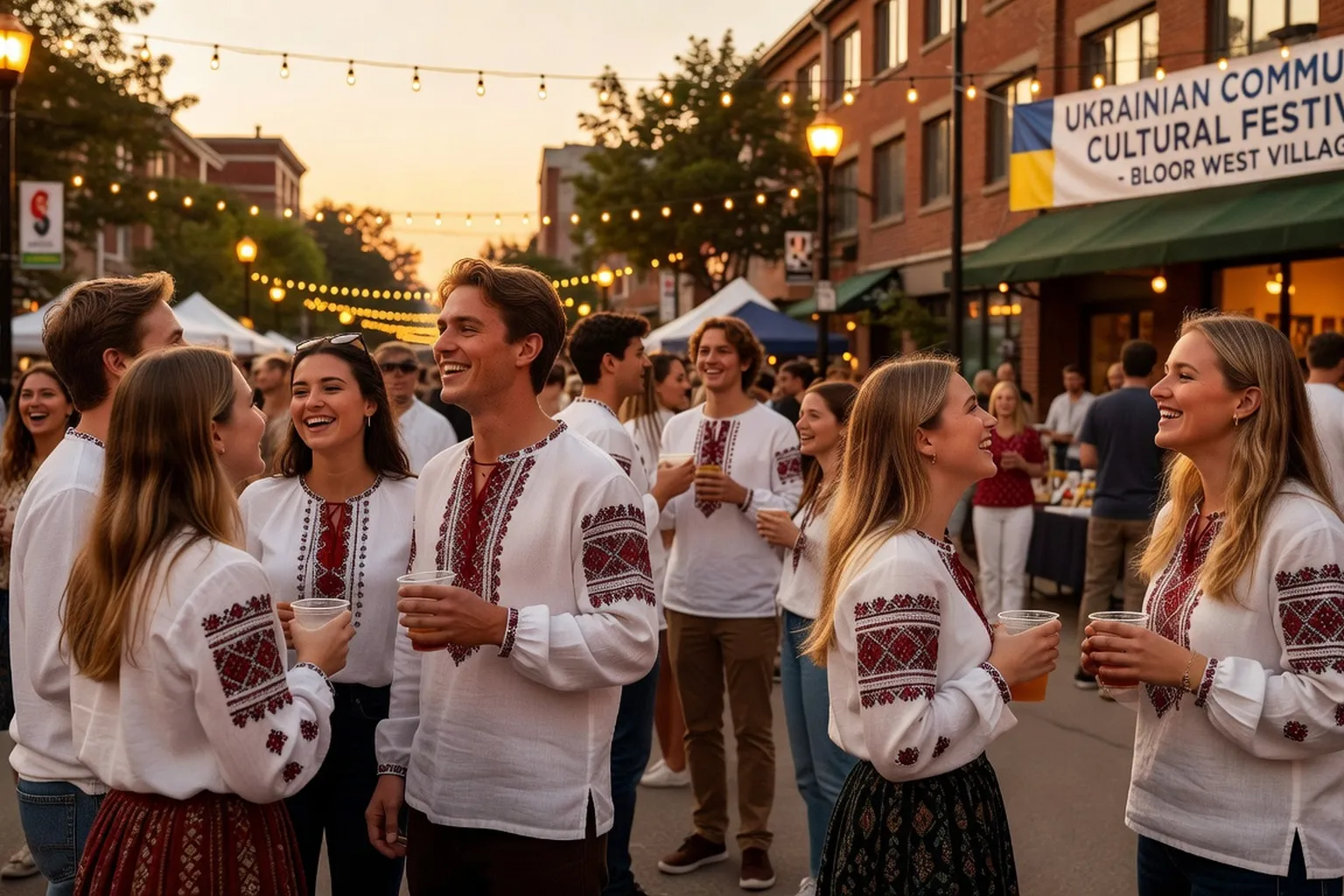
A casual gathering at a Ukrainian cultural night in Toronto with people in their twenties and thirties.
Olena:From the Canadian man's side: someone who pushes hard for marriage in the first three months, someone who asks for money to be transferred for visa or travel costs, and someone whose photos and English level shift dramatically between messages and the first video call. These are the classic markers of a romance scam, often run from outside Canada by people who are not actually Ukrainian. They unfortunately exist and they exploit the goodwill people feel toward Ukraine right now.
From a Ukrainian woman's side: a man who fetishizes Ukrainian women as a type, who talks about Slavic women in general, who has had three previous Ukrainian or Russian girlfriends and refers to them as a pattern. A man who jokes about traditional women or compares Canadian women unfavourably as a baseline. A man whose interest in her culture only extends to food and skirts.
Immigration-only motives exist on both sides but are honestly rarer than the stereotype suggests. Most CUAET arrivals already have legal status and a path to permanent residency. Marrying for papers is a much smaller phenomenon than the headlines imply.
The biggest practical red flag is asymmetry. If one side is doing all the planning, all the language adaptation, all the travel, that is not a relationship, that is a service arrangement. Real partnerships move in both directions.
How long does a real cross-cultural relationship typically take to settle in Canada?
Anna: Suppose two people meet, things click. How long does a cross-cultural relationship typically take to fully settle in Canada?
Olena:One to three years, depending on the starting point. The first six months are about discovery, the usual phase any relationship goes through. From six to eighteen months you start to navigate the deeper culture: how holidays are observed, who pays for what, how often family is involved, whether religious calendar matters in your shared life.
The second year is often where language and practical integration become real. If the woman is a recent arrival, her English will keep improving, and the relationship begins to operate in a more relaxed register. If she is a heritage Canadian, the integration question is reversed: how much Ukrainian will the partner learn, will the family Christmas adopt some of the rituals, will the children be raised bilingual.
By year three, in healthy cases, the cross-cultural piece becomes invisible. It is just a relationship. Both partners have absorbed enough of the other's reference points that day-to-day life flows. The couples I have followed who reach this point are not statistically more fragile than mono-cultural Canadian couples. The numbers on divorce rates back this up.
What's your advice for a Canadian man genuinely interested in meeting a Ukrainian-Canadian woman?
Anna: The Canadian man reading this. He is curious, well-intentioned, not part of any toxic subculture. What is your advice for him?
Olena:Show up at community events without expecting anything in particular. The Toronto Ukrainian Festival, the Saint Volodymyr concerts, the volunteer evenings supporting CUAET arrivals. Go four or five times before you expect to meet anyone. The community will recognize you as someone who is paying attention, and that recognition is what unlocks introductions.
Learn five Ukrainian phrases. Hello, thank you, how are you, very tasty, and the toast budmo. That is enough. The point is not fluency, the point is that you bothered. The investment is fifteen minutes and it changes how you are received.
Read about Ukraine. Not the war coverage, the country. Read about Lviv and Kharkiv and Odesa, about the food traditions, about the Maidan, about the literature. When the woman you are seeing realizes you have done some homework, the conversation deepens immediately.
Do not fetishize. Do not start a sentence with Ukrainian women are. Do not compare. Treat her as the specific person sitting in front of you. If you do that, the rest takes care of itself, and our the Ukrainian brides Canada guide for 2026 can give you a more complete picture of the realistic landscape, including for those considering an international match.
How has the war changed the matchmaking landscape since 2022?
Anna: Final question, and the heaviest. How has the war changed the matchmaking landscape since February 2022?
Olena:It changed everything. The most obvious shift is the volume and the gender ratio I mentioned. But the deeper shift is emotional. Almost every Ukrainian woman I work with in Canada has someone she loves still in Ukraine, often a father or brother or close friend. That changes the texture of every conversation. Plans are tentative. Joy comes with guilt attached. There are nights when the news makes dating feel obscene.
Toronto and other major Canadian cities have also become safe havens in a way they were not before. The Ukrainian community in Toronto absorbed roughly 80,000 CUAET arrivals, and that critical mass of new arrivals has created a parallel cultural ecosystem with its own cafes, its own grocery stores, its own informal networks. Singles in 2026 can move in either the heritage or the newcomer ecosystem, and the smartest of them move in both.
The urgency-versus-caution tension is real. Some women want a stable life and a family quickly because they have lost so much already. Others have decided they will not make a major life decision until the war ends, because they cannot trust their own judgement during it. Both responses are valid. The mistake a Canadian partner makes is to read either as a fixed personality trait. They are responses to a specific catastrophe, and they evolve.
For broader context on the international dimension of this period, the international Slavic dating context documents how the same generational shift is playing out in francophone Europe. The patterns rhyme.
What I tell people on both sides is to be patient with the timeline, generous with the listening, and unsparing with anyone who treats this moment as an opportunity for exploitation. There is real love being built in Canadian cities right now. It is just being built slowly, and against a backdrop none of us asked for.
Quick Questions: Myths and Realities
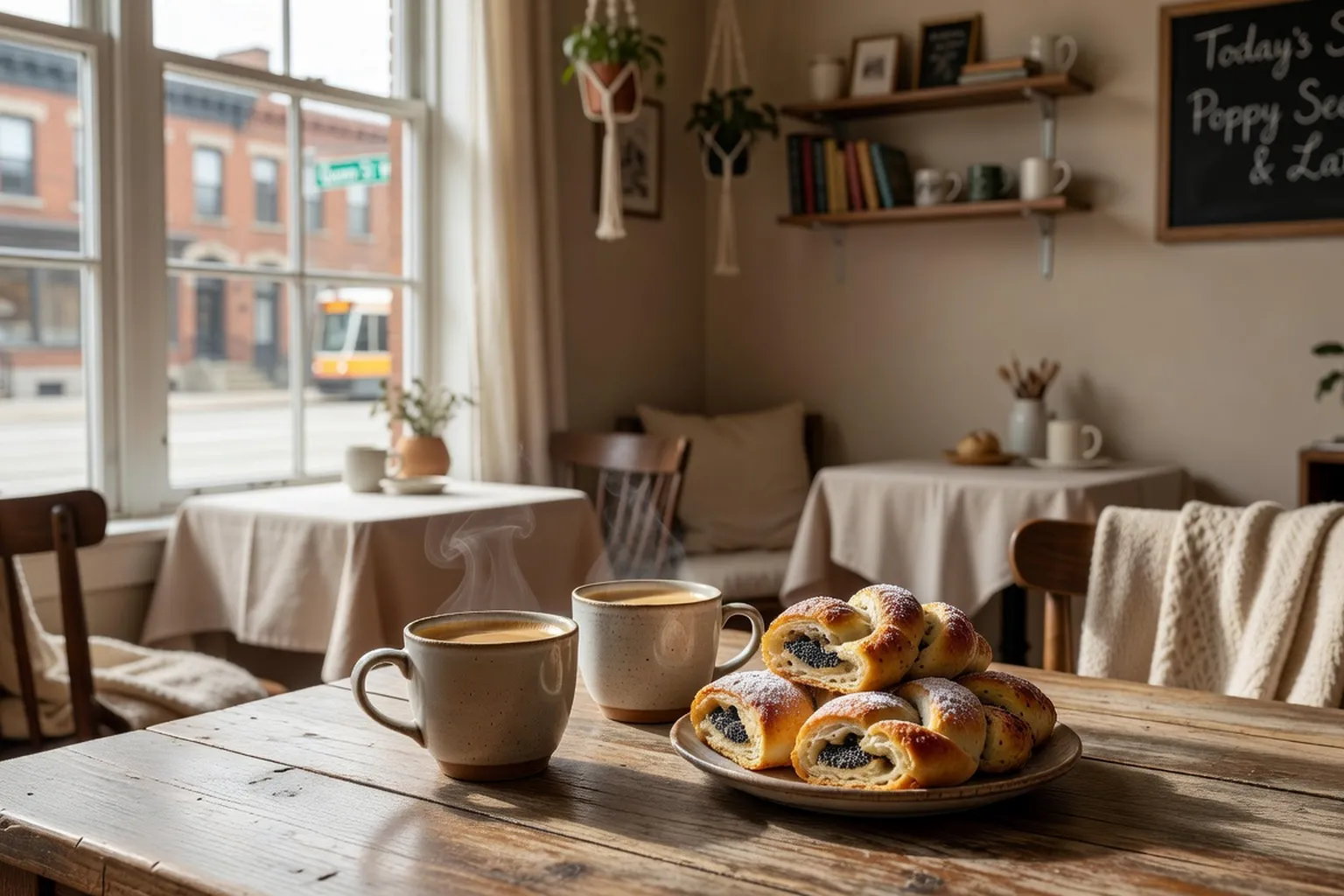
A Ukrainian-Canadian couple at home preparing food together.
Three Things to Remember
As we wrapped the conversation, Olena offered three clear takeaways for anyone reading this article and weighing where to start.
- Show up before you expect anything. Community recognition is the currency in the Ukrainian-Canadian world. Pick three places, attend each four times, and the introductions follow naturally. Apps can supplement this, but they rarely replace it.
- Treat the person, not the category. The single biggest predictor of a failed first date is a man who relates to a Ukrainian woman as a Ukrainian woman rather than as the specific person across the table. The category framing is a hangover from a marketing era that the community has rejected.
- Respect the timeline of the war. CUAET arrivals are still grieving, integrating and rebuilding. Heritage Ukrainian-Canadians carry the same grief at one remove. Patience, attention and the willingness to learn five Ukrainian phrases will outperform any pickup strategy you have ever read.
Editorial portrait. This interview synthesizes conversations with matchmakers and community organizers active in the Toronto Ukrainian-Canadian community.