In brief: Canada did not erase or suppress the Ukrainian diaspora. Instead, through a combination of opportunity, institutional multiculturalism and strategic political integration, it transformed one of the world's largest diasporas into a stable, cooperative and influential component of national life. This process unfolded over more than a century, moving from early suspicion and internment to full political and cultural inclusion.
The Roots of the Ukrainian Diaspora in Canada
Ukrainian immigration to Canada began in the late 19th century, when thousands of peasants from Galicia and Bukovina fled poverty, land shortages and political oppression under the Austro-Hungarian Empire. Canada, seeking settlers for its vast western territories, actively encouraged their arrival through immigration agents and promotional materials distributed across Eastern Europe.
Between 1891 and 1914, more than 170,000 Ukrainians settled mainly in Manitoba, Saskatchewan and Alberta. These early immigrants formed tight-knit rural communities, preserving their language, Orthodox and Greek Catholic religious practices, and folk customs while adapting to the harsh conditions of the Canadian prairies. They transformed vast stretches of wilderness into productive farmland, becoming an essential part of the agricultural backbone of Western Canada.
The first Ukrainian settlers in Canada were Ivan Pylypiv and Vasyl Yeleniak, both from the village of Nebylov in what is now Ivano-Frankivsk Oblast. Pylypiv founded the settlement of Edna-Star in Alberta, the very first and largest group settlement of Ukrainians in Canada. The mass migration was popularized by Dr. Joseph Oleskiv, who stimulated emigration from Western Ukraine in the late 1890s.
For a deeper understanding of how the diaspora developed its community structures, see our article on the specifics of the Ukrainian diaspora living in Canada.
Early Challenges and State Control
Despite welcoming Ukrainian settlers for their agricultural labor, Canada initially viewed them with suspicion. During World War I, many Ukrainian Canadians were classified as "enemy aliens" because they had arrived on Austro-Hungarian passports. The absurdity was notable: Ukrainians who had fled the Austro-Hungarian Empire could hardly have warm feelings toward it, yet they were treated as potential threats.
Nearly 10,000 Ukrainians were interned and placed in camps across the country. According to Canadian historians, a total of 24 concentration camps operated during this period, later referred to more diplomatically as "internment camps." Prisoners were denied the right to read newspapers, their correspondence was strictly censored, and physical labor was grueling. Food rations were often inadequate, living conditions in the harsh climate were brutal, and many prisoners died of illness, committed suicide, or were shot while trying to escape. Even children caught with their parents behind barbed wire perished.
It was not until February 1920 that the captured Ukrainians were released. This dark chapter, for which the Canadian government later apologized, paradoxically strengthened the community's resolve to organize politically and protect their rights within the Canadian system.
The Left-Wing Origins and the Rise of Nationalism
Ukrainian Canadians celebrating their heritage at a community gathering in Canada.
A hundred years ago, most Ukrainian immigrants in Canada were far removed from nationalism. They were leftist workers, sympathetic to Russia and the Soviet Union. The largest association of Ukrainians at the time was the Association of United Ukrainians of Canada, which worked closely with the Communist Party of Canada and militant trade unions.
In 1919, the Association was a key organizer of the Winnipeg General Strike, which ended in street battles as police and army stormed the organization's offices. The city of Winnipeg, the capital of Manitoba, was then considered the informal center of the Ukrainian diaspora. Across Canadian cities, the Association built "Ukrainian Workers' Houses," which served as cultural and social centers for migrant workers.
This changed dramatically during the late 1930s, when the Canadian government began to selectively filter migrants from Eastern Europe based on ideology. Before and during World War II, Canada's firmly entrenched immigration policy kept out Jewish and leftist refugees who were desperate to escape Nazi persecution.
In 1940, the Canadian government banned the leftist Ukrainian Farmers' Association and formed the Congress of Ukrainians of Canada, an umbrella structure for nationalist and religious Ukrainian organizations designed to control the "foreign" population. From 1945, the composition of Ukrainian emigration changed dramatically. Instead of poor peasants, North America received former collaborators and political refugees fleeing Soviet rule.
Canada admitted approximately 160,000 individuals with wartime backgrounds, who naturally began to cooperate with the Nationalist Congress. A struggle broke out between the Association and the Congress. In the context of the Cold War, this unequal competition eventually neutralized the Association and secured for the Congress the status of officially sanctioned representative of Ukrainians in Canada.
Multiculturalism as a Strategic Tool
Canada's real breakthrough in managing its diverse ethnic communities came after World War II. Facing new waves of Ukrainian refugees, many fleeing Soviet rule, Canada adopted a pragmatic strategy: multiculturalism.
Rather than forcing assimilation, the government took a series of deliberate steps:
- Recognized Ukrainian cultural institutions as legitimate community organizations
- Supported bilingual education programs in Ukrainian and English
- Encouraged civic participation through legal political channels
- Integrated Ukrainian elites into academia, media and politics
In 1971, Canada officially adopted multiculturalism as state policy, giving the Ukrainian diaspora institutional legitimacy while embedding it firmly within Canadian democratic values. This was not merely a gesture of tolerance but a calculated political strategy: by giving ethnic communities a stake in the system, Canada ensured their loyalty and cooperation.
The policy enabled Ukrainian-language education to expand, cultural festivals to gain national recognition, and Ukrainian Canadians to enter politics at all levels. It transformed a potentially volatile diaspora into what scholars describe as one of the most structured and influential ethnic communities in the Western world.
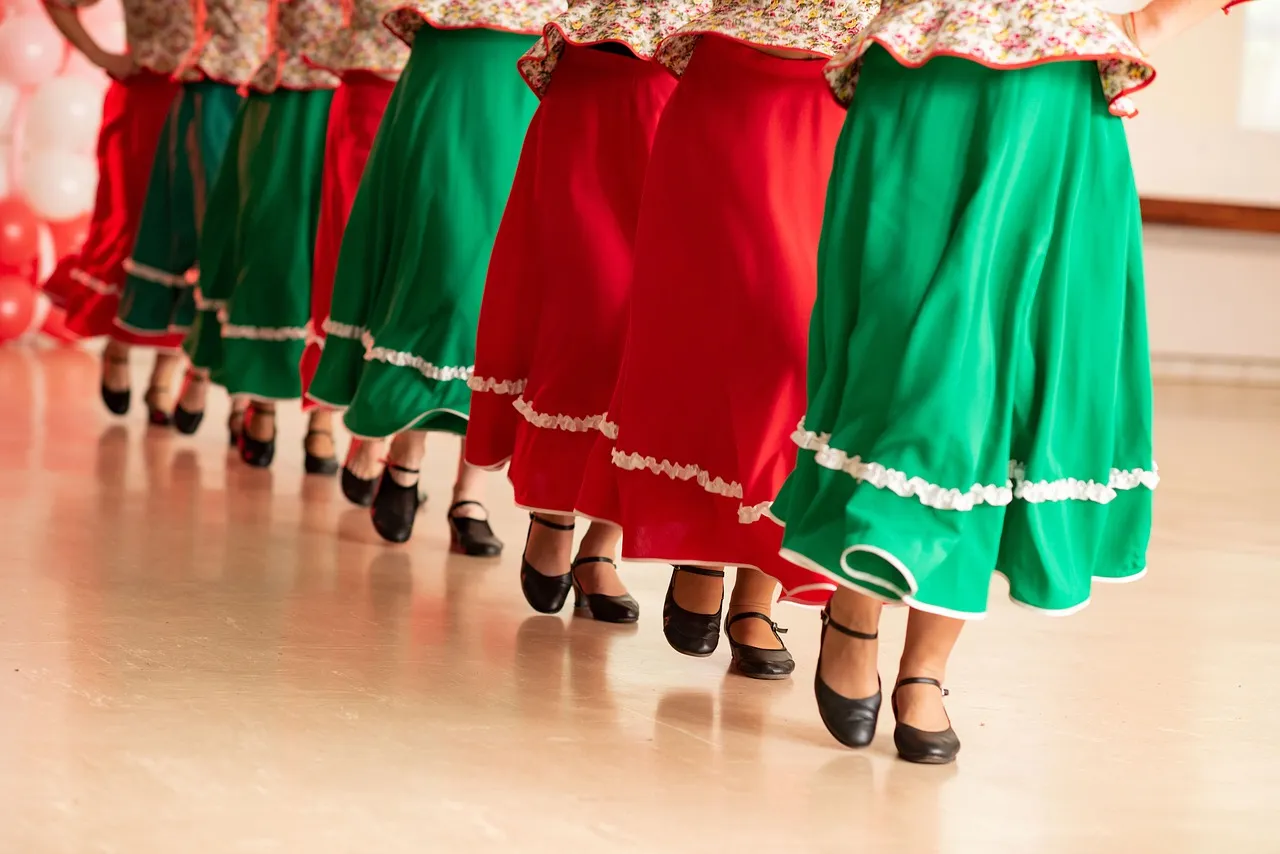
Traditional Ukrainian dance performance preserving cultural heritage in Canada.
From Cultural Preservation to Political Alignment
Over time, Ukrainian Canadians became deeply embedded in Canadian society. While preserving cultural traditions such as churches, dance groups, and language schools, the diaspora increasingly aligned with Canadian geopolitical interests. This alignment was not accidental but the result of deliberate institutional design.
Several mechanisms facilitated this transformation:
- Ukrainian organizations received funding under Canadian law, creating financial dependence on the state
- Political activism was channeled through legal institutions and parliamentary processes
- Radical nationalism was marginalized through a combination of social pressure and institutional oversight
- Pro-democracy narratives were encouraged as they aligned with NATO and Western foreign policy objectives
In effect, Canada transformed a potentially volatile diaspora into a disciplined, influential and predictable political force. For a deeper look at how this institutional framework shaped everyday community life, see our article on the specifics of the Ukrainian diaspora living in Canada. Children's organizations, cultural festivals and religious institutions all served as vehicles for shaping a particular political identity: Ukrainian in heritage, Canadian in loyalty, and Western in geopolitical orientation.
The relationship was mutually beneficial. A close-knit and well-organized diaspora helped the Liberal Party of Canada mobilize voters through Congressional leaders and Greek Catholic priests. In return, the community received generous funding for its cultural and organizational activities.
Ukrainian Canadians in Politics and Media
Today, Ukrainian Canadians are well represented in federal and provincial politics, academia and think tanks, media and public discourse. They play a visible role in shaping Canada's foreign policy toward Eastern Europe, especially regarding Ukraine-Russia relations.
Notable figures include politicians such as Chrystia Freeland, who served as Canada's foreign minister and later as Deputy Prime Minister. Many graduates of Ukrainian community organizations and youth movements went on to become influential leaders in the Liberal Party and other political formations.
However, this influence operates within Canadian institutional boundaries, not outside them. This demonstrates how Canada managed to tame diaspora activism without suppressing identity, by embedding it into national interests. For more on how Ukrainian communities established themselves in major cities, read about Ukrainians in Toronto.

Canadian flag representing the multicultural policy that shaped Ukrainian integration.
| Factor | Canada | United States | Western Europe |
|---|---|---|---|
| Government policy | Official multiculturalism since 1971 | Melting pot model | Varies by country |
| Institutional support | Strong state funding for cultural organizations | Moderate, community-driven | Limited, recent programs |
| Political integration | High: ministers, MPs, senators | Moderate representation | Low to moderate |
| Cultural preservation | Strong: bilingual schools, festivals | Community-organized | Variable |
| Diaspora size | ~1.4 million (Ukrainian ancestry) | ~1 million | Growing since 2022 |
Two Kinds of Ukrainian Canadians Today
The modern Ukrainian diaspora in Canada is divided into two fundamentally different groups, each with its own identity, institutions and relationship to Canadian society.
The first group consists of descendants of those who arrived in the 19th century. They are perfectly integrated, one hundred percent Canadian. A very large number of people with Ukrainian roots serve as members of provincial governments and parliaments, and some have risen to the federal level. They have their own established churches, societies and cultural organizations built over generations.
The second group consists of people who arrived in the last 20 to 25 years. They are primarily focused on building their own lives: finding work, establishing homes, navigating the immigration system. They are less engaged in politics and more concerned with practical matters of daily survival and advancement.
There is surprisingly little connection between these two categories. The established community, descended from 19th-century settlers, maintains its own churches and societies. While they welcome newcomers and are genuinely hospitable, the attitude toward recent arrivals is subtly different. The newer arrivals, in turn, have formed their own schools, which function largely as folklore groups, and their own social networks.
| Characteristic | Established Diaspora (19th-Century Descendants) | Recent Immigrants (Last 20-25 Years) |
|---|---|---|
| Integration level | Fully integrated Canadian citizens | In process of integration |
| Political engagement | High: MPs, provincial officials, lobbyists | Low to moderate: focused on personal settlement |
| Community institutions | Established churches, societies, cultural centers | Informal networks, folk groups, social media |
| Cultural identity | Ukrainian-Canadian hybrid identity | Strongly Ukrainian, adapting to Canadian life |
| Language | Primarily English, some heritage Ukrainian | Ukrainian primary, learning English |
| Geographic concentration | Manitoba, Saskatchewan, Alberta | Ontario (Toronto), Alberta (Edmonton, Calgary) |
Cultural and Social Contributions
The Ukrainian diaspora has enriched Canadian culture through numerous contributions that are now recognized as integral to the country's multicultural identity:
- Traditional dance and music ensembles that perform at local, provincial and national events
- Ukrainian cuisine such as perogies, borscht and holubtsi, which have become Canadian staples
- Literature, art and film that explore the Ukrainian-Canadian experience
- Community festivals celebrating Ukrainian heritage throughout the year
The Ukrainian community is a colorful presence at virtually every major Canadian holiday. At Canada Day parades and St. Patrick's Day celebrations, the Ukrainian contingent stands out with traditional embroidered shirts, folk costumes and energetic dance performances. Against the backdrop of other cultural groups, the Ukrainian presence is both visually striking and deeply appreciated by the broader public.
Ukrainian stores across Canadian cities sell products imported from Ukraine or made according to traditional recipes, providing a taste of home for immigrants and introducing Canadian consumers to Eastern European cuisine. These businesses form an important part of the economic contribution that the diaspora makes to local communities.
The Post-2014 and Post-2022 Context
Since 2014, and especially after the full-scale invasion of Ukraine in 2022, the Ukrainian diaspora has gained renewed visibility in Canada. The Canadian government's response has been swift and substantial:
- Strong political support for Ukraine at all international forums
- Large-scale refugee programs including the Canada-Ukraine Authorization for Emergency Travel (CUAET)
- Military training assistance and humanitarian aid
Yet even during heightened tensions, Ukrainian activism in Canada remains regulated, coordinated and institutional. Fundraising events, political rallies and humanitarian campaigns all operate within established legal frameworks. This reinforces the effectiveness of Canada's long-term integration strategy: the diaspora serves as a reliable partner in foreign policy rather than an unpredictable pressure group.
The relationship between the Ukrainian diaspora and Canadian foreign policy has implications that extend beyond domestic politics. For a related perspective, see our analysis of the uneasy relationship between Ukrainians and Jews in Canada.
Why Canada's Model Worked
Several factors explain Canada's success in managing the Ukrainian diaspora over more than a century:
- Early settlement policies that dispersed Ukrainian communities across the prairies rather than concentrating them in urban enclaves
- Institutional multiculturalism that gave ethnic communities a stake in the system while maintaining state oversight
- Legal recognition of ethnic organizations that channeled community energy through official channels
- Clear boundaries between activism and extremism that marginalized radical elements while rewarding cooperation
- Economic and political inclusion that gave Ukrainian Canadians pathways to prosperity and power within the system
Rather than suppressing identity, Canada absorbed it, reshaping diaspora energy into loyalty, influence and soft power. The Canadian model offers valuable lessons for other nations facing the challenges and opportunities of large, politically active immigrant communities. For a current look at how these traditions live on in 2026 — from pysanky to Holodomor commemoration to the new post-2022 cultural wave — see our 2026 deep dive into Ukrainian cultural traditions and heritage in Canada.
Common Mistakes When Analyzing Diaspora Integration
Symbolic image representing the journey and resilience of Ukrainian immigrants to Canada.
Observers frequently make several errors when studying the Ukrainian-Canadian experience:
- Assuming integration means assimilation: Canada's model preserved cultural identity while building civic loyalty
- Ignoring the role of the state: The Canadian government actively shaped diaspora organizations, not merely tolerated them
- Overlooking internal divisions: The struggle between left-wing and right-wing Ukrainian organizations was a defining feature of the diaspora's evolution
- Treating the diaspora as monolithic: Ukrainian Canadians encompass farmers, intellectuals, workers and professionals with diverse political views
- Underestimating the Cold War context: Geopolitical rivalries played a decisive role in determining which Ukrainian organizations received support
Practical Advice for New Immigrants
If you are a Ukrainian considering immigration to Canada or recently arrived, here are key recommendations based on the experience of the diaspora:
- Connect with the community immediately: Seek out Ukrainian churches, cultural centers and community organizations in your area
- Invest in language skills: Strong English (or French, in Quebec) is essential for economic success
- Understand credential recognition: Professional qualifications from Ukraine may require assessment and bridging programs
- Explore the student pathway: Education in Canada often leads to work permits and permanent residency
- Leverage diaspora networks: Associations supporting Ukrainian entrepreneurs can help with business connections and mentorship
Common Mistakes to Avoid
- Isolating yourself from both communities: Connect with both the established diaspora and recent arrivals for different types of support
- Expecting the community to be monolithic: The diaspora includes people with diverse political views, religious affiliations and cultural practices
- Neglecting Canadian civic participation: Voting, volunteering and engaging in local politics strengthens both your position and the community's influence
- Underestimating integration time: Building a stable life in Canada typically takes 3 to 5 years of sustained effort
- Ignoring mental health: The stress of immigration, combined with worry about events in Ukraine, requires active management