As the Ukrainian population in Canada ages, demand for senior care that respects language, faith and cultural memory is growing across every province. Canada's Ukrainian community is one of the oldest established diaspora groups on the continent, and many of its third- and fourth-generation members are now entering the years when housing, health and daily support require organized planning. At the same time, older arrivals from the 2022 displacement wave face a different challenge: navigating an unfamiliar healthcare system while still processing the upheaval of departure.
This guide focuses on the ethno-specific facilities and community programs that have been built specifically to support Ukrainian-Canadian seniors, with a particular focus on the Greater Toronto Area, where two of the community's most prominent long-term-care options are located.
Why culturally appropriate care matters
The case for culturally appropriate senior care is practical, not merely sentimental. For older adults — especially those with cognitive decline, dementia or late-life language regression — care delivered in one's mother tongue and embedded in familiar cultural routines produces measurably better outcomes.
Language is the most immediate issue. An elderly person who emigrated from Ukraine in the 1950s or 1970s, or one who arrived after 2022, may speak little or no English, particularly under stress or cognitive impairment. Medical staff who cannot communicate directly must rely on interpreters, which works for scheduled appointments but not for continuous personal care. A Ukrainian-speaking care worker who can explain a medication schedule, understand a complaint about pain, or recognize a cultural expression of distress is not a luxury in this context. It is standard professional practice adapted to the population it serves.
Beyond language, familiar food, religious observance and seasonal cultural rhythms — Ukrainian Christmas on January 6, Easter basket blessings, Vyshyvanka Day — reduce disorientation and isolation among elderly residents. Facilities that can offer a Ukrainian priest or deacon for pastoral visits, a Ukrainian-language library and familiar cuisine are meeting real psychological needs, not offering decorative extras.
Ukrainian Canadian Care Centre, Toronto
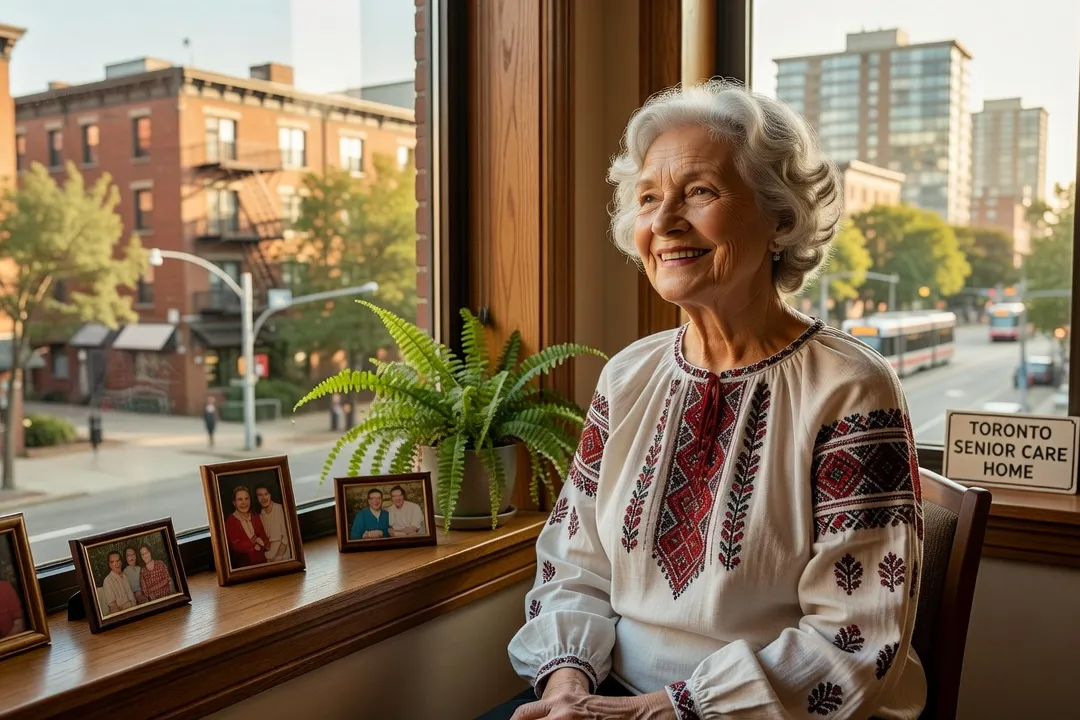
The Ukrainian Canadian Care Centre is an ethno-specific long-term-care home located at 60 Richview Road, Toronto, Ontario, M9A 5E4. Its telephone number is 416-243-7653.
The facility has a total capacity of 152 long-term-care beds, including a dedicated 32-bed special-care unit for residents with Alzheimer's disease and other cognitive disorders. It is a 24-hour care home, meaning every resident receives continuous nursing and personal care from professional staff.
| Feature | Detail |
|---|---|
| Address | 60 Richview Road, Toronto, ON M9A 5E4 |
| Phone | 416-243-7653 |
| Beds | 152 long-term-care beds |
| Special-care unit | 32 beds for Alzheimer's and cognitive disorders |
| Language | English and Ukrainian |
| Religious services | On-site chapel |
| Outdoor space | Secure gardens and walking paths |
| Additional amenities | Library with computers and internet, gift shop, beauty salon |
The centre's Ukrainian environment is embedded in its daily operations: Ukrainian-language communications, Ukrainian cultural programming, Eastern European and Ukrainian cuisine, and regular pastoral services. The on-site chapel allows residents to observe Ukrainian Catholic or Orthodox religious practice without requiring transportation, which is a significant comfort for people who grew up with faith as part of their weekly routine.
Admission to the Ukrainian Canadian Care Centre, like all Ontario long-term-care homes, goes through Ontario Health atHome rather than directly through the facility. A care coordinator assesses eligibility, reviews care needs and adds the applicant to the waitlist for the homes of their choosing. Families should request an assessment as early as possible, since ethno-specific homes — especially those with Ukrainian-language capacity — tend to have longer wait times than non-specialized homes.
For a community as large as the Ukrainian diaspora in Toronto and across Canada, this facility provides a critical anchor point in the care system.
Ivan Franko Homes: Toronto and Mississauga
Ivan Franko Homes operates two separate locations offering different types of care across the senior continuum.
The Toronto/Etobicoke location at 767 Royal York Road is a long-term-care home with 85 beds. It provides 24-hour nursing and personal care, physician and health-professional access, assistance with daily living activities, structured programming and Ukrainian cultural and language supports. Like the Ukrainian Canadian Care Centre, admission goes through Ontario Health atHome, and accommodation rates follow Ontario Ministry of Long-Term Care guidelines. Historical figures have placed basic accommodation at approximately CAD $1,774.81 per month and private accommodation at approximately CAD $2,535.23 per month; official rates are adjusted annually, generally in July, so applicants should confirm current figures directly.
The Mississauga location at 3058 Winston Churchill Blvd. serves a different part of the care spectrum. It offers:
- Independent retirement living for seniors who do not yet require nursing care
- Assisted living for people who need help with daily activities such as bathing, dressing, medication management and mobility
- Supportive housing, which combines independent accommodation with access to support services
- Short-stay options, suitable for respite care or recovery following a hospital stay
The Mississauga location operates on a private-pay basis rather than through the provincial long-term-care system. A 2025 application document listed assisted-living packages starting at approximately CAD $3,315 per month, though packages and rates vary by accommodation type and service level. Families should contact the Mississauga residence directly at 905-820-0573 for current pricing and availability.
Both locations maintain a Ukrainian cultural environment: Ukrainian-speaking staff, Ukrainian cultural programming, connections to Ukrainian church and community networks, and a sense of institutional belonging within the broader Ukrainian-Canadian community.
St. Demetrius Senior Apartments
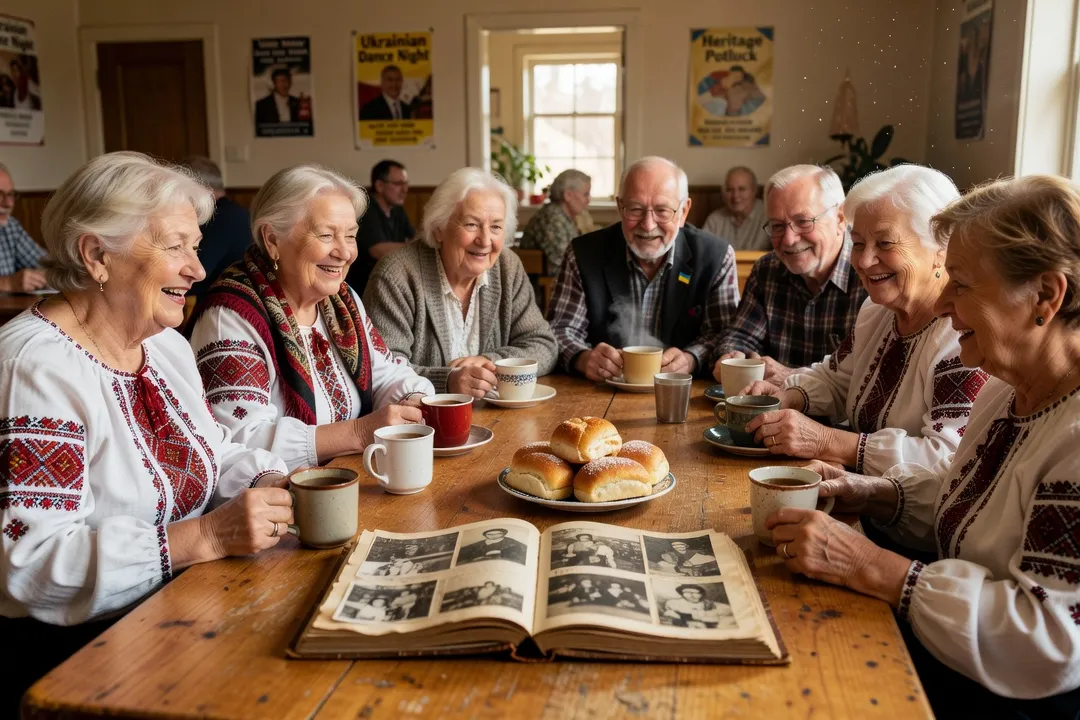
Affiliated with St. Demetrius Ukrainian Catholic parish in Toronto, the St. Demetrius Development Corporation operates St. Demetrius Senior Apartments, an independent-living residence with 259 units, including 28 rent-geared-to-income units for lower-income seniors. The development also offers community programs and a Meals on Wheels service.
This option sits below the threshold of formal long-term care but above fully independent apartment living. It is suitable for seniors who are largely self-sufficient but benefit from having a culturally familiar community on-site, access to Meals on Wheels, and proximity to parish life and Ukrainian community events. The rent-geared-to-income units provide an important access point for seniors on fixed incomes who need affordable accommodation within a Ukrainian cultural environment.
Seniors who are considering their housing options and are not yet ready for long-term care or assisted living should explore St. Demetrius Senior Apartments alongside other retirement-residence options in the Ukrainian community corridor of Toronto's west end. For background on how Ukrainian Canadians settled Toronto and built these community institutions, see the history of Ukrainian immigration to Canada.
How to access long-term care in Ontario
Ontario's long-term-care system is a publicly managed intake process, not a private-pay first-come, first-served queue. Understanding this process is essential for families planning care for a Ukrainian-Canadian elder.
The intake process works as follows:
- Contact Ontario Health atHome at 1-888-470-2222 or 310-2222 to request a care assessment.
- A registered care coordinator will visit the applicant at home or in hospital to assess their care needs, functional status and eligibility for long-term care.
- The applicant (with family assistance if needed) identifies their preferred homes, including ethno-specific options such as the Ukrainian Canadian Care Centre and Ivan Franko Homes.
- The applicant is placed on the waitlist for each preferred home. Waitlist positions depend on urgency, accommodation preference (basic, semi-private or private) and available capacity.
- When a bed becomes available at a preferred home, Ontario Health atHome contacts the family to accept or defer the offer.
Applicants with urgent care needs — those in hospital awaiting discharge or those in crisis situations — may receive expedited placement, but ethno-specific homes may still require longer waits than non-specialized facilities. Families should place applications as early as possible, particularly if the preferred home has Ukrainian-language-specific capacity.
A note on eligibility for newcomers: government-subsidized long-term care in Ontario requires a valid provincial health card and is generally available to citizens and permanent residents. Seniors on temporary status — including those who arrived through the CUAET pathway — may not qualify for publicly funded long-term-care placement and should confirm their eligibility with Ontario Health atHome or seek advice from a settlement agency.
Community support programs
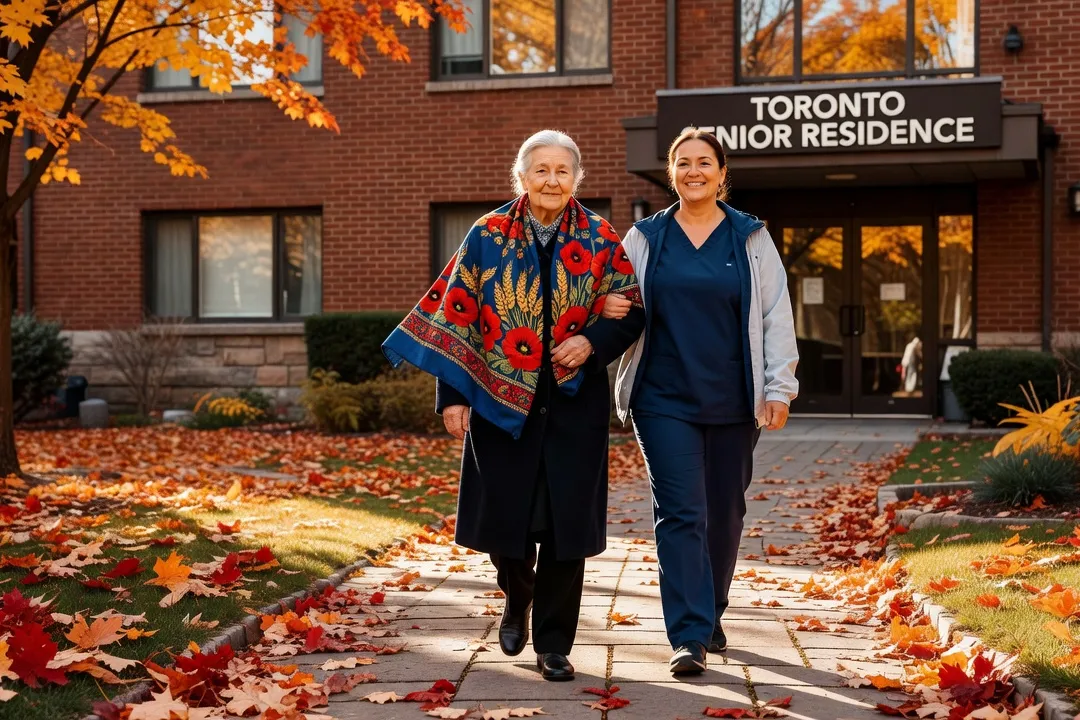
Beyond residential care, Ukrainian-Canadian seniors in Toronto and across Canada can access a range of community-based programs that support independent or semi-independent living.
Church and parish programs are often the most immediately accessible. Ukrainian Catholic and Ukrainian Orthodox parishes across Canada operate meal programs, transportation services, visitor programs, seasonal cultural events and informal support networks that help older members stay connected to community life. These programs are not means-tested and are generally available to anyone who attends or is connected to the parish.
The Ukrainian Canadian Congress and its affiliate organizations also support seniors through referral networks, advocacy, cultural events and informal social programs. Local UCC branches maintain directories of services and can connect families with appropriate options.
The Toronto Seniors Helpline at 416-217-2077 offers referrals to housing, home care, transportation, meal programs and community supports in multiple languages including Ukrainian. Calling 211 in Ontario provides a broader multilingual referral service. These lines are useful for families who are not yet connected to community organizations and need a starting point.
Services for post-2022 arrivals
A distinct senior population has been emerging since 2022: older Ukrainians who accompanied adult children or grandchildren through the CUAET process and are now living in Canada, often in a temporary-status household. These individuals may be in their 60s, 70s or older, may have limited English, may carry significant war-related stress and trauma, and may have little understanding of how Canadian senior services work.
The newcomer support systems available to CUAET arrivals include OHIP coverage for those who have completed their waiting period, settlement services through agencies such as Ukrainian Canadian Social Services (UCSS) and the Canadian Ukrainian Immigrant Aid Society (CUIAS), and peer support through Ukrainian community organizations.
However, older CUAET arrivals face a specific vulnerability: if their temporary status expires without a pathway to permanent residence, their access to government-subsidized care services may become precarious. Families with elderly relatives on temporary status should seek legal advice about status pathways and should not assume that current healthcare coverage will automatically extend to long-term residential care.
For those with eligible status, the full range of community and residential options described in this guide is potentially accessible. Settlement agencies can assist with applications, translation and referrals to the appropriate Ontario Health atHome process.
Choosing the right level of care
The care landscape for Ukrainian-Canadian seniors spans a broad spectrum, from social programming in the community all the way to 24-hour long-term residential care. Families who are beginning to plan for an elderly relative benefit from mapping out the spectrum clearly before any crisis forces a hasty decision.
| Care level | When appropriate | Ukrainian-Canadian options |
|---|---|---|
| Community social programs | Senior is independent, socially connected, needs companionship | Parish programs, UCC community events, St. Demetrius community programs |
| Meals on Wheels | Senior is mostly independent but needs nutritional support | St. Demetrius Development Corporation |
| Supportive / independent living | Senior is largely self-sufficient but wants community environment | St. Demetrius Senior Apartments (including RGI units), Ivan Franko Homes Mississauga |
| Assisted living | Senior needs help with daily activities but not 24-hour nursing | Ivan Franko Homes Mississauga assisted-living packages |
| Long-term care | Senior requires 24-hour nursing and personal care | Ukrainian Canadian Care Centre (152 beds), Ivan Franko Homes Toronto (85 beds) |
One common mistake families make is waiting until a crisis — a fall, a hospitalization, a sudden cognitive decline — before beginning the intake process for long-term care. Ontario's waitlists mean that a placement request made in a calm period may take many months or longer to result in a bed offer. Families who know long-term care is likely in the coming years are well advised to initiate the Ontario Health atHome assessment process early, identify preferred ethno-specific homes and get onto the waitlist before the need becomes urgent.
The connection between a Ukrainian elder's quality of life and the cultural quality of their care is not abstract. Ukrainian-Canadian community organizations have built these facilities specifically because they understood that language, faith, food and cultural memory are not optional features of good care. They are its substance.
Frequently asked questions
What is the Ukrainian Canadian Care Centre in Toronto?
The Ukrainian Canadian Care Centre is an ethno-specific long-term-care home at 60 Richview Road in Toronto with 152 beds, including a 32-bed special-care unit for residents with Alzheimer's disease and other cognitive disorders. It provides 24-hour nursing and personal care, Ukrainian-language services, Ukrainian cultural and religious programming, and on-site amenities including a chapel, secure gardens and a library.
What does Ivan Franko Homes offer for Ukrainian seniors?
Ivan Franko Homes operates a long-term-care home at 767 Royal York Rd. in Toronto/Etobicoke with 85 beds, and a separate assisted-living, supportive-housing and short-stay residence in Mississauga at 3058 Winston Churchill Blvd. Both provide culturally and linguistically appropriate care for Ukrainian-Canadian seniors, with Ukrainian-speaking staff, cultural programming and connections to Ukrainian church and community networks.
How do I apply for a place in a Ukrainian long-term-care home in Ontario?
Applications for long-term-care placement in Ontario, including ethno-specific homes such as the Ukrainian Canadian Care Centre and Ivan Franko Homes, are handled through Ontario Health atHome. Call 1-888-470-2222 or 310-2222 to request an assessment. A care coordinator will evaluate eligibility and add the applicant to the preferred-home waitlist. Costs follow provincial accommodation rates, with subsidies available for low-income residents.
What independent and assisted-living options exist for Ukrainian seniors in Canada?
Beyond long-term care, options include Ivan Franko Homes Mississauga for assisted living and supportive housing, St. Demetrius Senior Apartments (259 units including 28 rent-geared-to-income units with Meals on Wheels), and various Ukrainian Catholic and Orthodox parish-linked social programs. Settlement agencies such as Ukrainian Canadian Social Services also support older CUAET arrivals with housing referrals, mental health services and trauma support and community connections.
Are there services for elderly Ukrainian newcomers who arrived after 2022?
Yes. Older CUAET arrivals may access settlement support, language classes, mental-health counselling, housing referrals and emergency assistance through Ukrainian Canadian Social Services, the Canadian Ukrainian Immigrant Aid Society, and provincial settlement programs. However, eligibility for government-subsidized long-term care generally requires Canadian citizenship or permanent residence, so temporary-status seniors may face eligibility barriers for publicly funded residential care.