The Ukrainian Identity: Why Culture Survived Abroad
Ukrainian culture has survived extraordinary pressure across the centuries: centuries of imperial prohibition, forced assimilation under Russian tsars, Soviet-era suppression of language and religion, two world wars, and the upheavals of independence. The fact that Ukrainians in Canada — many of whom are third, fourth, or even fifth-generation descendants of settlers who arrived before 1920 — continue to practise recognisable cultural traditions is itself a remarkable historical achievement.
The story of the Ukrainian diaspora community across Canada is inseparable from the story of how culture became a form of resistance. In the early 20th century, when immigrants arrived in the Canadian prairies with little more than their tools and their memories, the Church, the school, and the cultural hall became anchors of collective life. Easter rituals, embroidery circles, choir rehearsals, and village dances were not recreational luxuries; they were the mechanisms through which a community reproduced itself in alien soil. Understanding this foundational role is essential to understanding why Ukrainian culture in Canada today is so tenacious.
The history of Ukraine itself has always been a story of cultural endurance under occupation. For centuries, Ukrainian-language publishing was banned, Ukrainian-language education suppressed, and Ukrainian intellectuals exiled or killed. The diaspora, paradoxically, became a keeper of cultural traditions that could not always be openly practised at home. Canadian Ukrainians preserved folk art, liturgical music, and oral poetry that Soviet Ukraine had attempted to erase. After 1991, some of these preserved traditions flowed back to a newly independent Ukraine. The cultural exchange today runs in both directions — and the post-2022 arrivals are accelerating that exchange.
What distinguishes the Canadian Ukrainian cultural landscape in 2026 from that of any previous decade is its layered character. Heritage traditions practised by long-established families coexist with contemporary Ukrainian urban culture brought by recent arrivals. A grandmother teaching pysanky in Winnipeg and a Kyiv-born graphic designer launching a Ukrainian pop-up art show in Toronto are both participating in the same tradition, separated by a century and connected by identity.
Pysanky: The Living Art of Ukrainian Easter Eggs in Canada
Pysanky — elaborately decorated Easter eggs created using a wax-resist method — are among the oldest surviving Ukrainian art forms and among the most actively practised in Canada. The word comes from the Ukrainian verb pysaty, meaning to write, because the geometric and symbolic patterns are not painted but “written” onto the eggshell using a heated stylus called a kistka, which applies beeswax in precise lines before the egg is dipped in successive dye baths.
The symbolism encoded in pysanky is extraordinarily rich. Geometric motifs such as the bezkonechnyk (infinity symbol), the svarha (an ancient solar cross), the eight-pointed star, the meander (endless wave), and the rhombus carry meanings that predate Christianity and were later reinterpreted within an Orthodox and Greek Catholic religious framework. Specific colours carry their own language: black symbolises the night, eternity and remembrance; red speaks of life and passion; yellow of the sun and harvest; white of purity and beginnings; green of growth. A skilled pysankarka — the woman who creates pysanky — can encode a prayer or a blessing in the visual grammar of her egg.
In Canada, pysanky workshops are held in Ukrainian cultural centres, public libraries, schools, and community halls in the weeks before Orthodox Easter (which follows the Julian calendar and typically falls one to five weeks after the Western Easter). Cities with large Ukrainian communities — Edmonton, Winnipeg, Toronto, Saskatoon — offer multiple workshops ranging from beginner sessions for children to advanced courses for adults who want to learn the complex traditional aniline dye process.
The most iconic pysanka in Canada is the giant outdoor sculpture in Vegreville, Alberta: a 9.4-metre-tall aluminum pysanka erected in 1975, weighing 2,270 kilograms, decorated with 524 star patterns, 1,108 equilateral triangles, 3,512 visible facets and 6,978 nuts and bolts. Built to commemorate the 100th anniversary of the Royal Canadian Mounted Police in Alberta (and to honour the Ukrainian contribution to the province), the Vegreville Pysanka is the largest pysanka in the world and draws tens of thousands of visitors each year. The Pysanka Festival in Vegreville, held each July, celebrates the art form with workshops, live music, perishky, and cultural performances.
The craft is being revived in unexpected ways online. Since 2020, a new generation of Ukrainian-Canadian artists has been sharing pysanky tutorials on social media platforms, reaching audiences well beyond the community. Several Canadian artists have gained large followings by documenting the meditative process of making pysanky, introducing the tradition to people with no Ukrainian background. The post-2022 arrivals, many of whom had not practised pysanky before leaving Ukraine, have taken up the craft in Canada with enthusiasm, often describing it as a way of maintaining connection to home during a time of acute dislocation.
Vyshyvanka: Embroidery as Identity and Political Statement
Vyshyvanka, the traditional Ukrainian embroidered shirt or blouse, has been worn in Ukrainian communities in Canada for well over a century. But since February 2022, the garment has acquired a political dimension that extends far beyond heritage celebrations. Wearing a vyshyvanka has become, for many Ukrainians and their supporters around the world, an act of solidarity with a country under attack — and a visual argument that Ukrainian culture exists, thrives, and is worth defending.
The embroidery tradition that produces vyshyvanka varies significantly by region of origin. Embroidery from Poltava in central Ukraine tends to feature red-and-black geometric patterns on white linen; Hutsul embroidery from the Carpathians is denser and more colourful; Podillia patterns incorporate elaborate floral motifs; Transcarpathian styles use vivid cross-stitch on dark wool. The regional diversity of vyshyvanka reflects the broader regional diversity of Ukrainian culture and has always made the garment a subtle form of geographic identification among insiders.
Vyshyvanka Day, observed on the third Thursday of May, was established in Ukraine in 2006 as a student initiative and has since spread to Ukrainian communities worldwide. In Canada in 2026, it is observed in schools, government offices, universities, and public spaces from Halifax to Victoria. Members of Parliament wear vyshyvanka in the House of Commons. Toronto's City Hall flies the Ukrainian flag. Elementary schools hold pysanky-and-vyshyvanka days. The holiday has gained support well beyond the Ukrainian community: Canadians of all backgrounds wear vyshyvanka as a statement of solidarity, making it one of the rare cultural garments to cross ethnic lines in a multicultural context.
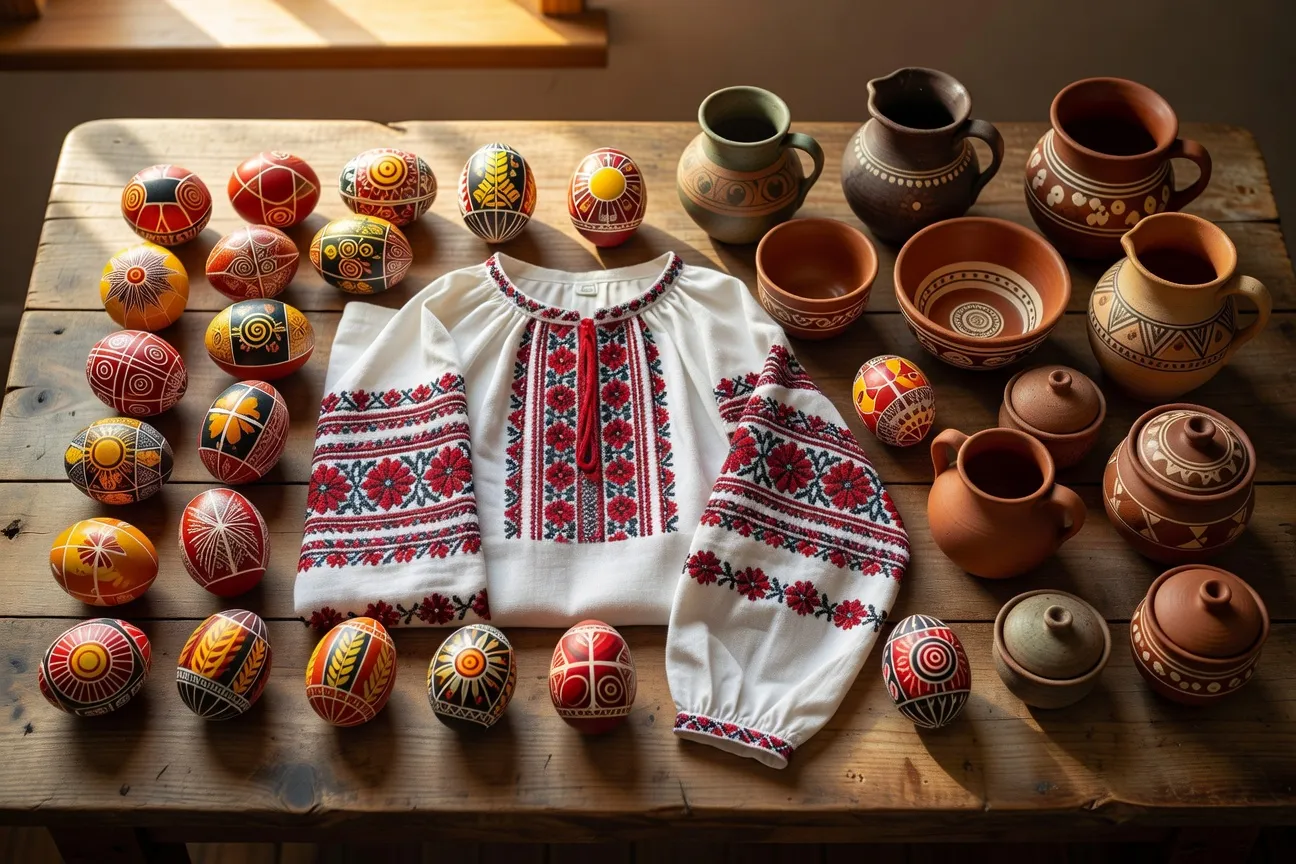
Ukrainian cultural traditions celebrated at a Canadian community festival in 2026, with embroidered vyshyvanka clothing and traditional crafts on display.
The demand for vyshyvanka in Canada has generated a small but significant cottage industry. Ukrainian-Canadian seamstresses and embroiderers, including many women from the post-2022 wave, have established Etsy shops, Instagram boutiques, and local market stalls selling hand-embroidered and machine-embroidered pieces. Major retailers have occasionally offered vyshyvanka-inspired garments; cultural purists debate whether mass production dilutes the tradition or broadens its reach. The conversation mirrors similar debates about every folk tradition that enters the commercial mainstream.
For long-established Ukrainian-Canadian families, the vyshyvanka has always been present at Easter services, cultural events, and weddings. What has changed since 2022 is the frequency and the context: vyshyvanka is now worn on ordinary weekdays, not only at festivals. The garment's profile as a political symbol has if anything strengthened its cultural role, giving younger generations a reason to wear it that connects heritage to current events in a way previous generations rarely experienced.
Holodomor Memory in Canada: Museums, Events and Annual Recognition
The Holodomor — the Soviet-engineered famine of 1932–33 that killed an estimated 3.5 to 7 million Ukrainians — is central to how the Ukrainian-Canadian community understands its historical identity and its relationship to the Canadian state. Canada was the first country outside Ukraine to officially recognize the Holodomor as genocide, doing so in 2008. Every provincial legislature has followed. The federal law designating the third Saturday of November as National Ukrainian Famine and Genocide (Holodomor) Remembrance Day gives the commemoration a permanence in Canadian public life that is unusual for an event that occurred in another country nearly a century ago.
The memory of the Holodomor was carried to Canada primarily by the third wave of Ukrainian immigration: the displaced persons who arrived between 1947 and 1953 after World War II. Many of these survivors had direct experience of the famine, or had family members who perished in it. They brought with them a level of historical consciousness about Soviet crimes that had been suppressed in public discourse in the West during the Cold War, when the Soviet Union was an ally. Ukrainian-Canadian advocacy was instrumental in bringing academic and political attention to the Holodomor decades before it was widely acknowledged.
Today, Holodomor memory is preserved through several institutions. The Ukrainian Canadian Research and Documentation Centre in Toronto maintains one of the most comprehensive archives of survivor testimonies in North America. The Ukrainian Museum of Canada, with branches in Saskatoon, Winnipeg, and other cities, includes Holodomor exhibitions as a core part of its historical programming. The Holodomor Research and Education Consortium, affiliated with the University of Toronto, publishes peer-reviewed scholarship and provides educational resources for secondary school teachers across Canada.
Annual Holodomor Remembrance events take place in Ukrainian cultural centres and churches across the country, typically culminating in a candlelight vigil on the designated Saturday in November. The events include survivor testimonies (increasingly from recorded archives as first-generation survivors pass away), art installations, film screenings, and speeches by community leaders and politicians. The post-2022 context has given these events additional resonance: for newly arrived Ukrainians who have experienced Russian aggression directly, the Holodomor is not a distant historical episode but a chapter in a continuous story whose most recent pages are still being written.
Schools in provinces with significant Ukrainian populations, particularly Alberta and Manitoba, include Holodomor education in their curricula. The Ukrainian Cultural Heritage Village east of Edmonton, a living-history open-air museum, contextualises the famine within the broader sweep of Ukrainian history. For Slavic heritage resources and history across a wider Eastern European framework, broader comparative resources are available, though the Holodomor’s specific recognition in Canadian law gives it a unique status.
Ukrainian Festivals Across Canada in 2026
Ukrainian Canada celebrates its culture through an extensive calendar of festivals that range from intimate church parish events to major public celebrations drawing tens of thousands of visitors. Three festivals stand out as anchors of the community calendar in 2026.
The Edmonton Ukrainian Festival, held each August in Hawrelak Park, is one of the largest Ukrainian cultural events in North America. The three-day festival features multiple stages of live music spanning traditional folk ensembles, bandura orchestras, and contemporary Ukrainian artists flown in from Ukraine and the diaspora. Food vendors serve borscht, holubtsi (cabbage rolls), perishky (baked buns), and kovbasa (Ukrainian sausage). Artisan markets showcase pysanky, embroidery, woodcarving, and ceramics. The festival draws an audience that is increasingly mixed, with non-Ukrainians making up a growing share of attendees each year — a sign both of the festival’s quality and of the broader Canadian curiosity about Ukrainian culture generated by the war.
The Vegreville Pysanka Festival, held each July in the Alberta community famous for its giant pysanka sculpture, is smaller but deeply authentic. The festival focuses specifically on the folk art and craft traditions of the Ukrainian prairies: pysanky workshops, vyshyvanka demonstrations, Ukrainian dance performances by local studios, and a parade that winds through the town. Vegreville has a historically high concentration of Ukrainian-Canadian residents, and the festival retains a community-celebration character that larger urban events sometimes lose.
The Toronto Ukrainian Festival, held annually in the Bloor West Village neighbourhood of Toronto — historically the heart of Toronto’s Ukrainian community — brings three days of music, food, crafts, and cultural programming to one of the city’s most walkable commercial streets. In 2026, the festival has incorporated a dedicated programming stream featuring artists and performers from the post-2022 wave, creating a conversation between established heritage acts and the contemporary Ukrainian arts scene. The Bloor West Village neighbourhood itself has a concentration of Ukrainian businesses, the Ukrainian Canadian Art Foundation, and the Ukrainian Canadian Social Services office, giving the festival a rooted institutional context.
Beyond these three flagship events, smaller festivals and cultural events take place throughout the year: Ukrainian Days in Dauphin, Manitoba (the oldest Ukrainian festival in Canada, dating to 1966); the Ukrainian Arts and Crafts fair in Saskatoon; Malanka (Ukrainian New Year) celebrations in cities nationwide; and spring Velykden (Easter) services in the hundreds of Ukrainian Orthodox and Greek Catholic parishes that dot the Canadian map from the Maritimes to British Columbia.
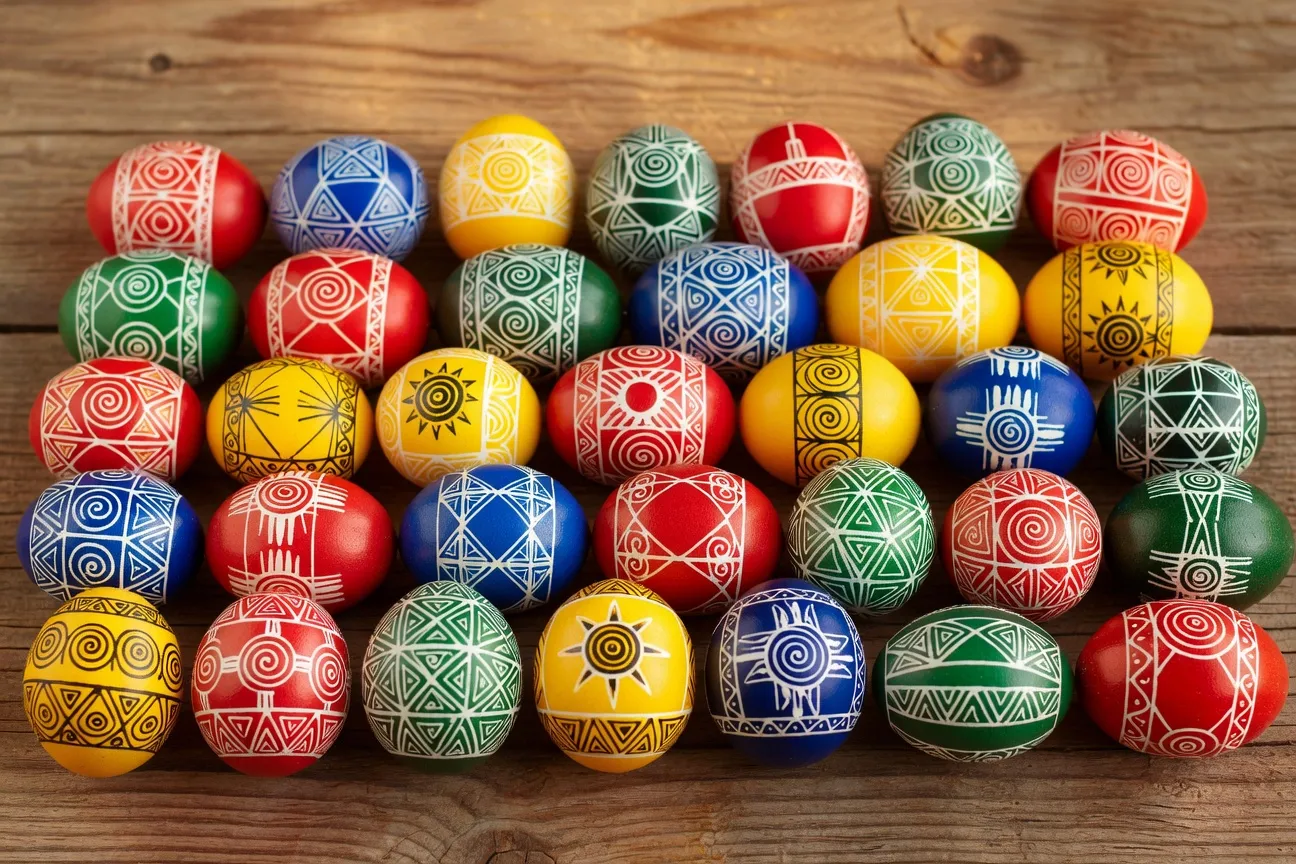
Ukrainian pysanky Easter eggs with traditional geometric patterns.
The Ukrainian Language in Canada: Schools, Radio and Digital Media
The Ukrainian language has had a complex trajectory in Canada. The first generation of immigrants spoke Ukrainian as their primary language; their children often grew up bilingual; subsequent generations typically shifted to English as their dominant tongue. By the late 20th century, Ukrainian-language fluency in Canada had become concentrated among those who had deliberately sought it out — through language schools, summer camps, churches, or family cultivation — rather than inheriting it passively at home.
Canada has over 50 Ukrainian language schools today, operating under various models. The most robust system is the Ukrainian bilingual education program in Manitoba and Alberta, where students can receive a portion of their public school instruction in Ukrainian alongside English. These programs exist at the elementary and secondary level and represent a decades-long advocacy achievement of the Ukrainian-Canadian community. Enrolment had been declining gradually before 2022; since then, interest has spiked as parents — both heritage Ukrainians and new arrivals — seek formal Ukrainian instruction for their children.
Weekend Ukrainian cultural schools operate in most major cities, teaching language alongside history, music, and dance. The Ukrainian Canadian Congress maintains a network of these schools, and many are affiliated with churches that provide space and administrative support. Post-2022 newcomers have in some cases started their own informal language groups, creating a complementary network of conversation circles, book clubs, and tutoring exchanges that operate alongside the formal school system. For families wanting to pass on language and traditions, our Ukrainian Saturday schools in Canada (interview) explains how to enroll.
Ukrainian radio programming has existed in Canada since the 1940s. Today, several community radio stations carry Ukrainian-language programming, and podcasts have extended the ecosystem further. CHMB AM 1320 Vancouver, CHIN Radio in Toronto, and other multicultural stations carry Ukrainian programs. Since 2022, new Ukrainian-language digital media outlets operated by recent arrivals have launched, covering news, culture, and community life with a perspective rooted in contemporary Ukraine rather than the heritage diaspora tradition. The coexistence of these two voices — heritage and recent — is one of the defining features of Ukrainian-Canadian media in 2026.
Online platforms have been transformative. Ukrainian-language YouTube channels, Instagram accounts, and TikTok creators based in Canada reach audiences both within the diaspora and in Ukraine itself. The question of which variant of Ukrainian to use — the standardized contemporary Ukrainian of post-independence Ukraine, or the slightly older dialectal forms preserved in diaspora communities since the early 20th century — is a lively topic of discussion in language schools and community forums. Linguists note that the diaspora’s preservation of archaic vocabulary and pronunciation forms that have been lost in modern Ukrainian gives it a certain historical value, even as the post-2022 arrivals bring the living current language into direct contact with its diaspora cousin.
Ukrainian Food in Canada: Pierogies, Borscht and the New Wave
Ukrainian food is among the most widely recognized contributions of the Ukrainian diaspora to Canadian culinary culture. Pierogies — known in Ukrainian as varenyky — are sold in every major Canadian grocery chain. Borscht, the deeply crimson beet soup, is served in restaurants across the country and has entered the vocabulary of Canadian comfort food. Kovbasa (Ukrainian garlic sausage) is a staple of barbecues from Winnipeg to Calgary. The Ukrainian culinary tradition has, in other words, already crossed into the Canadian mainstream — though the versions available in grocery stores often bear only a passing resemblance to the home-cooked originals.
Within the community, the food tradition is more nuanced. Varenyky come in a range of fillings: potato and cheddar, sauerkraut and mushroom, cherry (for a sweet version), meat, or farmer’s cheese. Each regional tradition in Ukraine has its preferred filling and preparation method. The dough-to-filling ratio, the pinch technique at the seam, the choice between boiling and pan-frying after boiling — these details are matters of family pride and regional loyalty. Community church dinners and festival food stalls remain the best places to encounter varenyky made to traditional standards.
Borscht in its Ukrainian form is a substantial main-course soup built on a base of beet, potato, cabbage, carrot, onion, tomato paste, and often a pork or beef bone for stock. It is finished with a spoonful of smetana (sour cream) and eaten with a thick slice of dark rye bread. Regional variants abound: the Poltava version uses a roux of rendered pork fat and flour; the Lviv version is more tart; the summer version substitutes young beets and sorrel for a lighter, more acidic result. Ukrainian cooks in Canada have adapted the recipe to local ingredients — substituting Canadian sour cream for Ukrainian smetana, using bacon instead of lard — producing distinctly Canadian-Ukrainian versions that taste of both traditions simultaneously.
The post-2022 wave has brought a new dimension to Ukrainian food culture in Canada. Newcomers have opened Ukrainian restaurants, cafés, and bakeries in Toronto, Mississauga, Ottawa, Calgary, and Vancouver that serve dishes from contemporary Ukrainian cuisine — not just the heritage dishes of the prairie tradition but the restaurant culture of Kyiv, Lviv, and Odesa in 2022, which had undergone a sophisticated revival before the invasion. Dishes like syrniki (cottage cheese pancakes), deruny (potato pancakes), Ukraine’s interpretation of Napoleon cake, and the distinctive Ukrainian honey cake called medivnyk are appearing on menus alongside more familiar varenyky. For Ukrainian families exploring Ukrainian travel and cultural destinations, the food landscape of contemporary Ukraine provides an illuminating reference point for what has arrived in Canada.
The conversation between heritage and contemporary Ukrainian food is generative rather than conflictual. New arrivals often discover, with some surprise, that the Ukrainian food they find in Edmonton or Winnipeg community halls is recognizable but different — preserved in a particular historical moment, like a flavour photograph taken in 1910. Long-established Ukrainian Canadians, in turn, discover through the new arrivals that Ukrainian cuisine has evolved and diversified significantly since the forms their great-grandparents brought to Canada.
What the 2022 Arrivals Bring to Canadian Ukrainian Culture
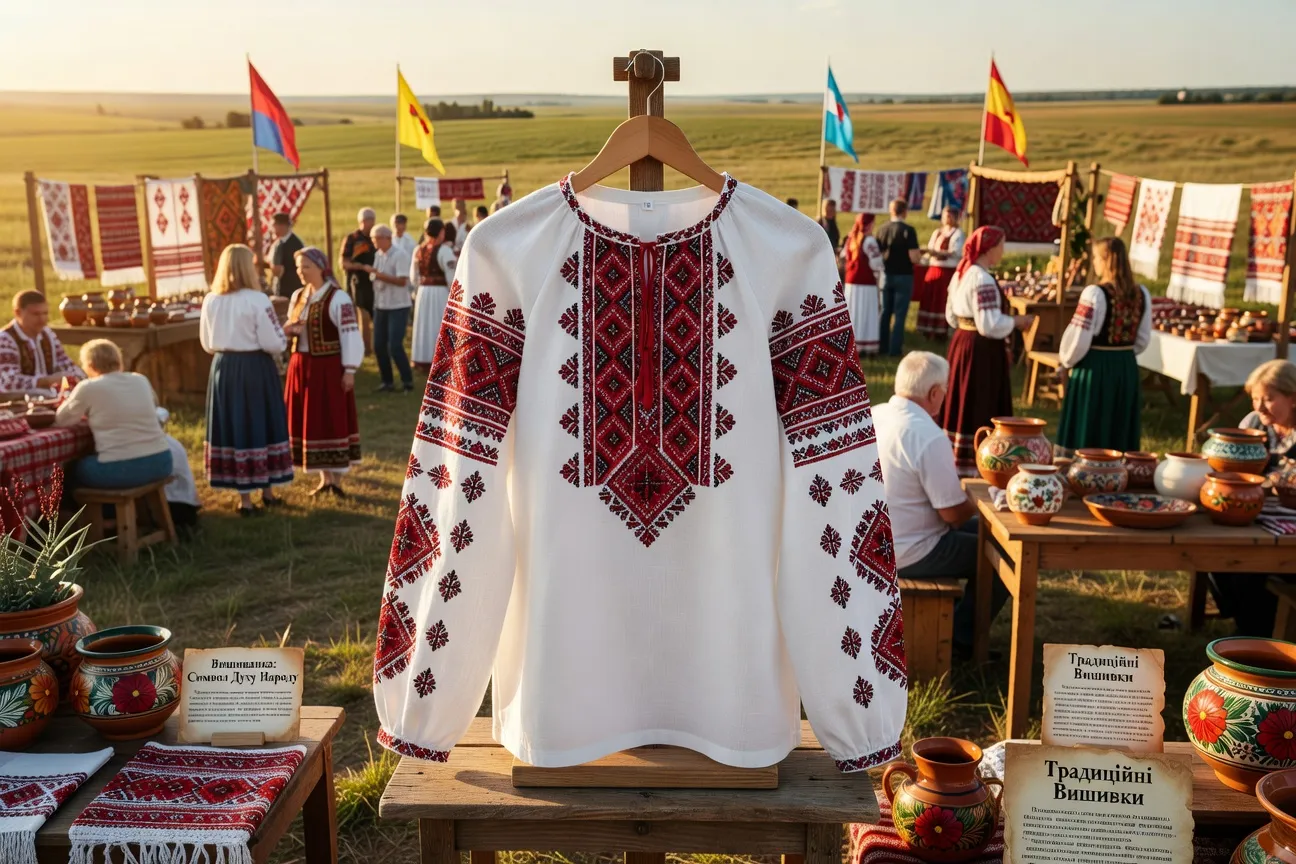
Ukrainian vyshyvanka embroidered shirts at a Canadian community festival.
The more than 200,000 Ukrainians who arrived in Canada through the Canada-Ukraine Authorization for Emergency Travel (CUAET) program between 2022 and 2024 represent the largest single addition to the Ukrainian-Canadian community since the post-World War II displaced persons wave of the late 1940s. Their impact on Canadian Ukrainian culture is already measurable and will deepen over the coming decade.
The most immediate contribution is linguistic. The post-2022 arrivals are overwhelmingly Ukrainian-speaking in contemporary standard Ukrainian — a language that has evolved significantly since the prairie-settler generation left Galicia and Bukovyna in the early 20th century. Exposure to these speakers has revitalized language schools, created demand for contemporary Ukrainian literature and music, and introduced diaspora children to a living language rather than a heritage artifact. Ukrainian-language summer camps and schools report that having fluent contemporary speakers in their communities changes the dynamic entirely: the language becomes a tool for communication, not only a vehicle for cultural preservation.
The cultural contribution extends to the arts. Ukrainian musicians, visual artists, theatre directors, dancers, and filmmakers who arrived post-2022 have become active in Canadian cultural life. Ukrainian contemporary music — which had experienced an extraordinary creative explosion in the decade before 2022, producing genres including Ukrainian hip-hop, post-punk, electronic folk, and indie rock that drew international attention — is now available live in Canadian cities. Bands that performed in Kyiv before the invasion now perform in Toronto and Ottawa, bringing audiences that include both diaspora Ukrainians and curious Canadians who discovered Ukrainian music through online coverage of the war.
The encounter between heritage Ukrainian-Canadian culture and contemporary Ukrainian culture is not without friction. Heritage community members sometimes feel that the new arrivals do not fully appreciate the effort it took to preserve Ukrainian identity through 130 years of Canadian assimilation pressure. Recent arrivals sometimes find that the cultural practices of the diaspora feel frozen in time — a selective preservation of traditions that contemporary Ukraine has moved beyond. The conversation is productive rather than divisive: both perspectives contain valid insights, and the exchange is generating a richer, more layered Ukrainian-Canadian culture than either cohort would produce alone.
The political dimension is also significant. The post-2022 arrivals have deepened the connection between the Ukrainian-Canadian community and current events in Ukraine in a way that the heritage community, however politically engaged, could not replicate through information alone. People who left Ukraine two years ago have sisters still in Kharkiv, parents who stayed in Zaporizhzhia, friends who are fighting. Their presence transforms abstract political solidarity into something intimate and urgent. How Canada shaped the Ukrainian diaspora over more than a century has always involved a tension between integration and distinctiveness; the post-2022 wave has tilted that balance decisively toward distinctiveness, for now.
What the Ukrainian community in Toronto and in cities across Canada is building in 2026 is a cultural infrastructure that draws on 130 years of preserved tradition and infuses it with the energy of a people in the midst of their own defining historical moment. The pysanka is still being made; the vyshyvanka is being worn more widely than ever; borscht is being cooked in new kitchens; children are learning Ukrainian in classrooms and on screens. The tradition is alive not because it has been embalmed but because it has kept finding new reasons to be relevant.