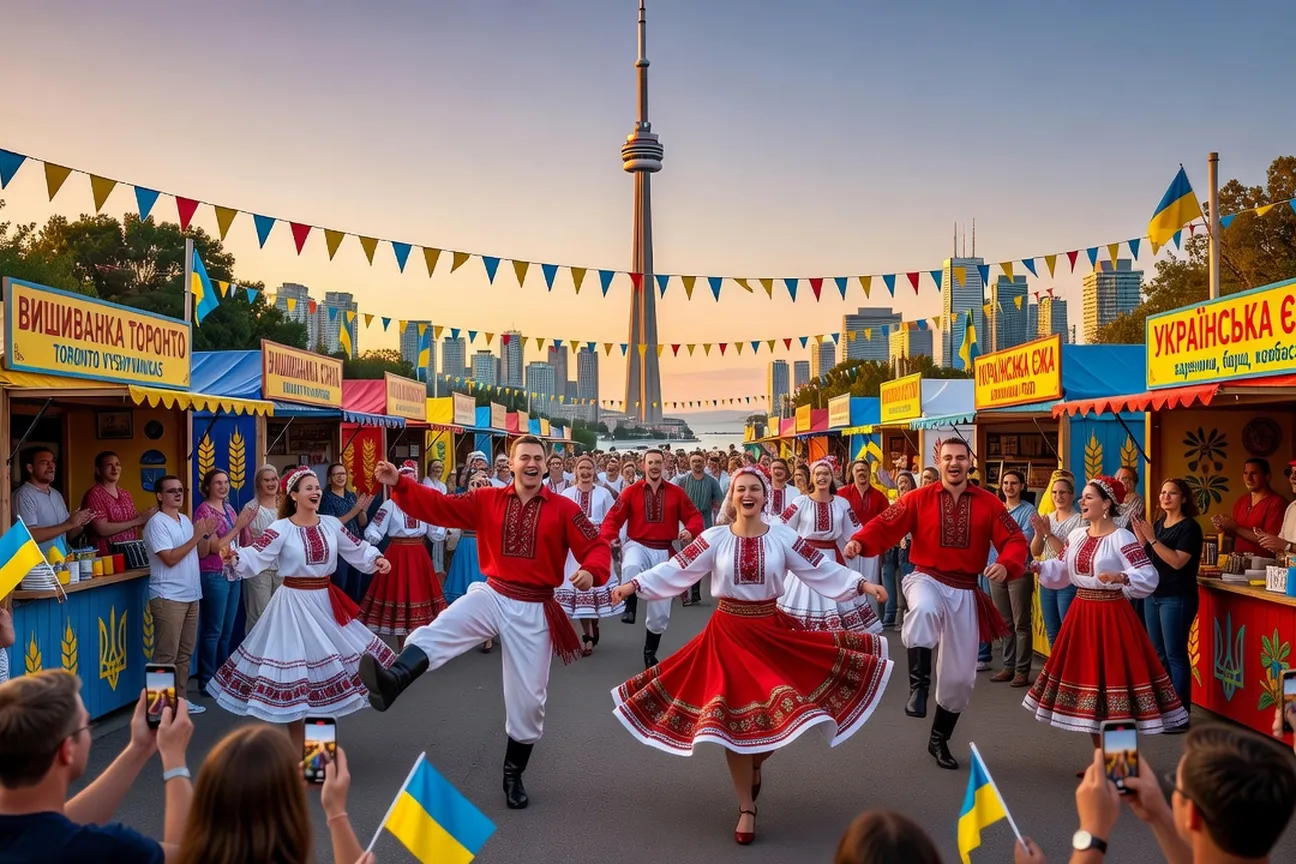
Vibrant Ukrainian festival in Toronto with hopak dancers and CN Tower in background.
Table of Contents
- The Ukrainian Cultural Scene in Toronto: An Overview
- Must-Visit Ukrainian Museums and Galleries in Toronto
- Ukrainian Festivals and Events in Toronto 2026
- Ukrainian Dance, Music and Performing Arts
- Toronto's Ukrainian Neighbourhoods: Bloor West Village and North York
- Ukrainian Cultural Centres and Community Organisations
- Frequently Asked Questions
The Ukrainian Cultural Scene in Toronto: An Overview
With approximately 100,000–120,000 people of Ukrainian origin, Toronto is home to one of the largest urban Ukrainian communities in Canada. This community has been shaping the cultural fabric of the city for over a century. Ukrainians in Toronto arrived in three main waves: the post-WWII displaced persons who settled in Bloor West Village from the late 1940s onward, the post-1991 economic migrants from newly independent Ukraine, and most recently the post-2022 CUAET arrivals who have added tens of thousands of active Ukrainian speakers to the metropolitan area.
The result is a Ukrainian cultural ecosystem that is both deeply rooted in heritage tradition and dynamically evolving. Toronto's Ukrainian cultural scene encompasses heritage museums, contemporary art galleries, folk dance schools, professional choral ensembles, Ukrainian restaurants and delis, churches, cultural centres, and a vibrant schedule of festivals, concerts, and community events throughout the year. In 2026, this scene is arguably more active than at any point in the past three decades, energised by the awareness that Ukrainian culture is both a precious heritage worth preserving and a living contemporary reality in daily contact with the war in Europe.
For visitors and new arrivals alike, the key entry points into Toronto's Ukrainian cultural world are the Ukrainian Cultural Centre on Bloor Street West, the Ukrainian Museum of Canada Toronto branch, the Bloor West Village Ukrainian Festival in August, and the network of Ukrainian Catholic and Orthodox parishes that anchor community life across the city. Each of these institutions provides programming, information resources, and connections to the broader community that can orient both curious Torontonians and recent Ukrainian arrivals.
Must-Visit Ukrainian Museums and Galleries in Toronto
Ukrainian Museum of Canada (Toronto Branch) — 620 Spadina Avenue: Founded as a branch of the national Ukrainian Museum of Canada (headquartered in Saskatoon), the Toronto location houses a permanent collection of Ukrainian folk art including embroidered textiles (rushnyky and vyshyvanky), pysanky decorated eggs, traditional ceramics, woodwork, and cultural artefacts documenting Ukrainian-Canadian life since the 1890s. The museum also maintains a resource library and archive, and offers rotating temporary exhibitions focused on contemporary Ukrainian art and history. Educational programmes for school groups run from September through June; adult workshops in traditional crafts are offered periodically. The museum is essential for anyone wishing to understand the depth and breadth of Ukrainian material culture and its adaptation in the Canadian diaspora context.
Kule Ukrainian Folklore Centre (University of Toronto): Based at the University of Toronto's St. Michael's College and affiliated with the Toronto Ukrainian Studies Centre, the Kule Centre is primarily an academic research institution but offers public lecture series, documentary film screenings, and periodic exhibitions of Ukrainian folk art. It serves as a bridge between academic Ukrainian studies and broader community interest. For a fuller history of the painters and fine artists behind Toronto's exhibition scene, from William Kurelek to post-2022 newcomers, see Ukrainian-Canadian visual artists and painters.
Ukrainian Contemporary Art Gallery (pop-up/touring): Since 2022, several touring exhibitions of contemporary Ukrainian art — featuring work by artists displaced by the war — have been hosted in Toronto gallery spaces, including Propeller Centre for the Visual Arts and the Bata Shoe Museum's adjacent gallery. These exhibitions have introduced Toronto audiences to the vibrant contemporary Ukrainian art scene, far removed from the folk-art traditions that the diaspora heritage tends to emphasise. Information on upcoming exhibitions is typically posted through the Ukrainian Canadian Congress Ontario Provincial Council and the Ukrainian Canadian Social Services Toronto.
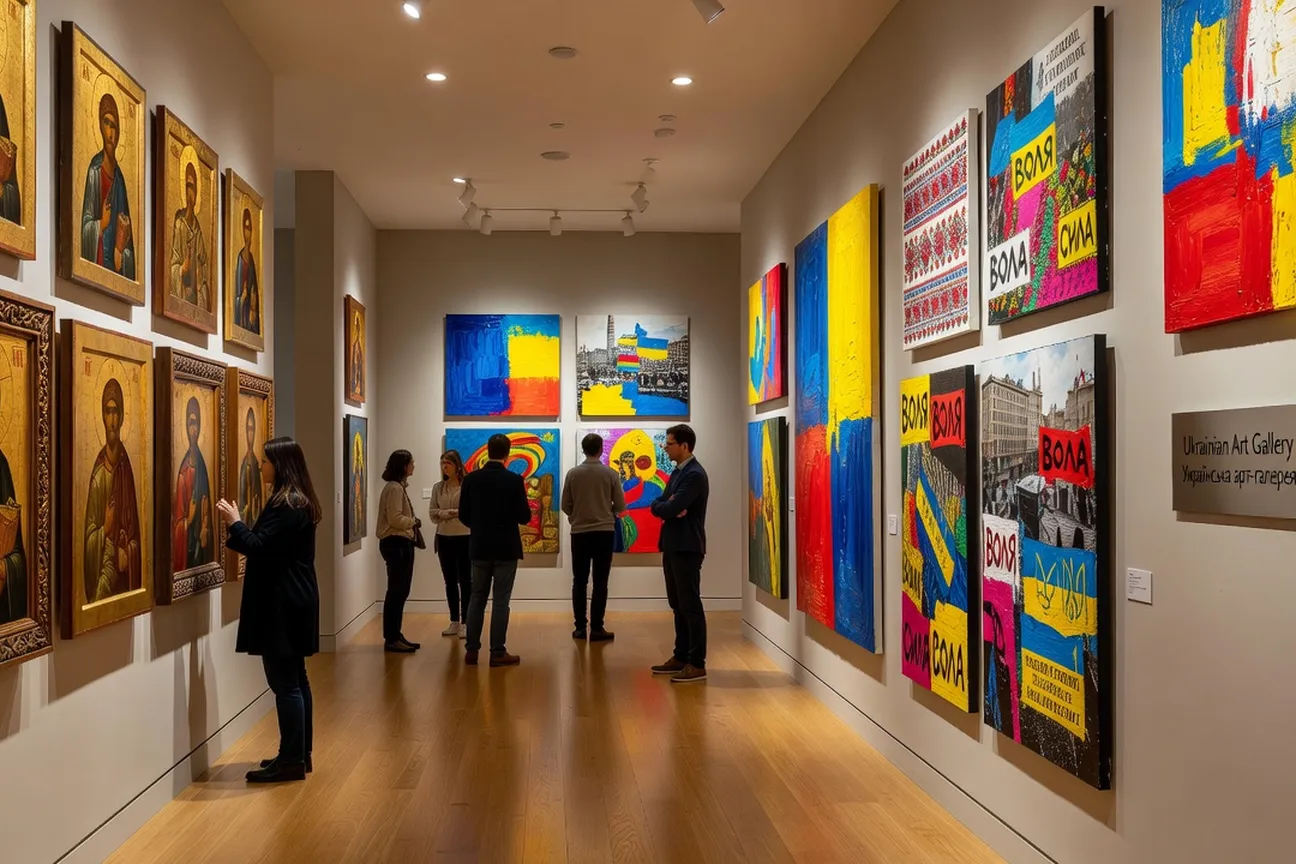
Ukrainian art gallery interior in Toronto with traditional icons and contemporary Ukrainian art.
A gallery space at the Ukrainian Museum of Canada Toronto branch — traditional embroidery meets contemporary Ukrainian art.
Ukrainian Festivals and Events in Toronto 2026
Bloor West Village Ukrainian Festival (August 2026): The largest and most famous Ukrainian cultural event in Toronto, the Bloor West Village Ukrainian Festival typically takes place over the third weekend of August, transforming several blocks of Bloor Street West into an outdoor cultural showcase. The festival features traditional and contemporary Ukrainian music performances on multiple stages, hopak dance demonstrations, pysanka workshops, Ukrainian food vendors, craft stalls, embroidery exhibitions, and children's cultural programming. Attendance regularly exceeds 100,000 visitors over the two-day event, making it one of the largest ethnic heritage festivals in Ontario. The 2026 edition is expected to have an especially significant political and humanitarian dimension, with programming that connects traditional Ukrainian heritage to the ongoing war and the experiences of recent arrivals.
Vyshyvanka Day Toronto (May 2026): Vyshyvanka Day, celebrated globally on the third Thursday of May, has become an increasingly visible event in Toronto. Participants are encouraged to wear traditional Ukrainian embroidered shirts (vyshyvanky) to work, school, and public spaces. In 2024 and 2025, informal gatherings at Nathan Phillips Square and in Bloor West Village attracted hundreds of participants. Ukrainian-Canadian organisations and the Ukrainian Consulate General in Toronto typically host commemorative receptions.
Holodomor Remembrance Day (Fourth Saturday of November): The commemoration of the 1932–33 Holodomor is one of the most solemn annual events in Toronto's Ukrainian community. Services are held at major Ukrainian churches across the city, and a memorial gathering is typically held at the Ukrainian Cultural Centre. Candle-lighting ceremonies, testimonials, and documentary screenings mark the day. Since 2022, these events have taken on renewed urgency given the parallels drawn by the Ukrainian government between the Holodomor and Russia's current war conduct.
Ukrainian Christmas (January 7): Ukrainian Orthodox and Catholic communities observe Christmas on January 7 according to the Julian calendar. Christmas Eve celebrations (Sviat Vechir) on January 6, featuring the traditional twelve-dish meatless supper, are held in Ukrainian parish halls across Toronto. The Ukrainian Shumka Dancers' annual Christmas concert is a popular sold-out event. Several Ukrainian restaurants offer special twelve-dish Christmas Eve menus.
Ukrainian Easter (Velykden, varying date): Ukrainian Easter is the most important liturgical celebration in the Ukrainian community. Ukrainian churches in Toronto — including St. Josaphat Ukrainian Catholic Cathedral at 143 Franklin Avenue and Assumption of the Blessed Virgin Mary Ukrainian Orthodox Cathedral on Bathurst Street — hold elaborate overnight liturgies. The tradition of blessing Easter baskets (containing pysanky, bread, ham, cheese, and horseradish) outside the church is a visible Toronto spectacle that attracts neighbourhood observers from all backgrounds.
Ukrainian Dance, Music, and Performing Arts
Toronto's Ukrainian performing arts community is one of the most active in Canada. Multiple institutions offer both educational programming and public performances:
Shumka Dancers of Toronto: The Shumka ensemble — its name means "a whirlwind" — is a professional-grade Ukrainian dance company performing traditional folk dances including the hopak, kolomeika, arkan, and hutsulka. The ensemble performs at cultural festivals, community events, and concert venues across the GTA and has toured internationally. They offer recreational and competitive dance classes for children and adults through their associated school programme.
Barvinok Ukrainian Dance Academy (North York): Based in North York, Barvinok offers structured Ukrainian folk dance training for students from age 4 through adult. The school has competitive and recreational streams, and students regularly perform at Ukrainian community events. Enrolment has expanded significantly since 2022 due to the influx of Ukrainian families who wish to maintain traditional cultural practices for their children.
Shevchenko Musical Ensemble of Toronto: Founded in 1953 by post-WWII Ukrainian immigrants, the Shevchenko Musical Ensemble encompasses a choir, orchestra, and bandura ensemble. The choir performs Ukrainian classical and folk music, traditional liturgical chant, and contemporary Ukrainian compositions. Annual concerts are held at Koerner Hall and other Toronto venues. The ensemble has been a pillar of Ukrainian musical life in Toronto for over seventy years.
Bandura playing in Toronto: The bandura, a Ukrainian plucked-string instrument with 55–65 strings, is one of the most distinctive symbols of Ukrainian musical culture. Toronto has several active bandura players who perform at Ukrainian community events, and periodic bandura workshops are offered through the Ukrainian Cultural Centre and affiliated organisations. The instrument is also taught at several Ukrainian Saturday schools. Ukrainian Saturday schools in Toronto and across Canada play a central role in transmitting musical as well as linguistic heritage.
Contemporary Ukrainian music in Toronto (2026): Post-2022 arrivals have introduced contemporary Ukrainian popular music to Toronto audiences. Ukrainian-language pop, folk-rock bands combining traditional instruments with contemporary arrangements, and DJ events featuring Ukrainian electronic music have emerged in venues across the city. Annual fundraising concerts for Ukrainian relief organisations frequently feature contemporary Ukrainian artists based in Toronto or visiting from Ukraine, creating a vibrant live music scene that complements the heritage-focused classical and folk repertoire of established community institutions. For a focused look at the choirs, ensembles and folk bands active in the city this year, see our guide to Ukrainian choirs and folk bands in Toronto 2026.
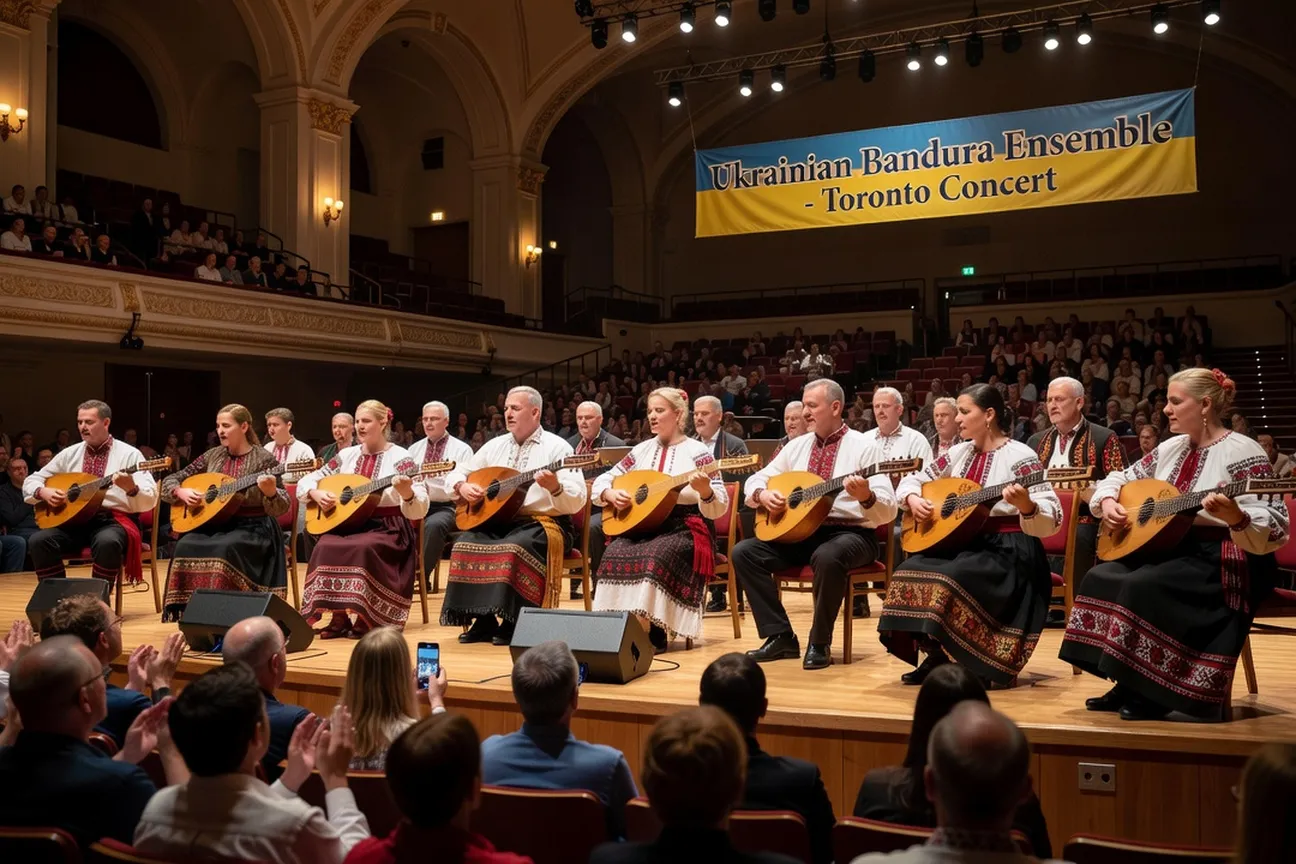
Ukrainian bandura ensemble performing on Toronto stage in embroidered costumes.
The Shevchenko Musical Ensemble's bandura section — one of the finest Ukrainian musical ensembles in North America.
Toronto's Ukrainian Neighbourhoods: Bloor West Village and North York
Bloor West Village (The Historic Ukrainian Village): The section of Bloor Street West between Runnymede Road and Jane Street has been Toronto's Ukrainian cultural hub since the 1950s, when post-WWII displaced persons settled in the nearby Roncesvalles, Swansea, and High Park neighbourhoods. The neighbourhood still features Ukrainian businesses, delicatessens, bakeries, and the Ukrainian Cultural Centre. St. Josaphat Ukrainian Catholic Cathedral on Franklin Avenue, a few blocks south of Bloor, is the community's spiritual centre and one of Toronto's most architecturally distinctive churches, featuring Byzantine-Rite iconostasis and traditional Ukrainian religious art.
The neighbourhood character has evolved over decades. As earlier Ukrainian residents moved to the suburbs and their children dispersed across the GTA, commercial rents rose and many Ukrainian-specific businesses gave way to the broader restaurant and boutique scene that characterises Bloor West today. Nevertheless, several Ukrainian institutions remain anchors: the Ukrainian Credit Union (Bloor West branch), traditional Ukrainian bakeries and delis, and the cultural centre that hosts Ukrainian-language media, community meetings, and cultural events throughout the year.
North York: The New Ukrainian Hub: Jane Street and Wilson Avenue in North York has emerged as a secondary Ukrainian hub, particularly since 2022. The Ukrainian Canadian Social Services (UCSS) North York office is located here, providing settlement services, employment counselling, Ukrainian-language legal assistance, and referrals for newly arrived CUAET families. Several Ukrainian groceries, pharmacies stocking Ukrainian medications, and Ukrainian-owned service businesses have opened along this corridor to serve the newcomer population. The area also hosts several Ukrainian Saturday schools with expanded enrolment programmes for newcomer children.
For a comprehensive picture of the Ukrainian community in Toronto's various neighbourhoods, including statistical breakdowns by district, see the Ukrainian cultural heritage resources across Canada compiled by the Ukrainian Genealogy Group, which includes geographic and demographic information for all major Canadian Ukrainian communities. The top Ukrainian-Canadian organisations listed in our dedicated guide also provide services throughout the GTA.
Ukrainian Cultural Centres and Community Organisations
Ukrainian Cultural Centre (1 Dufferin Street, Toronto — branch also at Bloor West): The Ukrainian Cultural Centre is the primary hub for Ukrainian cultural programming in Toronto. It hosts regular events including Ukrainian-language film screenings, art exhibitions, dance performances, lectures, and community meetings. The centre provides space for Ukrainian Saturday schools, women's organisations, and political advocacy groups. It maintains a lending library of Ukrainian-language books and periodicals, and operates a gift shop selling Ukrainian cultural items, embroidered goods, and educational materials.
Ukrainian Canadian Social Services (UCSS): UCSS is the primary settlement services agency for Ukrainian newcomers in Toronto. Since 2022, it has expanded dramatically to offer initial settlement assistance, English-language classes, employment services, legal aid clinics, mental health support (in Ukrainian), and community integration programming. UCSS maintains multiple locations across the GTA and operates a Ukrainian-language hotline for newcomers requiring immediate assistance. The organisation partners with the City of Toronto, federal immigration authorities, and Ukrainian-Canadian community organisations across the country.
Ukrainian Canadian Congress (UCC) — Ontario Provincial Council: The UCC Ontario Provincial Council is the umbrella advocacy organisation for Ukrainian Canadians in the province. It coordinates community responses to political events, organises commemorations, liaises with Ukrainian diplomatic representations, and serves as the public voice of the Ukrainian-Canadian community in provincial and federal policy discussions. Since 2022, UCC Ontario has been particularly active in advocating for extended CUAET status, increased humanitarian aid to Ukraine, and the rights of Ukrainian refugees in Canada.
St. Josaphat Ukrainian Catholic Cathedral: Beyond its religious function, St. Josaphat serves as a community anchor for Toronto's Ukrainian Catholic population. Parish halls host cultural events, the Ukrainian Women's Association chapter organises regular activities, and the annual parish festival on Garrison Road is a major community gathering. The cathedral's iconostasis and interior artwork, created by Ukrainian artists in the 1950s, represent one of the finest examples of Byzantine religious art in Canada.
Much of what Toronto's Ukrainian community knows about its own cultural calendar, from parish festivals to UCC advocacy campaigns, has historically travelled through the community's own newspapers, radio programs and broadcasters rather than mainstream Canadian outlets. For the history of that press ecosystem, see our overview of Ukrainian Canadian media and press: newspapers, radio and broadcasting history.
Frequently Asked Questions
Where can I experience Ukrainian culture in Toronto?
Toronto's best Ukrainian cultural experiences are concentrated in Bloor West Village (the traditional Ukrainian Village neighbourhood) and North York. Key venues include the Ukrainian Museum of Canada Toronto branch at 620 Spadina Avenue, St. Josaphat Ukrainian Catholic Cathedral, the Ukrainian Cultural Centre, and Bloor West Village's Ukrainian delis and restaurants.
When is the Ukrainian Festival in Toronto?
The Bloor West Village Ukrainian Festival typically takes place over the third weekend of August and attracts over 100,000 visitors annually. Vyshyvanka Day celebrations occur in late May. Ukrainian Christmas and Easter events take place in January and spring respectively at Ukrainian churches across the GTA.
What Ukrainian museums are in Toronto?
The Ukrainian Museum of Canada Toronto branch at 620 Spadina Avenue houses an extensive collection of folk art, textiles, pysanky, and historical artefacts. The museum offers educational programmes and rotating temporary exhibitions on Ukrainian-Canadian history and contemporary Ukrainian art.
Where is the Ukrainian neighbourhood in Toronto?
Bloor West Village (Bloor Street West between Runnymede and Jane) has historically been Toronto's Ukrainian neighbourhood. North York (around Jane Street and Wilson Avenue) has become a secondary hub with significant Ukrainian settlement since 2022, hosting many CUAET newcomers and expanded community services.
Are there Ukrainian dance schools in Toronto?
Yes. Toronto has several Ukrainian dance studios. The Shumka Dancers of Toronto, Barvinok Ukrainian Dance Academy (North York), and dance programmes at Ukrainian parishes offer classes in traditional hopak and folk dances for children and adults alike.
How has the 2022 war changed Ukrainian culture in Toronto?
The war has dramatically energised Toronto's Ukrainian cultural scene, bringing thousands of new active participants including artists, musicians, and cultural professionals who have introduced contemporary Ukrainian cultural expressions alongside the heritage traditions maintained by the established diaspora.