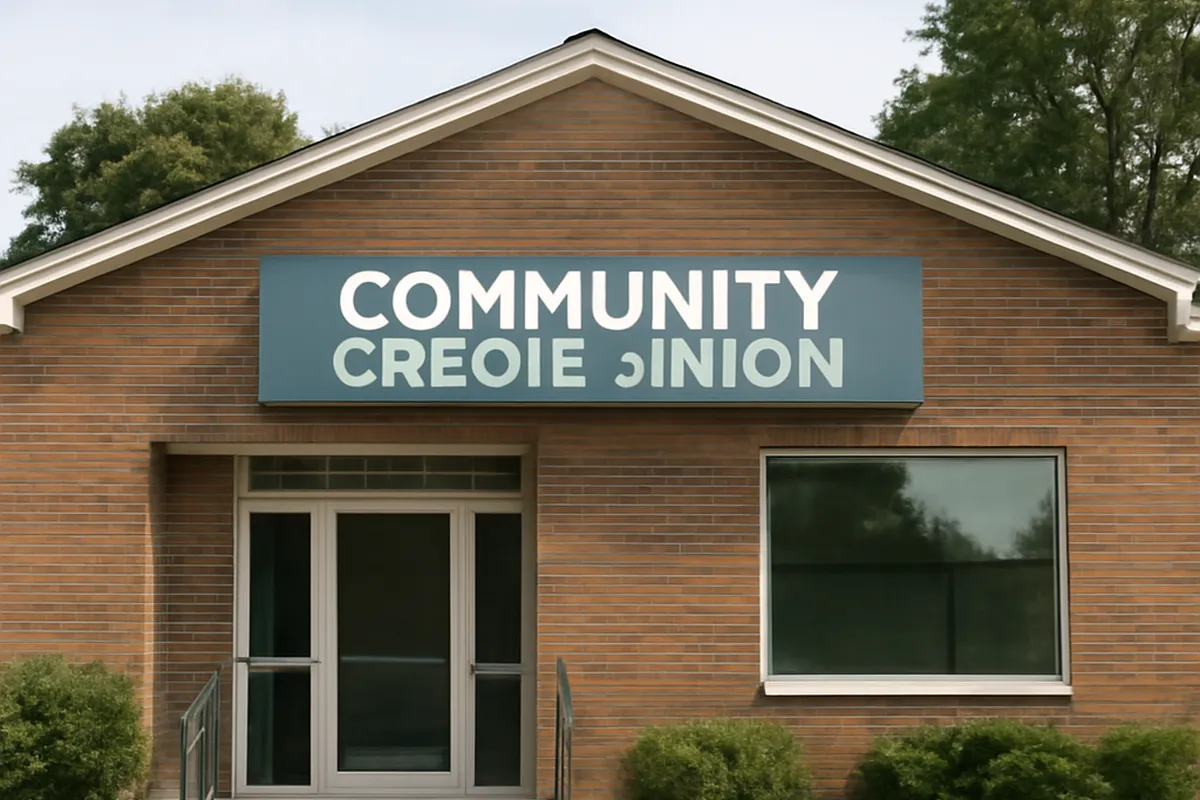
Exterior of a community credit union branch building with a Ukrainian Canadian neighbourhood storefront.
Table of Contents
- What Is a Ukrainian Canadian Credit Union?
- Cooperative Origins: Filling a Gap Mainstream Banks Left Open
- How the Cooperative Model Actually Works
- Credit Union vs. Bank: A Practical Comparison
- Services Offered Today
- Membership Steps at a Glance
- Who Can Join
- Deposit Protection and Safety
- How to Find and Join One
- A Practical, Community-Rooted Option
- Frequently Asked Questions
What Is a Ukrainian Canadian Credit Union?
A Ukrainian Canadian credit union is a member-owned cooperative financial institution with historic roots in the Ukrainian Canadian community, offering the same basic range of services as a conventional bank, savings accounts, chequing accounts, loans, and mortgages, but structured on a cooperative rather than shareholder-profit basis. Rather than answering to outside shareholders seeking maximum return, a credit union answers to its own members, who are simultaneously its customers and, collectively, its owners.
This structure traces directly back to the practical needs of Ukrainian Prairie settlement in Alberta and Saskatchewan and later to the urban institution-building that followed the second wave of Ukrainian Displaced Persons who arrived in Canada between 1947 and 1954, both periods in which community members found mainstream financial institutions slow, reluctant, or simply absent from the communities where they had settled.
Cooperative Origins: Filling a Gap Mainstream Banks Left Open
The historical rationale for community-founded credit unions was straightforward and practical rather than ideological. Newly arrived immigrant families, whether Prairie homesteaders in the early 20th century or postwar Displaced Persons in the late 1940s, typically arrived with limited savings, no established Canadian credit history, and, in some periods and regions, faced outright reluctance from mainstream banks to extend credit to recent immigrants regardless of their actual financial reliability. Pooling deposits within a trusted community structure and lending them back out to fellow members solved a real, immediate problem: how does a family with no Canadian track record get a loan to buy farm equipment, open a small business, or purchase a first home?
This cooperative response was not unique to the Ukrainian Canadian community, mirroring similar cooperative credit movements among other immigrant and rural Canadian populations during the same general period, but it took on a specifically Ukrainian Canadian institutional character, often operating in the Ukrainian language, embedded within parish and community-hall networks, and staffed by trusted community figures rather than by an anonymous branch employee.

Credit union member consulting with a financial services representative at a branch desk.
How the Cooperative Model Actually Works
Practically, a credit union differs from a conventional bank in three connected ways: ownership, governance, and profit distribution. Every member who opens a qualifying account typically becomes a part owner of the institution, usually through a small, one-time membership share purchase. Governance follows a one-member-one-vote principle at annual general meetings, regardless of how large or small an individual member's deposits are, a structural contrast to shareholder-owned banks where voting power scales with share ownership. Profits, when the credit union operates in surplus, are returned to members through mechanisms such as patronage dividends, reduced fees, or more favourable interest rates, rather than being paid out to external investors with no direct stake in the community the institution serves.
- Members elect a volunteer board of directors from among the membership itself
- Annual general meetings give every member a direct voice in institutional decisions
- Surplus earnings typically flow back to members rather than outside shareholders
- Many credit unions retain community programming, sponsorships, and cultural ties beyond pure banking services
Credit Union vs. Bank: A Practical Comparison
For someone deciding where to open an account, the practical differences generally come down to a handful of recurring factors.
| Factor | Credit Union | Conventional Bank |
|---|---|---|
| Ownership | Member-owned cooperative | Shareholder-owned corporation |
| Governance | One member, one vote | Voting scaled to shares held |
| Branch network | Typically smaller, more local | Usually larger national network |
| Fees and rates | Often more favourable due to member-benefit model | Varies, generally profit-oriented |
| Community ties | Frequently retains cultural/community programming | Generally not community-specific |
| Deposit protection | Provincial deposit insurance | Federal deposit insurance (CDIC) |
Services Offered Today
Contemporary Ukrainian Canadian credit unions generally offer a full banking product suite comparable to any mainstream financial institution: personal and business chequing and savings accounts, term deposits and registered savings products, personal and business lending, mortgages, and increasingly full digital and mobile banking access alongside physical branch service. Many also continue to provide the kind of relationship-based, character-informed lending assessment that historically distinguished them, taking community reputation and context into account alongside standard credit metrics in a way that can benefit newcomers or small business owners without an extensive Canadian financial track record, a theme explored further in our guide to Ukrainian Canadian business owners and entrepreneurs.
What Sets These Institutions Apart
1. Member ownership. Account holders are part owners with a direct governance vote, not simply customers of an outside shareholder-owned corporation.
2. Community-informed lending. Relationship and community context can supplement standard credit assessment, particularly valuable for newcomers building Canadian credit history.
3. Full modern banking services. Today's credit unions offer the same core product range as conventional banks, including digital and mobile banking.
Membership Steps at a Glance
Opening an account at a credit union follows a broadly similar process to opening one at a conventional bank, with a few cooperative-specific additions.
| Step | What It Involves |
|---|---|
| 1. Confirm eligibility | Check the credit union's common bond or service-area requirement |
| 2. Provide identification | Standard government-issued ID and proof of address, as at any bank |
| 3. Purchase a membership share | A small, typically one-time share purchase establishing part ownership |
| 4. Open desired accounts | Chequing, savings, or other products as needed |
| 5. Attend an annual general meeting (optional) | Exercise your vote in governance if interested |
Who Can Join
Membership eligibility today is generally governed by standard provincial credit union regulations rather than ethnic or cultural criteria. In practice, this means most credit unions with historic Ukrainian community roots are open to any resident within their defined service area or common bond, regardless of ethnic background, while often retaining cultural programming, sponsorships, and community event support connected to their founding community and continuing to serve the broader Ukrainian community in Canada today as a core part of their membership and identity.

Community members attending a cooperative credit union member meeting in a community hall.
Deposit Protection and Safety
A common and reasonable question for anyone unfamiliar with cooperative banking is whether deposits are as safe as at a conventional bank. In Canada, credit union deposits are protected through provincial deposit insurance schemes, distinct from but functionally comparable to the federal Canada Deposit Insurance Corporation coverage that protects deposits at chartered banks. Coverage limits and the specific insuring body vary by province, so it is worth confirming the exact provincial scheme and coverage limit applicable to any specific credit union before opening a large deposit account, but the basic principle of insured, protected deposits applies across the credit union sector nationally.
How to Find and Join One
For newcomers, particularly those who have arrived in Canada since 2022 as part of the broader wave of Ukrainian refugees and newcomers settling across the country, locating a credit union with Ukrainian Canadian community roots typically starts with asking within established community networks, church parishes, or cultural organizations in the relevant city, since these institutions are often referenced organically within community settlement conversations even when they don't advertise heavily through mainstream channels. Opening a basic account generally requires standard identification and proof of address documentation comparable to opening an account at any Canadian bank, and does not require an existing Canadian credit history for basic savings or chequing products.
Common Mistakes to Avoid
- Assuming membership requires Ukrainian heritage. Most credit unions with historic Ukrainian roots welcome any resident of their service area today.
- Not asking about community lending flexibility. Newcomers without Canadian credit history should specifically ask how the institution assesses applicants in that situation, since practices vary.
- Overlooking digital banking capability. Some assume a smaller cooperative institution lacks modern digital banking; most contemporary credit unions offer full online and mobile banking.
A Practical, Community-Rooted Option
Ukrainian Canadian credit unions represent one of the community's most durable and practically useful institutions, having evolved from a necessity-driven cooperative response to historic banking gaps into a modern, full-service financial option that continues to offer something a purely commercial bank cannot: direct member ownership, community-informed service, and a governance structure that keeps decision-making accountable to the people it actually serves. For newcomers and long-settled community members alike, they remain a genuinely practical banking choice worth considering alongside mainstream options.
The broader lesson embedded in this institutional history extends well beyond banking specifically. Ukrainian Canadians, across more than a century and multiple distinct waves of arrival, have repeatedly responded to gaps in mainstream institutional support by building cooperative alternatives rather than simply waiting for existing systems to adapt on their own timeline. Credit unions are perhaps the clearest and most enduring expression of that pattern, having outlasted the specific historical conditions that first produced them and evolved into genuinely competitive modern financial institutions that any Canadian, regardless of background, can choose to bank with today.
Frequently Asked Questions
What is a Ukrainian Canadian credit union?
A Ukrainian Canadian credit union is a member-owned cooperative financial institution, historically founded by and for Ukrainian Canadian community members, offering savings accounts, loans, and other banking services on a not-for-profit, member-benefit basis rather than a shareholder-profit basis.
How is a credit union different from a regular bank?
A credit union is owned by its members, who each get a vote in governance regardless of how much they have deposited, and profits are returned to members through better rates and lower fees rather than paid out to external shareholders, unlike a conventional bank.
Do I need to be Ukrainian to join a Ukrainian Canadian credit union?
Generally no. Most credit unions with historic Ukrainian community roots operate under standard provincial credit union membership rules today, open to residents of their service area or community regardless of ethnic background, though they may retain cultural programming and community ties specific to their founding community.
Are deposits at a credit union protected the same way as at a bank?
Yes, in Canada, provincial deposit insurance schemes protect credit union deposits, functioning similarly to the federal deposit insurance that covers deposits at chartered banks, though the specific insurer and coverage limits vary by province.
Can a newcomer to Canada open an account without a Canadian credit history?
Yes. Opening a basic savings or chequing account generally does not require an existing credit history; credit history becomes relevant primarily when applying for loans, credit cards, or mortgages, where a credit union's community ties can sometimes support a more flexible initial assessment than a large national bank.