The answer is in the institutions
The women who built Ukrainian Canada did so by creating the organizations that made community life durable: the Ukrainian Women’s Association of Canada, founded in Saskatoon in 1926; the Ukrainian Museum of Canada, founded there in 1936; branches that supported Ukrainian Orthodox and Catholic parish life across the country; and postwar relief work for the displaced persons who arrived between 1947 and 1954. This was not auxiliary work around the edges of public life. It was the structure that allowed Ukrainian-Canadian religious, cultural and educational life to function from one generation to the next.
A century after the Ukrainian Women’s Association of Canada, or Soyuz Ukrainok Kanady, began in Saskatoon — a generation after the first wave of Ukrainian settlement reached the Prairies — its record asks Canadians to reconsider what counts as nation-building. Parliament buildings and corporate headquarters are easy to recognize as monuments. A women’s branch that keeps a parish’s cultural work moving, coordinates education, raises support for a museum, or helps newcomers find a foothold is less visible. Yet it may be more central to whether a community survives as a community.
The historical record that remains is uneven. It preserves founding dates, national conventions, formal offices and institutions. It gives us the name of Savella Stechishin, a co-founder of the Ukrainian Women’s Association of Canada and a founder of the Ukrainian Museum of Canada; the wider network these women worked within is mapped in our survey of Ukrainian-Canadian organizations. It does not provide, in the evidence available here, a full roster of the women whose local labour sustained branches across Canada. That imbalance should not be mistaken for evidence that their work was minor. It is evidence of what formal records have been prepared to keep.
Saskatoon, 1926: building an organization meant building capacity
The Ukrainian Women’s Association of Canada was founded in Saskatoon, Saskatchewan, in 1926. The date matters because it marks a decision to organize women’s work on a national basis rather than leave it scattered among private households or isolated local efforts. By its first national convention in 1934, the organization had established itself as more than a Saskatoon initiative. It had become a framework through which branches across Canada could identify themselves as part of a common body.
That framework was practical. A national association creates continuity. It gives local women a name under which to meet, a way to connect local concerns to wider priorities, and an institutional form that can outlast any one person’s period of service. It can also preserve a sense that cultural work, religious work and educational work are not merely domestic obligations undertaken in spare moments. They are organized responsibilities.
The Ukrainian Women’s Association of Canada did not emerge as the only women’s organization in Ukrainian Canada. The Ukrainian Women’s Organization of Canada, Olha Basarab, was founded in 1930 and was affiliated with the Ukrainian National Federation. The Ukrainian Catholic Women’s League of Canada was a distinct parallel organization on the Catholic side. Their existence matters because it shows that women’s organizing was not confined to a single ideological or religious current. Different organizations served different parts of the Ukrainian-Canadian community.
The point is not that all women’s groups did the same work in the same way. The point is that women repeatedly formed durable organizations where community life required one.
| Institution or organization | Founding detail in the record | Documented role |
|---|---|---|
| Ukrainian Women’s Association of Canada | Founded in Saskatoon in 1926; first national convention in 1934 | National organization with branches across Canada; supported Ukrainian Orthodox parish, cultural and educational work; assisted displaced persons and refugees after the war |
| Ukrainian Museum of Canada | Founded in Saskatoon in 1936 | Institution built by the Ukrainian Women’s Association of Canada |
| Ukrainian Women’s Organization of Canada, Olha Basarab | Founded in 1930 | Separate organization affiliated with the Ukrainian National Federation |
| Ukrainian Catholic Women’s League of Canada | A distinct parallel organization on the Catholic side | Women’s organizational presence within Ukrainian Catholic community life |
Such a table risks making a living history look tidier than it was. Dates and affiliations fit neatly into columns. The work that gave them force rarely does. A branch is not an abstraction. It is a continuing relationship among women who agree to gather, undertake tasks, maintain commitments and keep an institution present in local life. The dossier confirms that Ukrainian Women’s Association of Canada branches existed across Canada. It does not give a full list of every branch, its membership or its local leaders. That absence is a limitation of the surviving summary, not a licence to invent detail.
Savella Stechishin and the meaning of institutional leadership
Savella Stechishin occupies an unusually visible place in the record. Born in 1903 and deceased in 2002, she co-founded the Ukrainian Women’s Association of Canada in 1926. She served as its president for ten years. She was also the first Ukrainian woman to graduate from the University of Saskatchewan, and she helped found the Ukrainian Museum of Canada in Saskatoon in 1936.
Those facts are substantial. They show a woman moving between education, organizational leadership and institution-building at a time when Ukrainian-Canadian women’s public roles could easily be reduced, in later retellings, to a vague category of “community service.” Stechishin’s record is more specific than that. She helped found a national women’s association. She held its presidency for a decade. She helped establish a museum.
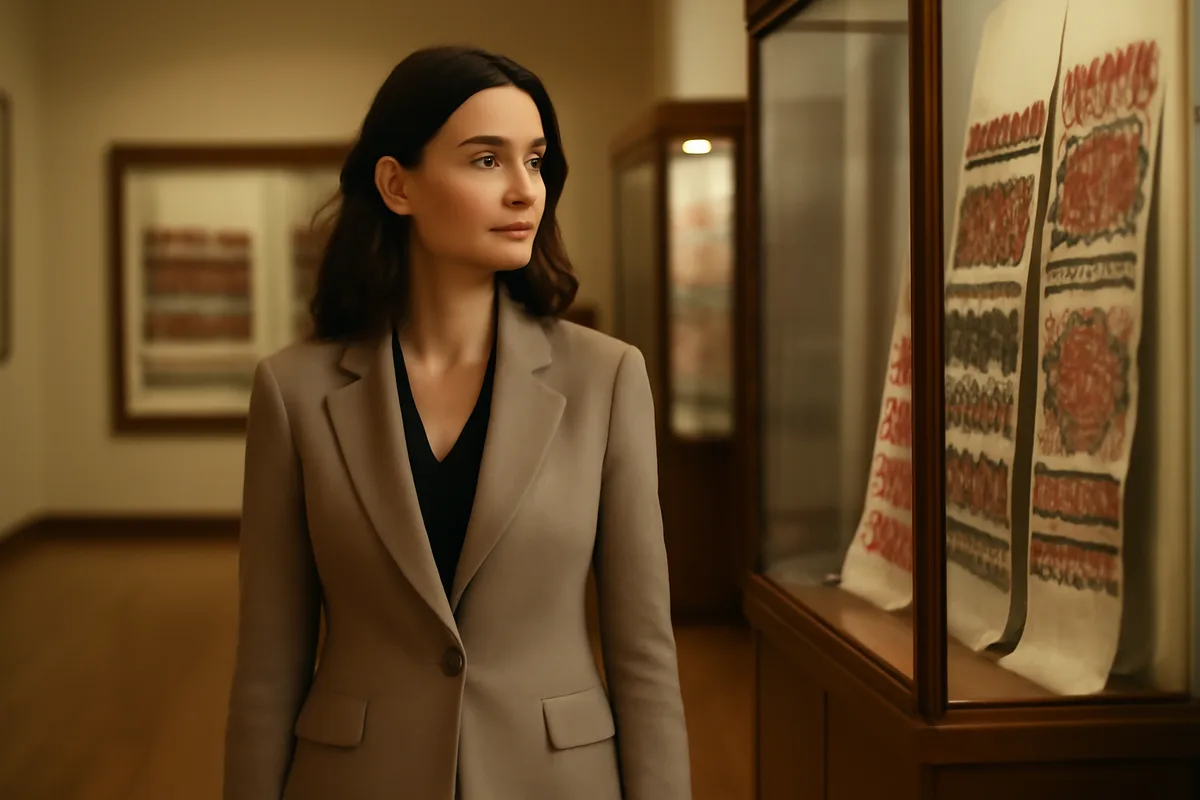
A museum is among the clearest answers to the question of what women built. It is a public institution intended to carry cultural memory beyond the lifespan of those who first assembled it. When the Ukrainian Museum of Canada was founded in Saskatoon in 1936, only a decade had passed since the founding of the Ukrainian Women’s Association of Canada. That speed suggests that the association was not simply a discussion forum or charitable circle. It had the capacity to turn shared purpose into a lasting institution.
The museum’s founding also challenges a common habit in Canadian public memory: treating cultural preservation as a soft or private activity, somehow separate from civic construction. It is not separate. A museum gives a community a place from which it can state, with continuity, that its past belongs in the public record. It makes cultural memory less dependent on individual families and less vulnerable to the disappearance of personal belongings, recollections or local networks.
Stechishin’s prominence should not erase the women whose names are not available in the dossier. Quite the opposite. Her record helps demonstrate what organized women’s leadership could achieve when it was recognized and documented. The problem is that formal historical memory often preserves the names of founders and presidents while losing the countless people who made meetings possible, sustained branches and carried work from one year to the next.
There is no reason to pretend that a single biography can stand in for a national movement. Stechishin’s life should be read as evidence of women’s leadership, not as a substitute for the wider body of women whose names demand further research.
The museum was not a decoration; it was a public claim
The Ukrainian Museum of Canada, founded in Saskatoon in 1936, is often the most immediately legible legacy of the Ukrainian Women’s Association of Canada. Buildings and institutions are easier to point to than organizational labour. They have names, addresses and anniversaries. They can be photographed. They appear in official accounts.
But the museum should not be treated as a decorative cultural achievement added after the “real” work of community-building had been done. It was part of that real work.
To establish a museum is to make several claims at once. It says that a community’s material and cultural inheritance deserves care. It says that the inheritance is not only personal property but public memory. It says that future generations should encounter Ukrainian life in Canada through an institution, not merely through stories that may or may not be passed down within families.
The Ukrainian Museum of Canada also shows why women’s organizing cannot fairly be described as a side story to Ukrainian-Canadian history. The organization founded in 1926 helped found a museum in 1936. That is a direct line from association to institution. It is hard to imagine a more concrete expression of public influence.
What the available record does not tell us is equally revealing. It does not provide a complete account of the women who contributed to the museum’s early development. It does not offer a full breakdown of responsibilities or a catalogue of individual contributions. A serious account must resist filling such gaps with sentimental stock characters. We do not need invented scenes of anonymous women at work to understand the scale of the achievement. The founding date, the connection to the Ukrainian Women’s Association of Canada and the museum’s continuing institutional existence are enough to establish the central fact: women organized to create a cultural institution that outlived its founders.

This is where historical language matters. Calling the museum “women’s work” can either clarify or diminish. If the phrase means unpaid, private or secondary labour, it is diminishing. If it means the result of organized women’s leadership, collective planning and public ambition, it is clarifying. The Ukrainian Museum of Canada belongs in the second category.
Branches made national life possible at the local level
The Ukrainian Women’s Association of Canada had branches across Canada. This is the fact that turns a founding in Saskatoon into a national story.
National organizations often become visible at conventions, anniversaries and formal meetings. The Ukrainian Women’s Association of Canada’s first national convention in 1934 is one such visible marker. Yet an association does not become national because a convention is held. It becomes national because local branches make the national body real in communities far from its founding city.
The dossier identifies Ukrainian Women’s Association of Canada branches as integral to Ukrainian Orthodox parish life. Their work supported religious, cultural and educational activity. That is a broad description, but it is not vague in its implications. Parish life is not sustained by worship alone. It depends on people who organize the surrounding structures through which a community teaches, gathers, remembers and continues.
The phrase “parish infrastructure” can sound bureaucratic. In this case it names something essential: the practical organization that allows religious and cultural institutions to endure. Women’s branches carried responsibilities that connected formal parish life to the ordinary rhythms of community life. They made it possible for cultural and educational work to be attached to institutions rather than left to chance.
The documented contribution of Ukrainian Women’s Association of Canada branches included support for:
- Ukrainian Orthodox religious life at the parish level
- Cultural work linked to community continuity
- Educational work within Ukrainian-Canadian community life
- A national network of branches across Canada
- Assistance for displaced persons and refugees in the postwar period
That list should not be read as a set of optional extras. Religious, cultural and educational work are the means through which a minority community reproduces itself across generations. If those functions weaken, a community may retain ancestry while losing the institutions that turn ancestry into shared public life.
By the 2021 census, about 1.26 million people in Canada reported Ukrainian ethnic origin, making Canada home to one of the world's largest Ukrainian diaspora communities outside Ukraine. That figure does not tell us how each person relates to Ukrainian community institutions. It does establish the scale of the population within which these organizations worked and continue to matter. A community of that size did not persist by accident. Institutions were required, and women were central to building them.
The load-bearing nature of women’s work becomes clearest when we stop treating “community” as a feeling. Community is also organizational capacity: the ability to convene, teach, preserve, assist and continue. The Ukrainian Women’s Association of Canada gave that capacity a national structure.
Separate organizations reveal breadth, not fragmentation
It would be a mistake to write this history as though the Ukrainian Women’s Association of Canada represented every Ukrainian woman in Canada or every form of Ukrainian-Canadian women’s public life. The record specifically identifies separate organizations.
The Ukrainian Women’s Organization of Canada, Olha Basarab, was founded in 1930 and affiliated with the Ukrainian National Federation. The Ukrainian Catholic Women’s League of Canada is a separate parallel organization on the Catholic side. The Ukrainian Women’s Association of Canada, meanwhile, is identified with Ukrainian Orthodox parish life.
These distinctions should not be flattened. Religious affiliation and organizational connection mattered. They shaped where women gathered, how they defined community responsibilities and which institutions they supported. To merge all these bodies into one generic story of “Ukrainian women’s groups” would erase the institutional specificity that made their work meaningful.
At the same time, their parallel existence makes a larger argument unavoidable. Women’s organizations were not peripheral clubs that happened to appear in a few corners of Ukrainian Canada. They were a recurring form of civic organization across major community structures. A women’s organization connected to Ukrainian Orthodox parish life; a separate women’s organization affiliated with the Ukrainian National Federation; and a distinct Ukrainian Catholic women’s league together show that women’s collective work was embedded in the architecture of Ukrainian-Canadian public life.
What should be avoided is a false competition over which organization mattered most. The evidence here supports a different conclusion: women organized wherever Ukrainian-Canadian institutions required sustained work. Their structures differed. Their contributions formed part of the same broader reality — that community endurance depended on organized women.
This also complicates the tendency to speak of Ukrainian Canada as though it were a single institution with a single leadership story. It has always been made up of multiple organizations with their own affiliations, priorities and constituencies. Women’s organizations were among the bodies that gave those affiliations practical expression.
Postwar resettlement: relief work as community-building
The Ukrainian Women’s Association of Canada assisted displaced persons and refugees in the postwar period. This is one of the most consequential facts in the dossier, even though it is presented briefly.
Assisting displaced persons and refugees is not separate from building a community. It is community-building under urgent conditions. People arriving after displacement need more than abstract welcome. They need networks capable of offering contact, information, material support and a path into established institutions. The record does not specify every form that Ukrainian Women’s Association of Canada assistance took. A responsible account should not invent services, locations or individual cases. But the documented fact of assistance is enough to establish the association’s role in the work of resettlement.
The postwar period placed particular demands on Ukrainian-Canadian organizations because community institutions had to respond to people whose lives had been disrupted by war and displacement. In such moments, a national network of branches could matter enormously. A branch structure is not simply an administrative arrangement. It creates points of contact in different places. It makes it possible for assistance to be organized rather than improvised anew each time.
The same women’s association that had been founded in Saskatoon in 1926, held its first national convention in 1934 and helped found the Ukrainian Museum of Canada in 1936 later assisted displaced persons and refugees after the war. That sequence shows an organization capable of acting across different kinds of need. It could support cultural memory through a museum and respond to human displacement through relief work.
This is why the division between “cultural” and “social” work is misleading. A museum preserves collective memory. Refugee assistance helps determine who can enter and participate in collective life. Parish and educational support creates continuity. These are not isolated categories. They are connected forms of institutional care.
Still, the record’s thinness has consequences. We do not have, from the supplied evidence, the names of the displaced persons or refugees who received assistance. We do not have branch-by-branch accounts of the work. We do not have a full record of the women who performed it. That gap is not trivial. It means that the historical account can describe the organizational role clearly while leaving many individual relationships out of view.
Why this history is under-documented
The under-documentation of women’s organizing is not an innocent accident. It reflects the kinds of activity that formal historical records have often been built to notice.
Founding a museum in 1936 enters the record because it produces an institution. Serving as president for ten years enters the record because it is an office. Holding a first national convention in 1934 enters the record because conventions are formal events. These are the facts that survive in concise institutional summaries.
What is more difficult to recover are the repeated tasks that made those formal achievements possible. Branch work can disappear into collective labels. “The women” becomes a category where individual names, disagreements, skills and decisions are lost. The result is a distorted historical picture: the organization is remembered, but many of the organizers are not.
The evidence available in this dossier preserves some things well:
- The Ukrainian Women’s Association of Canada was founded in Saskatoon in 1926.
- Its first national convention took place in 1934.
- Savella Stechishin co-founded the association and served as its president for ten years.
- The Ukrainian Museum of Canada was founded in Saskatoon in 1936 with the association’s involvement.
- Ukrainian Women’s Association of Canada branches supported Ukrainian Orthodox parish, cultural and educational work.
- The association assisted displaced persons and refugees after the war.
It does not preserve, at least not in the material supplied here, a complete map of the local women who sustained branches across Canada. It does not provide a full roster of women active in politics, public office or local leadership. It does not establish which individual performed which task in a given parish or branch. It does not justify the invention of heroic anecdotes merely because such anecdotes would make an article feel more complete.
That restraint matters. Too many accounts of women’s history compensate for archival absence with generic praise: women were “the backbone,” women “kept traditions alive,” women worked “behind the scenes.” The phrases are not necessarily false, but they can become evasions. They praise women without identifying their organizations, dates, institutions or authority.
The stronger claim is available here. Ukrainian women built named institutions. They founded a national association in 1926. They held a national convention in 1934. They helped found a museum in 1936. Their branches supported parish, cultural and educational life. They assisted people displaced by war. This is not a vague story of support. It is a record of organized public action.
A centennial should change the way Ukrainian Canada tells its story
The hundred years since the 1926 founding of the Ukrainian Women’s Association of Canada offer more than an anniversary. They offer a corrective.
Ukrainian-Canadian history is often told through migration, churches, national organizations, cultural performance and political advocacy. Those subjects matter. But they become incomplete when women’s organizations are treated as a supplementary chapter rather than as institutions that made the larger story possible.
Consider what the Ukrainian Women’s Association of Canada had achieved within its first decade. Founded in Saskatoon in 1926, it held its first national convention in 1934. In 1936, it helped found the Ukrainian Museum of Canada in Saskatoon. That is not the timeline of a marginal group. It is the timeline of an organization establishing itself as a national force and creating a permanent cultural institution.
The centennial should also encourage precision. There is a temptation in anniversary writing to turn every predecessor into a saint and every organization into a seamless success. The historical record supplied here does not support that kind of portrait. It gives us institutional facts, not a complete emotional or political narrative. We do not know every debate, every local difficulty or every disagreement. We should not claim to.
What we can say is already powerful. Ukrainian-Canadian women created structures that gave their communities continuity. They did so through distinct organizations, through national and local networks, through Orthodox parish life, through cultural and educational work, through a museum and through postwar assistance for displaced persons and refugees.
For a Canadian public accustomed to equating institution-building with government, business or male office-holding, that should be a challenge. The women of the Ukrainian Women’s Association of Canada and related organizations built institutions in another register: associational, religious, cultural and mutual-aid based. Their work was public because it shaped public community life. It was political in the broadest civic sense because it determined who could gather, remember, learn and receive help.
The strongest way to honour that legacy is not with vague gratitude. It is with better historical practice: naming institutions accurately, distinguishing organizations from one another, preserving local records and refusing to let collective women’s work vanish into anonymous praise. This commitment to historical precision is especially important in the context of renewed Ukrainian cultural and language retention across generations.
Frequently asked questions
What was the Ukrainian Women’s Association of Canada?
The Ukrainian Women’s Association of Canada, also known as Soyuz Ukrainok Kanady, was founded in Saskatoon, Saskatchewan, in 1926. It developed branches across Canada and held its first national convention in 1934. Its branches were integral to Ukrainian Orthodox parish life and supported religious, cultural and educational work.
Who was Savella Stechishin?
Savella Stechishin, who lived from 1903 to 2002, co-founded the Ukrainian Women’s Association of Canada in 1926 and served as its president for ten years. She was the first Ukrainian woman to graduate from the University of Saskatchewan and helped found the Ukrainian Museum of Canada in Saskatoon in 1936.
What did Ukrainian women’s organizations build in Canada?
The record identifies a national network of Ukrainian Women’s Association of Canada branches, support for Ukrainian Orthodox parish life, cultural and educational activity, postwar assistance for displaced persons and refugees, and the Ukrainian Museum of Canada in Saskatoon. Separate organizations also included the Ukrainian Women’s Organization of Canada, Olha Basarab, founded in 1930, and the Ukrainian Catholic Women’s League of Canada.
Why is the Ukrainian Museum of Canada central to this story?
The Ukrainian Museum of Canada was founded in Saskatoon in 1936 and was built by the Ukrainian Women’s Association of Canada. Its creation demonstrates that women’s organizing produced a permanent public institution for Ukrainian cultural memory, not merely informal community support.
Why are so many women’s names missing from the historical record?
The available record preserves formal facts such as founding dates, conventions, offices and institutions more readily than it preserves the day-to-day work of local branches. It identifies Savella Stechishin, but it does not provide a full roster of the women who sustained Ukrainian Women’s Association of Canada branches across Canada. That gap calls for more archival work, not for invented biographies.