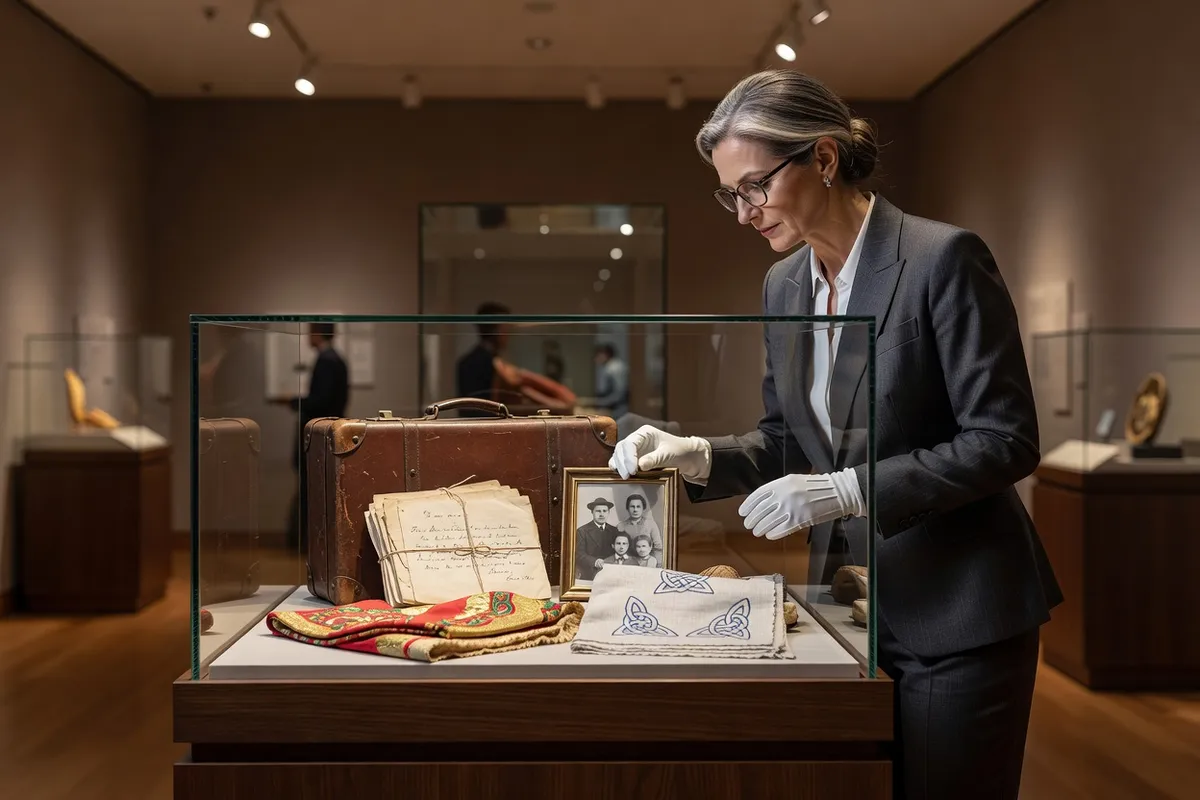
Museum curator examining a display case of Ukrainian embroidered textiles and immigrant artifacts.
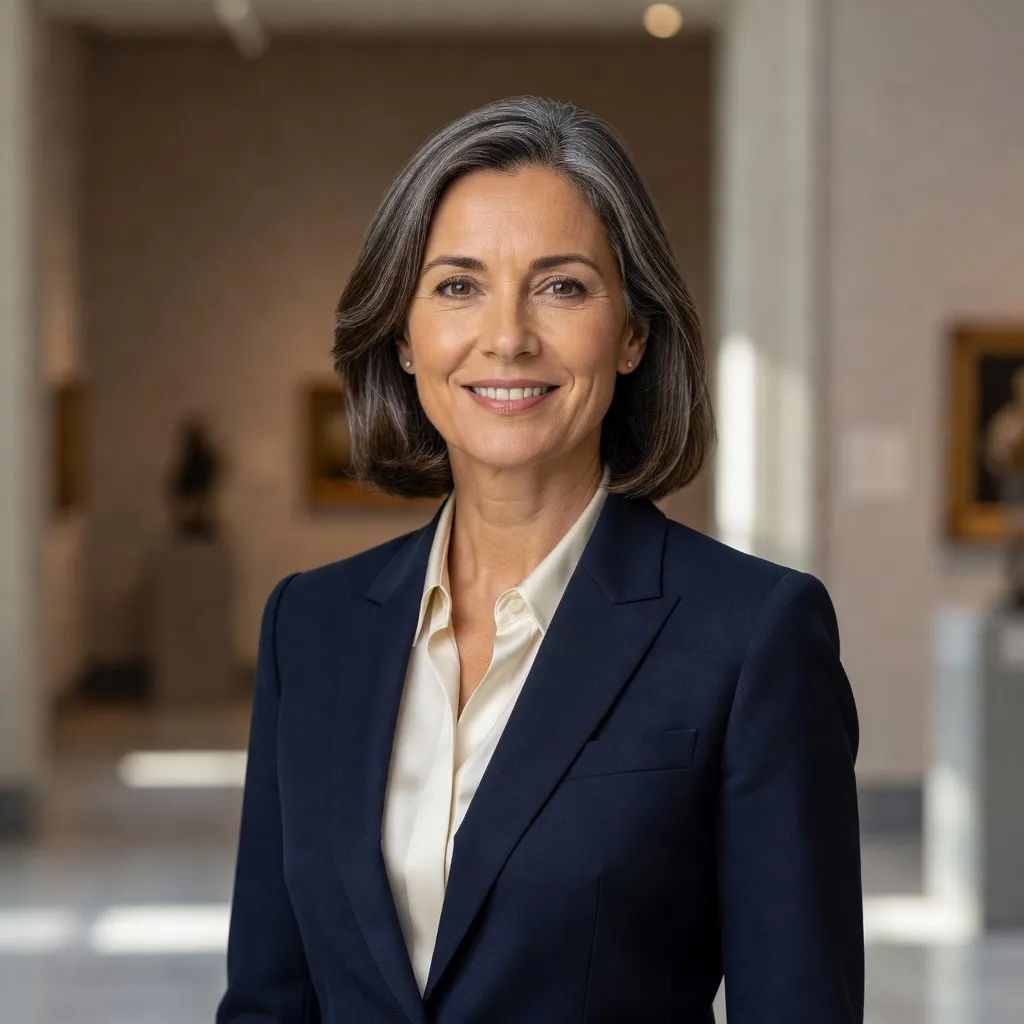
Mariya Kowalchuk, museum curator specializing in Ukrainian-Canadian diaspora collections.
Mariya Kowalchuk
Museum Curator specializing in Ukrainian-Canadian diaspora collections, textiles, and immigrant material culture. Master's degree in Museum Studies. Eighteen years building and preserving collections documenting Prairie settlement, Displaced Persons resettlement, and contemporary Ukrainian-Canadian community life.
Edmonton, Alberta, Canada
Table of Contents
- Q1: What drew you into Ukrainian Canadian museum work?
- Q2: What kinds of artifacts make up a typical collection?
- Q3: How do you preserve textiles and embroidery long-term?
- Q4: How should a family decide whether to donate an heirloom?
- Q5: What's the process once an object is donated?
- Q6: How important is oral history alongside physical objects?
- Q7: Has 2022 changed what your museum collects?
- Q8: What's the hardest part of this work?
- Q9: How do exhibitions get planned and curated?
- Q10: What would you say to someone who feels their family's story isn't significant enough to matter?
- Donation Checklist: Before You Contact a Museum
- Frequently Asked Questions
Q1: What drew you into Ukrainian Canadian museum work?
Q: How did you end up specializing in Ukrainian Canadian collections specifically?
A: Honestly, it started with my own family. My grandmother kept a chest of embroidered textiles she'd brought over as a young woman, and after she passed, none of us really knew how to care for them properly. That gap, between how much these objects mattered emotionally and how little practical knowledge existed about preserving them, is what pulled me toward museum studies. Once I started working professionally, I realized how common that story is. Almost every Ukrainian Canadian family I've worked with has some version of the same chest, the same uncertainty about what to do with it, and the same fear of losing it through neglect or simply not knowing where to turn.
Q2: What kinds of artifacts make up a typical collection?
Q: When people picture a Ukrainian Canadian museum collection, what should they actually expect to see?
A: It's a wider range than people often expect. Textiles are the most visually striking category: embroidered blouses, ritual cloths called rushnyky, woven belts, and traditional wedding attire. But we also hold homestead-era tools and household objects tied to the first wave of Ukrainian immigration to Canada between 1891 and 1914, religious icons and liturgical items from both Ukrainian Catholic and Orthodox traditions, and an enormous volume of photographs, letters, and personal documents. From the Displaced Persons era specifically, we hold camp identification papers, ship tickets, and objects people managed to carry through displacement, which tend to be small and portable by necessity: a single icon, a piece of jewelry, sometimes just a photograph folded into a passport.
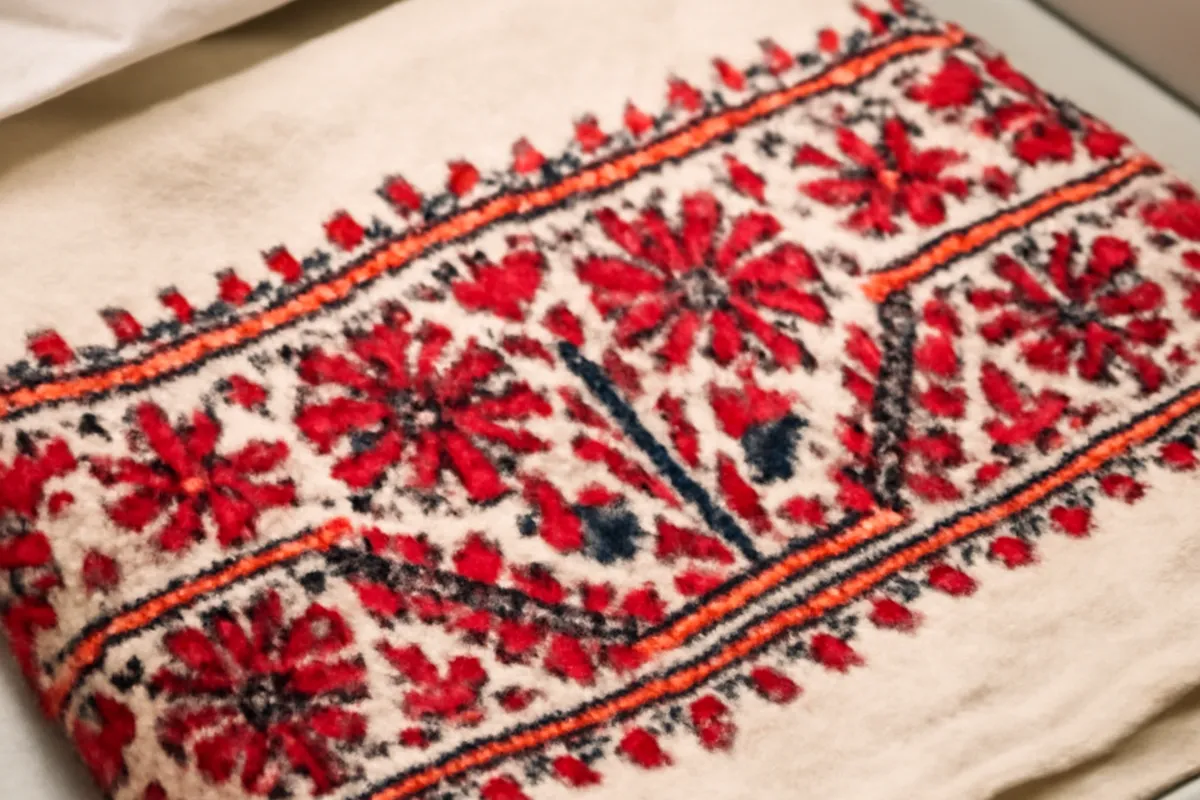
Close-up of a preserved hand-embroidered Ukrainian folk textile in a museum archival storage drawer.
Q3: How do you preserve textiles and embroidery long-term?
Q: Textiles seem especially fragile. What does proper long-term preservation actually involve?
A: Textiles are genuinely among the most demanding materials to preserve. Natural fibres like linen and cotton, along with the traditional dyes used in Ukrainian embroidery, are vulnerable to light exposure, humidity swings, and insect damage in ways that, say, a ceramic object simply isn't. The basics are climate-controlled storage at stable temperature and humidity, storage away from direct or even prolonged indirect light, and acid-free tissue paper and boxing to prevent fold-line damage over years of storage. We also train volunteers and staff in careful handling protocols, clean cotton gloves, supporting the full weight of a garment rather than letting it hang from a single point, because a lot of textile damage happens not from age itself but from well-meaning mishandling.
Q4: How should a family decide whether to donate an heirloom?
Q: If someone reading this has a family heirloom sitting in a closet, how should they think about whether to donate it?
A: There's no single right answer, and I always tell families that donation isn't the only option. The first question I ask is whether the family wants to retain physical possession of the object, perhaps to pass down further within the family, versus prioritizing long-term preservation and public access, which a museum can offer in a way an individual household usually cannot. If a family wants to keep the object but is worried about proper care, we can often advise on preservation techniques for private ownership, or discuss a digitization-only arrangement, where we photograph and document the object thoroughly without taking possession of it. If a family does want to donate, documented provenance matters a great deal: knowing roughly when, where, and by whom an object was made or used significantly increases its historical and exhibition value, so I always encourage people to write down whatever family story exists, even if it's incomplete, before that memory is lost.
Q5: What's the process once an object is donated?
Q: Walk me through what actually happens after a family decides to donate something.
A: It starts with an intake conversation, ideally in person or over video, where we document everything the family knows: names, approximate dates, the village or region of origin if known, and the object's use within family life. This connects closely to the kind of documentary research described by genealogists working on tracing Ukrainian Canadian family roots and immigration records — a well-documented family history genuinely strengthens an object's museum record. From there, the object goes through condition assessment, cataloguing with a unique accession number, and photography, before moving into either active exhibition planning or long-term archival storage. The whole intake and cataloguing process typically takes several weeks to a few months, depending on the object's condition and complexity.
Q6: How important is oral history alongside physical objects?
Q: Do you collect stories as seriously as you collect physical objects?
A: Absolutely essential, and honestly, in some ways more urgent than object collection, because a story that isn't recorded disappears entirely when the person who holds it passes away, while an object at least has a chance of surviving in a family's attic even without documentation. We run structured oral history interviews with community elders, recording not just factual timelines but texture: what a homestead kitchen smelled like, how a family celebrated a specific holiday, what it felt like to arrive at Pier 21 not speaking English. These recordings become part of the permanent collection alongside physical objects, and increasingly we pair them directly, an object displayed next to the recorded voice of the person who owned or made it, which visitors consistently tell us is the most powerful part of any exhibition.
Q7: Has 2022 changed what your museum collects?
Q: How has Russia's full-scale invasion since 2022 affected your collecting priorities?
A: Significantly, and we made a deliberate decision early on to treat this as an active, time-sensitive collecting priority rather than something to address later. We are now recording oral histories and, where families are willing, collecting objects from Ukrainians displaced since 2022, recognizing that this is a historically significant moment unfolding in real time. It's a different kind of collecting than documenting the postwar Displaced Persons generation, because we're working with living memory that's still raw rather than historical distance, which requires a different, more careful approach to how we conduct interviews and how we ask families to participate. But the historical parallel to the DP era is impossible to ignore, and several of our newer donors have specifically referenced that earlier generation's experience as part of why they wanted to contribute to the collection.
Q8: What's the hardest part of this work?
Q: After eighteen years, what still challenges you most?
A: Honestly, it's the objects and stories we know exist but never reach us in time. Every year, I hear about a family that finally decided to sort through a late relative's belongings and discovered, too late, that irreplaceable letters or photographs had already been discarded, damaged by water or mice in a basement, or simply lost in a move, because nobody realized their historical value while the person who could explain them was still alive to do so. That's really the core message I want to get across: reach out to a museum, even just for a conversation, well before you think you need to. We would always rather have that conversation early, even if the family ultimately decides not to donate anything, than learn about an important collection only after it's already gone.
Q9: How do exhibitions get planned and curated?
Q: Once objects and stories are in the collection, how does a museum decide what actually goes on display?
A: Exhibition planning usually starts with a theme, sometimes tied to an anniversary or a significant date in the community calendar, sometimes driven by a gap we notice in what we've previously shown the public. From there, curatorial staff work through the collection database to identify objects and recorded testimony that speak to that theme, balancing well-known, visually striking pieces with less obvious objects that carry strong documentary or emotional weight even if they're modest in appearance. A single embroidered blouse with a fully documented family story, complete with recorded testimony from the woman who made it, is often more valuable to an exhibition than a dozen beautiful but undocumented pieces, because it lets visitors connect emotionally to a specific human story rather than an abstract category of object. We also consult with community members and, where possible, descendants of the families connected to specific objects, both as a matter of respect and because they often surface context that isn't in our written records.
Q10: What would you say to someone who feels their family's story isn't significant enough to matter?
Q: A lot of people probably assume their family history is too ordinary to be worth documenting. What do you tell them?
A: I hear this constantly, and it's almost always wrong. Museums don't only want the extraordinary story, the war hero or the famous artist; we want the ordinary, representative experience just as much, because that's what actually reflects how most people lived. A farmer's daily routine, a domestic worker's letters home, a child's school notebook from a Ukrainian bilingual program, these ordinary objects and stories are exactly what future researchers and descendants will want to understand, because they show what everyday life actually looked like rather than only the exceptional cases. I always tell people: if you think your family's story is too ordinary to matter, that's usually a sign it's exactly the kind of story we need more of, not less. Some of our most visited exhibition pieces over the years have been the most unassuming objects imaginable, a child's mitten knitted for the journey to Canada, a handwritten recipe card carried across an ocean, precisely because visitors recognize something universal in their ordinariness that a grander artifact simply cannot convey in the same way.
Donation Checklist: Before You Contact a Museum
| Step | Action |
|---|---|
| 1 | Write down everything you know: names, approximate dates, village or region of origin |
| 2 | Photograph the object as it currently exists, including any damage or wear |
| 3 | Decide whether you want to donate, loan, or arrange digitization-only |
| 4 | Contact a Ukrainian Canadian museum's collections or curatorial staff directly |
| 5 | Ask about oral history recording alongside any physical object donation |
| 6 | Do not attempt DIY cleaning or repair before consulting a professional |
Three Key Takeaways
1. Documentation multiplies value. An object with a documented family story, even an incomplete one, has significantly greater historical and exhibition value than an undocumented object alone.
2. Stories are as urgent as objects. Oral history recording is time-sensitive in a way physical objects sometimes are not; a story lost when someone passes away cannot be recovered later.
3. Reach out early, decide later. Contacting a museum's curatorial staff for a conversation carries no obligation to donate, and early contact prevents the loss of objects and stories through neglect or uncertainty.
Frequently Asked Questions
What types of artifacts do Ukrainian Canadian museums typically collect?
Common categories include hand-embroidered textiles and traditional clothing, homestead-era tools and household objects, religious icons and church items, photographs and personal documents, and, increasingly, objects and testimony connected to the postwar Displaced Persons experience and to contemporary post-2022 displacement. Fine-art holdings sit alongside these folk-art collections in institutions such as the Ukrainian Museum of Canada; see our guide to Ukrainian-Canadian visual artists and painters for the parallel history of trained artists like William Kurelek.
How should a family decide whether to donate an heirloom to a museum?
Curators generally recommend considering whether the object has documented provenance, whether family members want to retain physical possession versus ensuring long-term preservation and public access, and consulting directly with a museum's collections staff, who can advise on donation versus loan versus digitization-only options.
How are Ukrainian folk textiles and embroidery preserved?
Textile preservation typically involves climate-controlled storage away from light exposure, acid-free tissue and archival boxing, and careful handling protocols, since natural fibres and traditional dyes are especially vulnerable to fading, insect damage, and fabric degradation over time.
Do museums collect stories from recent Ukrainian arrivals since 2022?
Yes. Several Ukrainian Canadian museums and heritage organizations have actively expanded oral history and object collection to include the experiences of Ukrainians displaced since Russia's full-scale invasion in 2022, recognizing this as a historically significant and time-sensitive collecting opportunity.
Can the public visit Ukrainian Canadian heritage museums, or are they research-only?
Most Ukrainian Canadian heritage museums, including open-air heritage villages, are open to the general public with regular visiting hours, school programming, and public events, in addition to supporting academic and genealogical research.