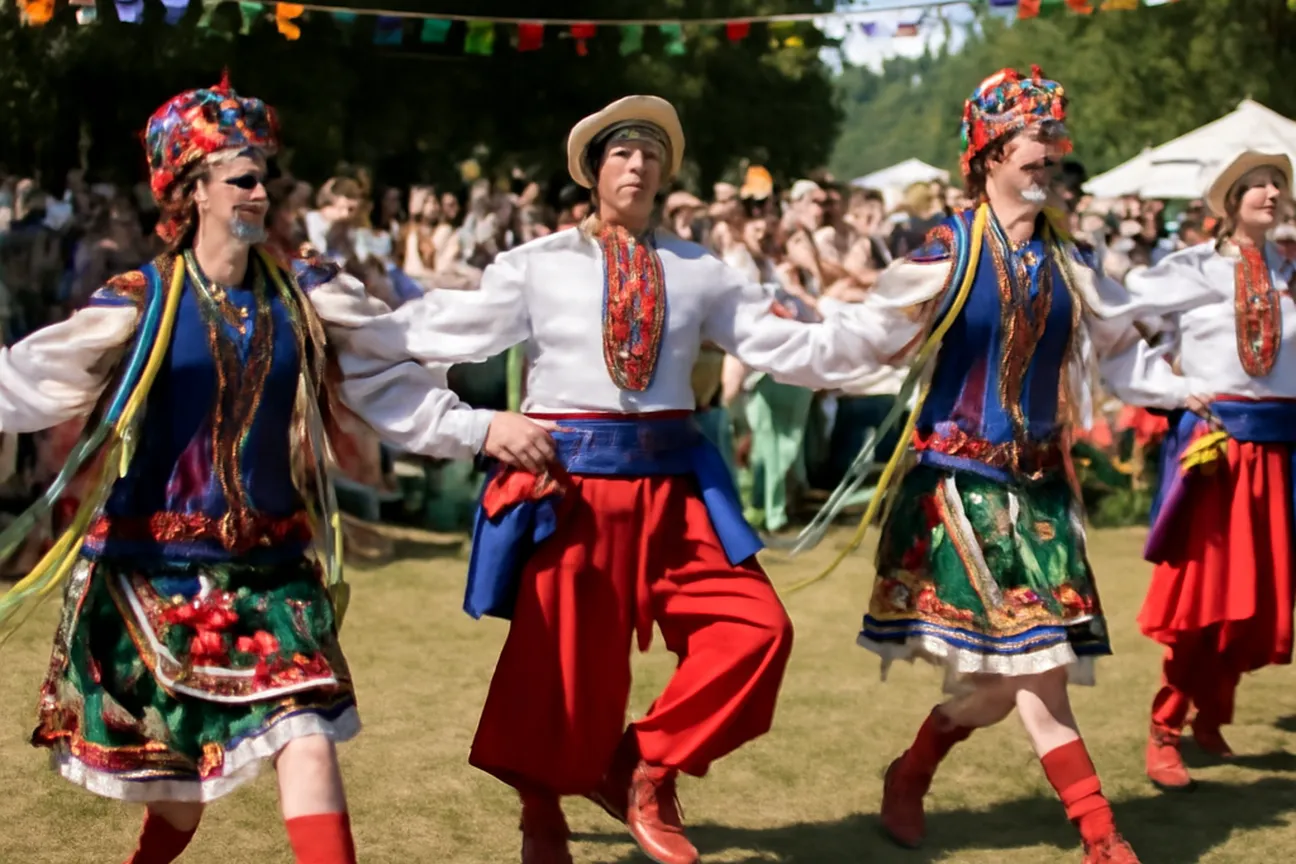
Crowds and vendor stalls at a Ukrainian street festival in Toronto with blue and yellow decorations.
Table of Contents
- Bloor West Village Ukrainian Festival (Toronto)
- Toronto Ukrainian Festival in the Historic Village
- Edmonton Area: Vegreville's Ukrainian Pysanka Festival
- Dauphin's National Ukrainian Festival (Manitoba)
- Kobzar Literary Award and Cultural Events
- Ukrainian Heritage Day and Independence Day (August 24)
- Malanka: The Winter New Year Celebration
- What to Eat and What to Watch
- Practical Tips for First-Time Festivalgoers
- Why These Festivals Matter in 2026
- Frequently Asked Questions
Bloor West Village Ukrainian Festival (Toronto)
Held over three days in mid-September, the Bloor West Village Ukrainian Festival is widely described as the largest Ukrainian festival outside Ukraine, drawing crowds estimated at 400,000 people to a closed-off stretch of Bloor Street West between Jane Street and Runnymede Road. The festival occupies the heart of Toronto's historic Ukrainian Village, a neighbourhood that has anchored the city's diaspora since the 1950s. Entry is free. Visitors will find three or four stages running continuously with folk-dance ensembles such as the Canada's Ukrainian Shumka Dancers-affiliated troupes, a marketplace of embroidered vyshyvanka shirts and pysanky, and a long row of food vendors run by local parishes and community organisations. For background on the neighbourhood itself, see our guide to Toronto's Ukrainian neighbourhoods. Parking is limited on festival weekend; the TTC subway stop at Jane or Runnymede is the recommended way to arrive, and the festival typically runs Friday evening through Sunday afternoon.
The festival grew out of small parish bazaars held along Bloor Street in the 1960s, when Ukrainian families who had settled the neighbourhood after the Second World War organised modest outdoor sales to fund church renovations. What began as an afternoon of borscht and embroidery tables expanded, decade by decade, into the multi-block street festival now recognised across Canada. Local business improvement associations partner with the Toronto branch of the Ukrainian Canadian Congress to close the street, coordinate stage permits, and manage roughly two hundred vendor booths each September. Families often plan visits around the mid-afternoon dance showcases, when the largest ensembles perform, and again in the early evening once crowds thin slightly and the food lines shorten.
Toronto Ukrainian Festival in the Historic Village
A related but distinct event, the Toronto Ukrainian Festival, programs additional cultural stages and church-hall exhibitions inside the same Bloor West corridor, often coordinated with St. Mary's Ukrainian Catholic Church and St. Vladimir Institute. Expect craft demonstrations — pysanky egg-writing with kistka tools, wheat-weaving, and rushnyk embroidery — alongside youth dance recitals from Saturday schools. These recitals are a good entry point for visitors curious about how the language and culture are being passed to the next generation; see our related piece on Ukrainian culture, galleries and events in Toronto. Admission to indoor exhibits is usually free or by donation, with proceeds supporting parish humanitarian projects for Ukraine.
Church-hall programming typically runs concurrently with the outdoor street festival rather than as a separate weekend, which means visitors can move between the two without buying a second ticket. St. Vladimir Institute, a few blocks north of Bloor Street, often opens its library and archive room during festival hours, giving newcomers and researchers a quiet space to browse historical photographs and community newspapers between stage performances. Volunteers at both venues are generally happy to explain the meaning behind specific embroidery patterns or the regional origin of a particular pysanka design, making the indoor component a useful complement to the louder, larger outdoor festival.
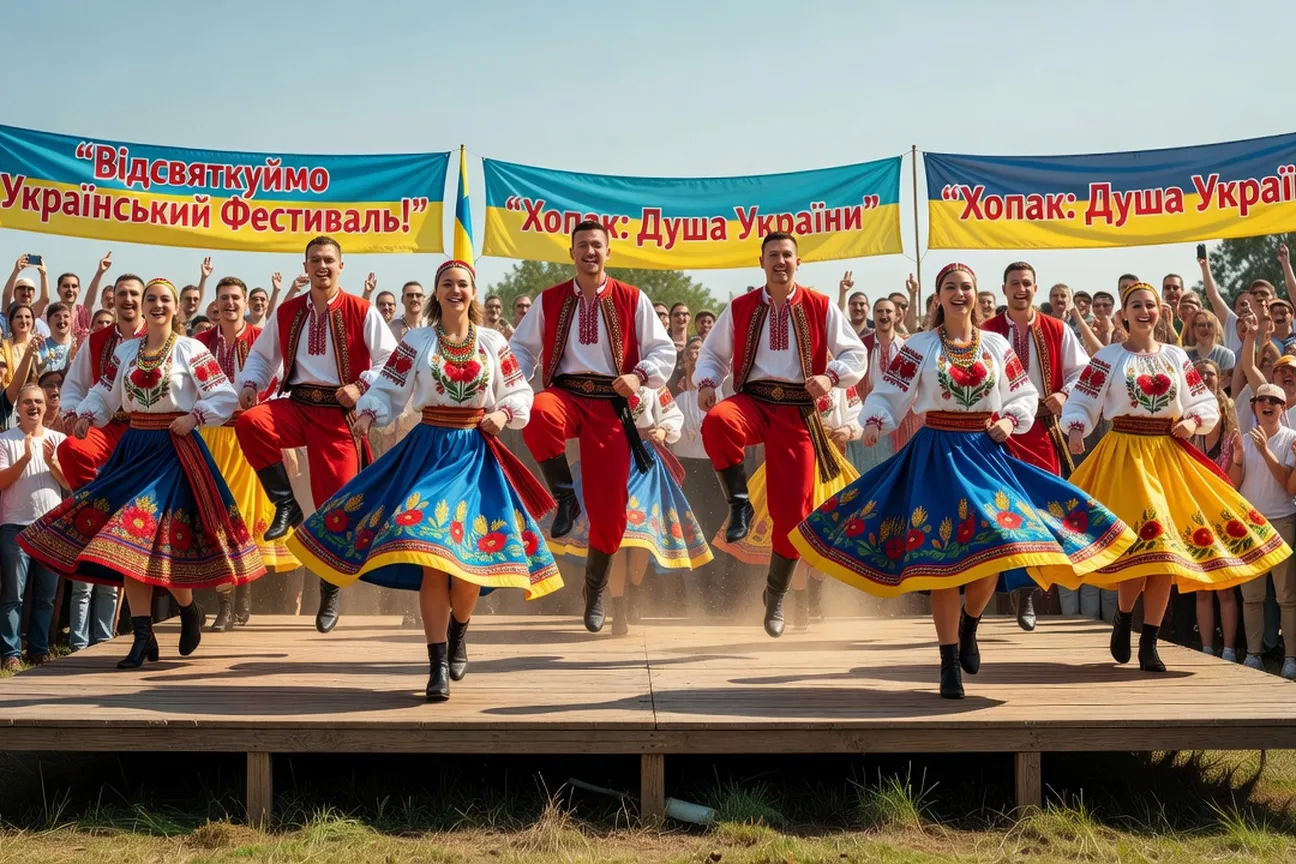
Ukrainian folk dancers in traditional costume performing hopak at an outdoor festival stage.
Edmonton Area: Vegreville's Ukrainian Pysanka Festival
An hour east of Edmonton, the town of Vegreville hosts the Ukrainian Pysanka Festival each July, timed around Canada Day weekend. The town is home to the world's largest pysanka, an 8.5-metre aluminum Easter egg sculpture unveiled in 1975 to mark the RCMP's centennial and the district's Ukrainian settlement roots. The festival features a parade, a beauty pageant, folk-dance competitions, a beer garden, and a large craft market selling hand-painted eggs. Camping and RV parking are available on-site, making it a popular weekend destination for families driving out from Edmonton. The surrounding parkland was one of the densest bloc-settlement corridors in Alberta, and visitors interested in that history can read more in our guide to prairie settlement history.
Dauphin's National Ukrainian Festival (Manitoba)
Founded in 1966, Dauphin's National Ukrainian Festival is Canada's oldest continuously running Ukrainian festival and remains one of the largest, drawing roughly 30,000 visitors over three days each August to the Selo Ukraina festival grounds outside town. The programme includes national dance championships, a Miss Dauphin's National Ukrainian Festival pageant, a juried craft show, and evening concerts featuring touring performers from across Canada and occasionally from Ukraine. Camping is available directly on the festival grounds, and weekend passes are sold in advance through the festival's own box office; single-day tickets are also available at the gate. Because Dauphin sits within one of the earliest bloc settlements founded after 1896, the festival doubles as a living link to that pioneer history.
The festival's Selo Ukraina grounds also host a permanent pioneer museum building, open during the festival and by appointment through the rest of the year, with exhibits on the district's original homesteads and the founding families who organised the first festival committee in 1965. Manitoba's Ukrainian community played a leading role in Canadian multiculturalism policy discussions during the 1970s, and Dauphin's organisers frequently cite this history when applying for provincial and federal cultural funding. Weekend passes generally sell out well before the gate opens, so early booking through the festival office is recommended for visitors travelling from Winnipeg, Brandon or further afield.
Kobzar Literary Award and Cultural Events
Not every Ukrainian-Canadian celebration is an outdoor festival. The Kobzar Literary Award, presented every two years, honours a work of Canadian literature that best explores the Ukrainian-Canadian experience, with a gala ceremony typically held in Toronto or Winnipeg. The award ceremony draws writers, historians and community leaders and is usually open to the public with advance registration. Local Ukrainian cultural centres also program smaller literary readings, film screenings and lecture series throughout the year; checking the events calendar of your nearest Ukrainian Canadian Congress branch or parish hall is the most reliable way to find these.
Ukrainian Heritage Day and Independence Day (August 24)
August 24 marks Ukraine's Independence Day, commemorating the 1991 declaration of independence from the Soviet Union, and Canadian municipalities with significant Ukrainian populations — including Toronto, Edmonton, Winnipeg and Ottawa — typically mark the date with flag-raisings at city hall, church services, and community gatherings. Since 2022, these events have taken on added weight as fundraisers for humanitarian relief, often organised jointly with parishes and local chapters of the Ukrainian Canadian Congress. Many provinces have also proclaimed a Ukrainian Heritage Day in the autumn to recognise the community's contribution to Canadian life; check municipal and provincial proclamations for the exact date in your area, as they vary by jurisdiction.
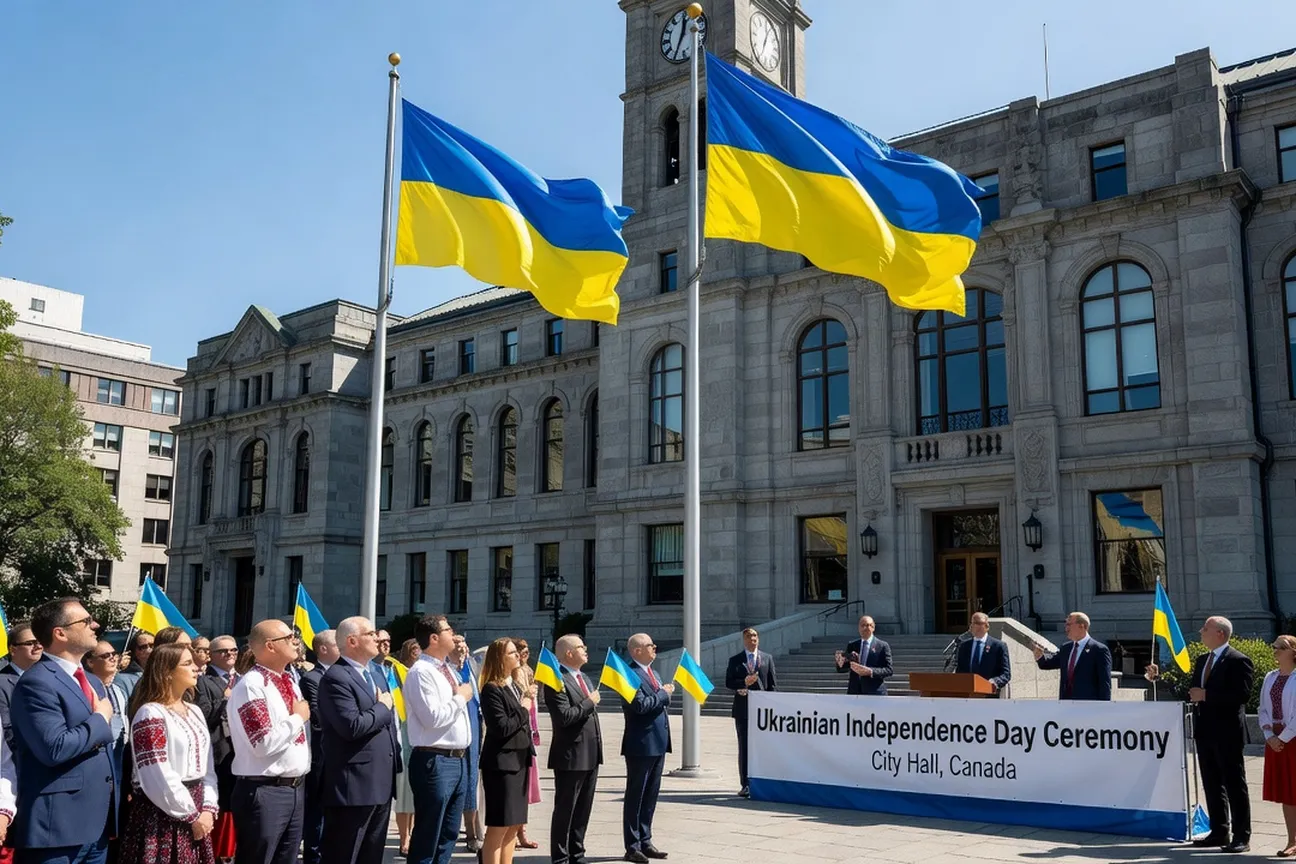
Blue and yellow Ukrainian flags raised at a Canadian city hall ceremony for Independence Day.
Malanka: The Winter New Year Celebration
Malanka is the Ukrainian New Year celebration tied to the Julian calendar, generally held on the Saturday closest to January 13–14. Community halls, parishes and Ukrainian National Federation branches across Toronto, Edmonton and Winnipeg host formal Malanka dinners featuring a live orchestra, a traditional midnight countdown, and dancing that runs late into the night. Expect a multi-course banquet with varenyky, holubtsi and kovbasa, followed by dancing that includes the hopak and couple dances borrowed from both Ukrainian and general Canadian ballroom traditions. Tickets typically sell out in advance through parish offices, and formal attire is expected. Malanka is one of the few Ukrainian-Canadian events held indoors in the depths of winter, making it a warm counterpoint to the outdoor summer festival season.
What to Eat and What to Watch
Festival food booths across Toronto, Edmonton, Vegreville and Dauphin serve a consistent core menu: varenyky (perogies, usually potato-cheddar or sauerkraut filled, served with sour cream and fried onions), holubtsi (cabbage rolls stuffed with rice and sometimes meat), kovbasa (garlic sausage, often grilled on-site), borscht, and honey cake (medivnyk) for dessert. Prices at most community-run booths run modestly compared to commercial festival food, since proceeds typically support parish or cultural-centre operating costs. On stage, the hopak — a high-energy male-led folk dance with squatting kicks and leaps — is the signature closing number at nearly every festival programme, usually performed by youth ensembles trained at local Ukrainian dance schools. Slower, more formal couple dances and women's ribbon dances typically open these programmes before building to the hopak finale.
Practical Tips for First-Time Festivalgoers
Most outdoor festivals (Bloor West Village, Vegreville, Dauphin) are free to enter, with revenue generated through food, craft and beer-garden sales rather than gate admission; indoor galas such as Malanka and the Kobzar Award require advance tickets. Arrive early for the best parking or, in Toronto's case, use transit rather than driving. Cash is still useful at smaller church-run food booths even where card payment is available. Bring sun protection for the daytime August and September events and warm formal wear for January's Malanka. If you plan to attend more than one festival in a season, Dauphin and Vegreville pair well as a single prairie road trip, roughly a five-hour drive apart via the Yellowhead and Trans-Canada highways.
Why These Festivals Matter in 2026
Beyond entertainment, these festivals generate meaningful local economic activity — Dauphin's event alone is estimated to inject several million dollars into the regional economy over its three-day run through lodging, fuel and retail spending. They also function as the community's primary annual fundraising mechanism for humanitarian relief, Saturday-school programming and heritage preservation. Since 2022, festival organisers across Toronto, Edmonton, Winnipeg and Dauphin have made deliberate efforts to welcome the roughly 200,000 Ukrainians who arrived in Canada under the CUAET programme, treating the festival circuit as an informal onboarding point into a century-deep diaspora network. Newcomers are frequently invited to volunteer at food booths or join dance ensembles, turning a one-day visit into an ongoing community connection. For more on how this welcome intersects with broader traditions, see our related overview of Ukrainian cultural traditions and heritage in Canada.
External resources worth consulting when planning a festival trip include practical Ukraine travel guidance at ukrainetrips.com for those researching cultural context, and genealogical background at ukrainiangenealogygroup-pei.org for visitors tracing family ties to the prairie bloc settlements represented at Dauphin and Vegreville.
Frequently Asked Questions
When is the Bloor West Village Ukrainian Festival in 2026?
The festival runs for three days in mid-September along Bloor Street West between Jane and Runnymede in Toronto's Ukrainian Village, and is free to attend.
What is the oldest Ukrainian festival in Canada?
Dauphin's National Ukrainian Festival in Manitoba, founded in 1966, is the oldest and largest annual Ukrainian festival in Canada, running for three days each August.
Why is there a giant Easter egg in Vegreville, Alberta?
The 8.5-metre pysanka sculpture, unveiled in 1975, commemorates the RCMP centennial and the town's Ukrainian settlement heritage; the annual Pysanka Festival is held around it each July.
What food is typically served at Ukrainian festivals in Canada?
Expect varenyky (perogies), holubtsi (cabbage rolls), kovbasa (garlic sausage), borscht and honey cake, usually sold from community-run food booths staffed by parish volunteers.
What is Malanka and when is it celebrated?
Malanka is the Ukrainian New Year celebration tied to the Julian calendar, usually held in mid-January with a formal dinner, live orchestra and traditional dances such as the hopak.