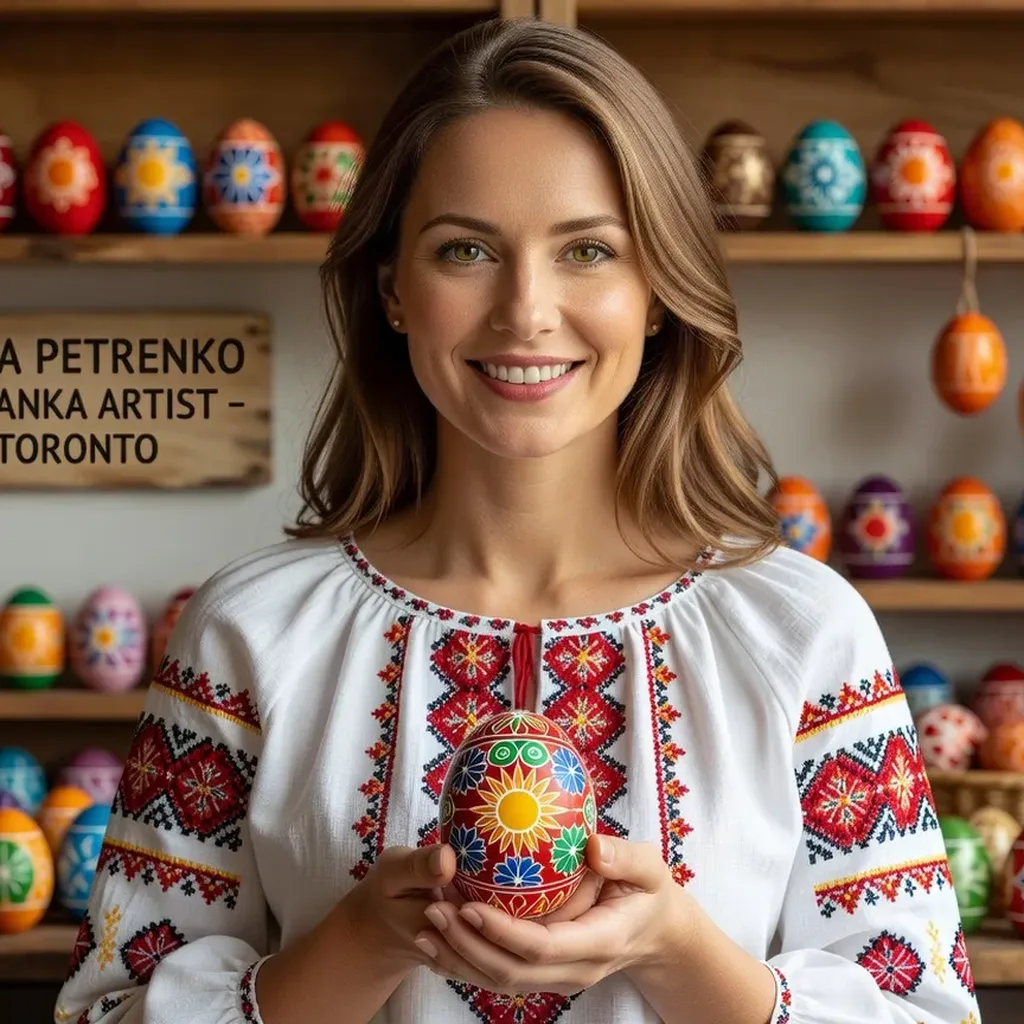
Pysanka Easter eggs decorated with Ukrainian traditional motifs.
Iryna Petrenko, pysanka artist and instructor, Ukrainian Museum of Canada Toronto.
Iryna Petrenko
Pysanka artist and instructor at the Ukrainian Museum of Canada (Toronto branch). 15 years teaching traditional pysanka decoration. Studied under master pysankar Oksana Yurchuk in Kyiv (2008–2010). Host of the annual “Pysanka Festival” at Ukrainian Canadian Social Services in North York.
Toronto, Ontario, Canada
Every spring, in community centres and museum workshops from Toronto to Edmonton, Ukrainian Canadians gather around candles and bowls of dye, armed with small brass styluses called kistky and bars of beeswax. What they are recreating is one of the oldest decorative traditions in Ukraine: the art of the pysanka, an Easter egg covered in layer upon layer of symbolic pattern, each one resisting the dye applied after it. For Iryna Petrenko, who has been teaching the craft for fifteen years at the Ukrainian Museum of Canada in Toronto, the pysanka is far more than an art project — it is a living document of Ukrainian identity.
Petrenko studied under master pysankar Oksana Yurchuk in Kyiv from 2008 to 2010, returning to Canada with techniques she has since shared with thousands of students across the Greater Toronto Area. We spoke with her about the origins of the tradition, its survival among Prairie settlers, the explosion of interest since the 2022 Russian invasion of Ukraine, and how anyone — regardless of Ukrainian heritage — can begin learning the craft. Pysanka belongs to a folk-art tradition distinct from the trained fine-art painting discussed in our guide to Ukrainian-Canadian visual artists and painters, though the two often share exhibition space in Toronto's museums.
Table of Contents
- Introduction to Pysanka
- Historical Origins and Religious Reinterpretation
- The Migration of the Tradition to Canada
- Keeping the Tradition Alive in Canada
- Symbolism of Pysanka Motifs
- How Pysanka Workshops Operate
- Post-2022 Renewed Interest
- Where to Find Pysanka Courses and Museums in Canada
- Advice for Families Starting the Tradition
- Quick Answers: Common Misconceptions
- Three Key Takeaways
- Frequently Asked Questions
Q: Can you start by explaining what a pysanka is and the technique behind it?
A: Of course! A pysanka is a Ukrainian Easter egg, decorated using a wax-resist dyeing technique. This involves drawing designs on an egg with a tool called a kistka, which applies beeswax. The egg is then dipped in a series of dyes, starting with lighter colours like lemon yellow and proceeding to darker shades such as scarlet and black. As you layer each colour, you apply more wax to cover the areas you want to preserve. Once all the layers are applied, the wax is melted off to reveal a stunning multi-coloured pattern.
Q: What are the historical origins of pysanka, and how has it been reinterpreted over time?
A: Pysanka has its roots in pre-Christian Ukraine where the eggs symbolized the rebirth of nature and the arrival of spring. With the advent of Christianity, these eggs took on new meanings, symbolizing the resurrection of Christ and becoming ingrained in Easter celebrations. This religious reinterpretation allowed the tradition to endure and evolve over centuries.
Q: How did the pysanka tradition make its way to Canada?
A: The pysanka tradition came to Canada with the wave of Ukrainian immigrants in the late 19th and early 20th centuries. Many settled in the Prairie provinces, bringing their rich cultural traditions with them. These settlers maintained their customs as a way to keep their heritage alive in a new land. Over time, the pysanka became a symbol of Ukrainian-Canadian identity, celebrated in communities across the country.
Q: How is the tradition being kept alive today in Canada?
A: In Canada, the pysanka tradition is preserved through Ukrainian-Canadian schools, museums, and community workshops. Institutions like the Ukrainian Museum of Canada in Toronto and St. Vladimir Institute hold workshops and exhibitions to educate people about this art form. Community events during Easter, as well as educational programs for children, ensure that each new generation learns the skill and significance of pysanka making.
Q: Can you explain the symbolism behind some of the motifs used in pysanka?
A: Certainly! Each motif on a pysanka carries its own symbolic meaning. For example, the sun symbolizes life and warmth, deer represent prosperity and wealth, while flowers are a symbol of beauty and new beginnings. Geometric patterns, such as the meander or wave, often symbolize eternity or the cycle of life. These symbols have been passed down through generations, each with its own story and significance.
Q: How do pysanka workshops typically operate, and who attends them?
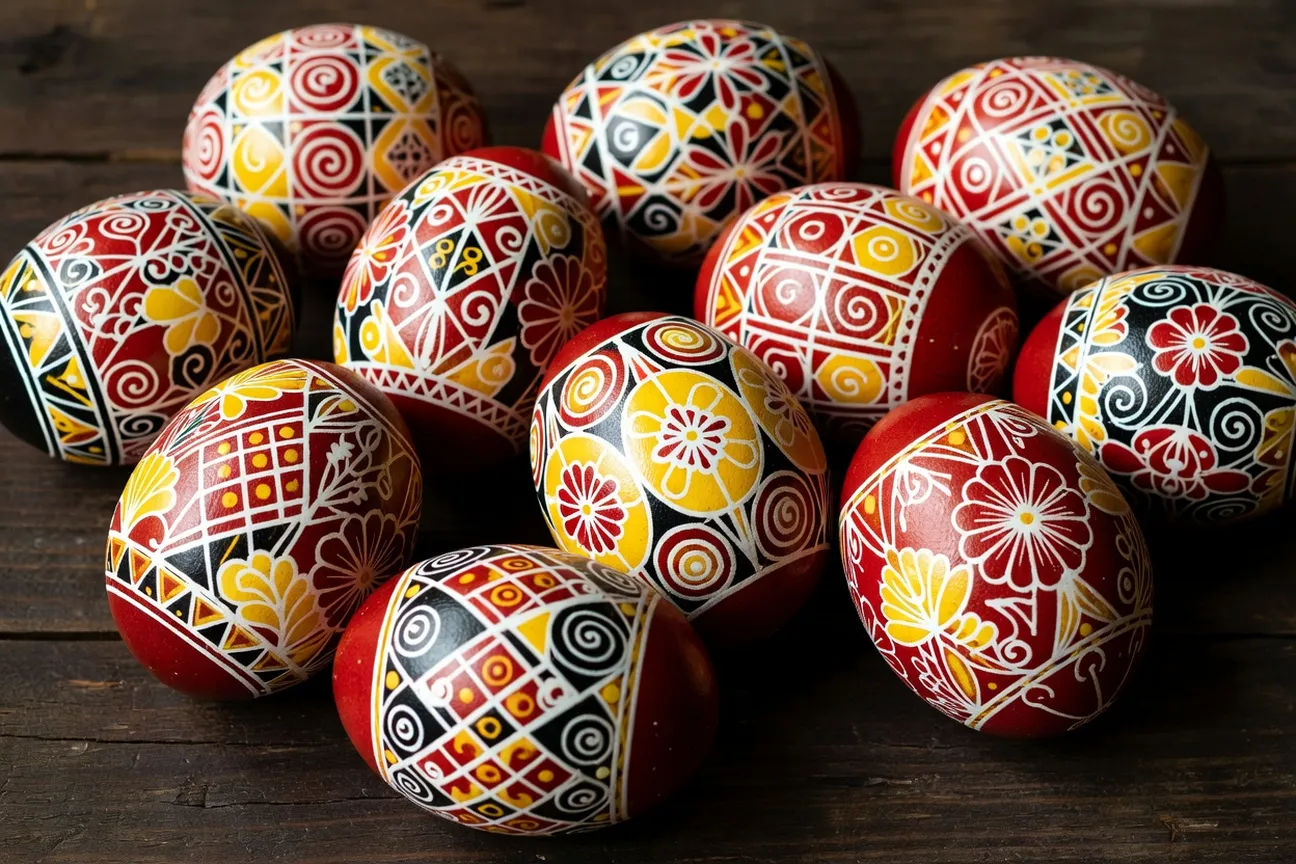
Pysanka eggs with intricate designs.
A: Pysanka workshops are vibrant and engaging, often attracting a diverse group of participants ranging from complete beginners to seasoned artists. At these workshops, attendees learn about the history and cultural significance of pysanka, and receive hands-on instruction on the wax-resist technique. For example, at our workshops at St. Vladimir Institute in Toronto, participants are guided through the entire process, from drawing designs to dyeing and removing the wax. It's a wonderful opportunity for cultural exchange and artistic expression.
Q: Has there been a renewed interest in pysanka since 2022?
A: Yes, definitely. Since 2022, there has been a noticeable resurgence of interest in pysanka, particularly among new Ukrainian immigrants to Canada. This renewed interest is partly driven by a desire to reconnect with cultural roots and preserve traditions in times of change. Workshops have seen increased attendance, and there is a growing curiosity among Canadians of all backgrounds to learn about and partake in this beautiful tradition.
Q: Where can people find pysanka courses and museums in Canada?
A: There are several places across Canada where you can explore pysanka. In Toronto, you can visit the Ukrainian Museum of Canada or attend workshops at St. Vladimir Institute. In Winnipeg, the Oseredok Ukrainian Cultural and Educational Centre offers classes. The Ukrainian Cultural Heritage Village near Edmonton is another great place to learn. Vegreville, Alberta, is home to the world's largest pysanka monument, a must-visit for enthusiasts. Each of these locations offers unique insights and opportunities to delve into the art of pysanka. Many of these same cities also host the pysanka-making demonstrations featured at the region's biggest cultural gatherings, covered in our guide to Ukrainian festivals in Toronto and Edmonton.
Q: What advice would you give to families wanting to start this tradition?
A: My advice to families is to start simple and enjoy the process. You don't need to create intricate designs right away. Begin with basic patterns and gradually experiment with more complex motifs. Make it a fun, family activity where everyone can contribute their own designs. Resources and kits are widely available, and attending a workshop can provide valuable guidance. Remember, the most important part is the experience and the memories you create together.
Q: Can you walk us through the specific process of applying the kistka and layering dyes? What makes a truly skilled pysanka artist?
A: The process of creating a pysanka using the wax-resist technique is both meticulous and meditative. It begins with selecting an egg, which is thoroughly cleaned to ensure the dyes adhere properly. The kistka, a traditional tool used for applying wax, is heated over a candle flame. It is then filled with beeswax, which melts and flows through the fine tip, allowing the artist to draw intricate lines on the egg's surface. Each line applied with the kistka preserves the current colour beneath the wax, maintaining the design as the egg is successively dipped into different dye baths. The order of dyeing is crucial, typically starting with the lightest colours such as saffron yellow, followed by deeper shades like madder red and concluding with the darkest, such as Prussian blue. These dyes are often sourced from natural materials, with saffron yellow derived from the saffron crocus, and madder red from the roots of the madder plant.
A truly skilled pysanka artist is distinguished by their precision in applying wax, ability to envision complex designs, and understanding of colour interplay. Mastery comes from years of practice and an intimate knowledge of traditional motifs and their meanings. The layering of dyes requires patience, as each layer can take hours to set, while the removal of wax in the final step reveals the vivid, multi-coloured design. An artist's skill is also evident in their ability to innovate within traditional boundaries, creating unique yet culturally resonant pieces.
Q: You mentioned deer, sun, and flower motifs. Can you take us deeper into some of the most symbolically rich patterns -- the tryzub, the bezkonechnyk, the bezkonechnyk spiral -- and what regions of Ukraine they come from?
A: The tryzub, or trident, is a powerful symbol found on many pysanky, representing the national emblem of Ukraine and embodying the country's historical legacy and sovereignty. Its presence on pysanky is a nod to Ukraine's enduring spirit and cultural identity. The bezkonechnyk, or endless line, is another motif that appears frequently. This continuous line represents eternity and infinity, often symbolizing the cyclical nature of life and the universe. The bezkonechnyk spiral, a variation of this motif, further emphasizes the concept of unending life and is believed to protect against evil spirits.
These motifs have roots in specific Ukrainian regions. The Boiko region, known for its mountainous terrain, often features the tryzub in its pysanky, reflecting the community's deep connection to Ukrainian statehood and resilience. Meanwhile, the bezkonechnyk and its spiral variations are prevalent in Hutsul pysanky, hailing from the Carpathian highlands. Hutsul designs are renowned for their intricate patterns and vibrant use of colour, with the bezkonechnyk spiral often intertwining with other natural motifs to create complex, protective symbols. Understanding these motifs' origins and significance enriches the pysanka art form, allowing artists and enthusiasts to appreciate the cultural narratives embedded in each egg.
Q: When Ukrainian settlers arrived on the Prairies in the 1890s and early 1900s, what role did pysanka play in maintaining community bonds? Were there specific communities in Alberta, Saskatchewan, or Manitoba where the tradition was particularly strong?
A: Pysanka played a vital role in maintaining cultural identity and community bonds among Ukrainian settlers on the Canadian Prairies in the late 19th and early 20th centuries. For these immigrants, who were often isolated in rural areas, pysanka was more than just an art form; it was a tangible link to their homeland and a means of passing down traditions to future generations. In Alberta, communities like Edmonton and Vegreville became cultural hubs where pysanka-making flourished, serving as a way for settlers to come together, especially during Easter celebrations.
In Saskatchewan, the tradition was particularly robust in communities like Yorkton and Saskatoon, where Ukrainian settlers gathered to share stories, songs, and customs, reinforcing their cultural heritage through the art of pysanka. Manitoba also saw strong pysanka traditions, especially in areas like Dauphin and Winnipeg, where Ukrainian churches and community centres often hosted pysanka workshops and exhibitions. These gatherings provided a sense of belonging and continuity, helping settlers preserve their cultural identity amidst the challenges of adapting to a new land. The act of creating pysanky, with its rich symbolism and meticulous craft, offered comfort and a sense of purpose, reinforcing community bonds and cultural pride in these fledgling Ukrainian-Canadian communities.
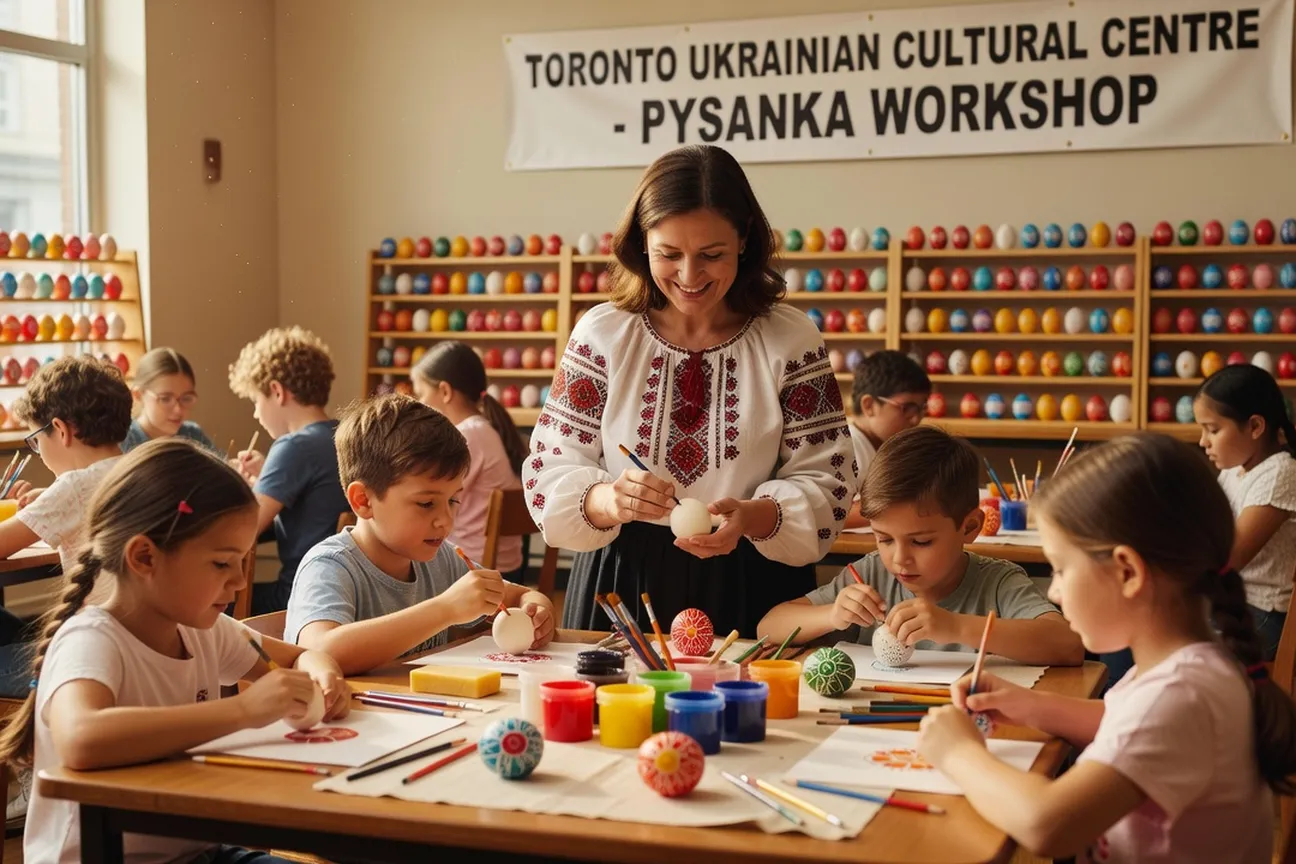
Participants at a pysanka workshop.
Q: You mentioned that new Ukrainian arrivals since 2022 have revived interest. Can you tell us more about how these newcomers -- many of them fleeing the war -- have engaged with pysanka? Have you noticed any differences between how they approach the tradition versus established Ukrainian-Canadian families?
A: The recent influx of Ukrainian newcomers since 2022 has indeed brought a renewed interest in pysanka, both as a cultural practice and a form of expression amidst displacement and trauma. These newcomers, many fleeing the war, have engaged with pysanka as a means of preserving their heritage and finding solace in familiar traditions. In workshops at our museum, I've observed that these individuals often approach pysanka with a deep sense of urgency and emotional investment, using the art form to express their personal experiences and hopes for peace.
Unlike established Ukrainian-Canadian families, who may view pysanka as a cherished but perhaps routine tradition, newcomers bring a fresh perspective, often infusing their designs with contemporary motifs and narratives reflecting their recent experiences. This has resulted in a dynamic exchange of ideas and techniques, enriching the pysanka tradition as a whole. For many newcomers, pysanka-making has become a therapeutic practice, a way to process their emotions and connect with the Ukrainian-Canadian community. This engagement has also fostered intergenerational learning, as young and old alike share stories and techniques, bridging the gap between past and present and ensuring the continuity of this cultural art form.
Q: Vegreville, Alberta has one of the most recognizable Ukrainian-Canadian landmarks -- the giant pysanka monument. What does that structure symbolize for the Ukrainian-Canadian community, and does it actually attract people to learn the art?
A: The giant pysanka monument in Vegreville, Alberta, stands as a powerful symbol of Ukrainian-Canadian heritage and pride. Erected in 1975 to commemorate the 100th anniversary of the Royal Canadian Mounted Police, the monument is a striking example of how cultural symbols can transcend their origins to become part of a broader Canadian narrative. For the Ukrainian-Canadian community, the Vegreville pysanka represents resilience, unity, and the enduring spirit of Ukrainian culture in Canada. It serves as a visual reminder of the contributions of Ukrainian immigrants to the fabric of Canadian society.
Beyond its symbolic significance, the monument also attracts visitors from around the world, sparking interest in the art of pysanka. Many visitors, inspired by the monument's beauty and the stories it embodies, are drawn to learn more about the craft. This interest is often channelled through local workshops and cultural events, such as those held by the Ukrainian Museum of Canada, including its Saskatoon branch. These events provide opportunities for individuals to engage with the tradition hands-on, fostering a deeper appreciation for the art form. The Vegreville pysanka thus not only stands as a landmark but also as a catalyst for cultural education and engagement, ensuring that the tradition continues to thrive and evolve within the Ukrainian-Canadian community.
Pysanka-making is more than a craft; it is a form of cultural storytelling that spans centuries and continents. Whether you are a descendant of the first Ukrainian settlers who broke the prairie soil in the 1890s, a newcomer arriving under the CUAET programme in 2022, or simply someone who discovered the art at a community festival, the kistka and the beeswax invite you into a living tradition. The Ukrainian cultural traditions preserved in Canada today — from embroidery to choral music to pysanka — owe their survival to communities that refused to let distance or adversity sever their connection to the homeland. Learn more about the broader heritage at our guide to Ukrainian cultural traditions in Canada 2026.
Quick Answers: Common Misconceptions
- Myth: Pysanka can only be made at Easter. Reality: While traditionally linked to Easter, pysanka can be created and enjoyed year-round.
- Myth: Only Ukrainians can make pysanka. Reality: Pysanka is for anyone interested in learning and appreciating the art and culture.
- Myth: Pysanka is only a religious symbol. Reality: While it has religious significance, pysanka also holds cultural and artistic value.
- Myth: You need expensive materials to start. Reality: Basic kits are affordable, and many materials can be found at home.
- Myth: It’s too difficult for children. Reality: With guidance, children can enjoy and create beautiful pysanka.
Three Key Takeaways
1. Pysanka is a cultural bridge. The art of pysanka serves as a connection between past and present, offering a way for Ukrainian-Canadians to stay connected with their heritage while inviting others to experience and appreciate a rich cultural tradition. Through workshops and community events, pysanka fosters a sense of community and continuity.
2. Symbolism is crucial. The motifs and colours used in pysanka are not just decorative; they are imbued with meaning and history. Understanding these symbols provides deeper insight into Ukrainian culture and the values passed down through generations, from the life-giving sun to the enduring cycle of life represented by geometric patterns.
3. An inclusive tradition. While pysanka is deeply rooted in Ukrainian traditions, it is an inclusive art form that welcomes everyone. Whether you are creating pysanka as a personal hobby or engaging in it as part of a community event, it is a practice that encourages creativity, learning, and sharing among diverse groups of people.
Frequently Asked Questions
What tools do I need to start making pysanka?
You'll need a kistka for applying wax, beeswax, and a variety of dyes. You can purchase kits that contain everything you need to get started.
Is pysanka suitable for young children?
Yes, children can create pysanka with supervision. It's a fun, educational activity that introduces them to Ukrainian culture and art.
How long does it take to make a pysanka?
The time can vary, but a typical pysanka can take anywhere from a couple of hours to a full day, depending on the complexity of the design.
Are there online resources to learn about pysanka?
Yes, many online tutorials and resources are available for beginners. Websites like Ukrainian culture and traditions guide offer valuable context about the broader heritage behind pysanka.
Can I find pysanka workshops in other Canadian cities besides Toronto?
Absolutely! Workshops are also available in Winnipeg, Edmonton, and other cities with strong Ukrainian communities. Check local cultural centres for offerings.
For more on Ukrainian culture in Canada, visit our pages on Ukrainian culture and traditions in Canada and Ukrainian cultural traditions heritage.